About Songzanlin Monastery (Ganden Sumtseling)
“A mountain monastery that still pulses with spiritual life — incense smoke, chanting monks, and golden rooftops against blue sky, slightly diluted by tour group energy but never fully extinguished.”
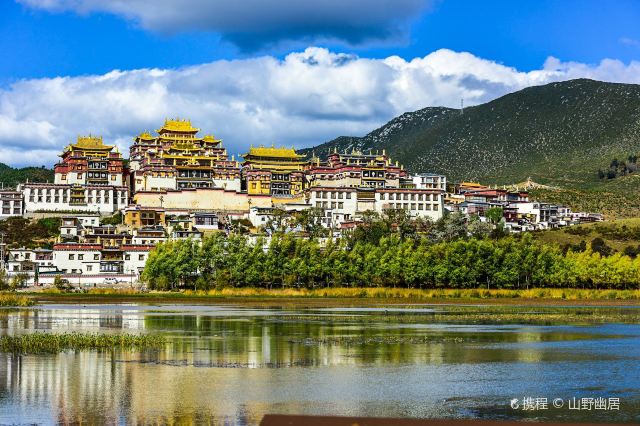
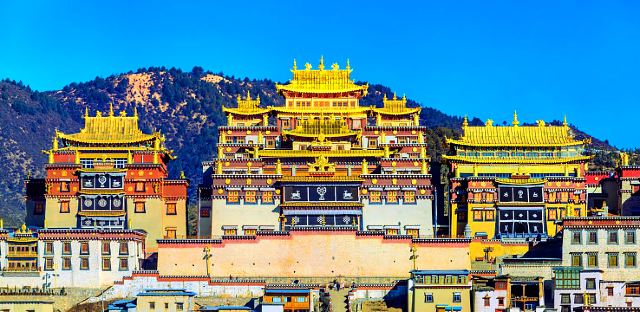
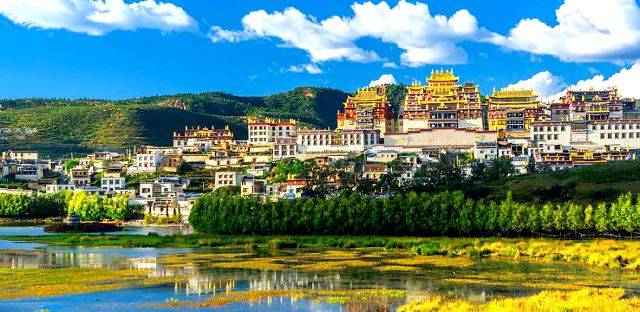
Songzanlin is the largest Tibetan Buddhist monastery in Yunnan and the most accessible taste of Tibetan culture without the permit hassles of actually entering Tibet. Built in 1679 by order of the Fifth Dalai Lama, the monastery genuinely earns its 'Little Potala' nickname with gold-roofed temple halls rising above a hillside village of monk dormitories. The main halls house gilded Buddha statues, ancient thangka paintings, palm-leaf scriptures, and ornate golden lamps — the religious art collection is genuinely impressive. About 700 monks live here in an active, functioning monastery. The complex sits at 3,380m altitude, and the steep staircases (146 steps to the main hall) will leave you breathless in both senses. The downside: heavy tourist traffic (especially from Chinese tour groups) can undermine the spiritual atmosphere, and some visitors report feeling it's been overly commercialized with monks staffing gift shops. The lake below the monastery offers the most photogenic view. Best experienced with a local Tibetan guide who can explain the religious significance.
Top Questions from Travelers
Why This Place Matters
Songzanlin was founded in 1679 by the Fifth Dalai Lama, making it one of the oldest and most important Gelug (Yellow Hat) sect monasteries outside of Tibet. At its peak, 2,000 monks lived here, and it served as the spiritual and administrative center of the entire Diqing Tibetan Autonomous Prefecture. The monastery was largely destroyed during the Cultural Revolution (1966-1976) and has been painstakingly rebuilt since 1982 — a process that continues today. The 700 monks currently in residence follow traditional monastic education, studying Buddhist philosophy, debate, and ritual. The monastery's Tibetan name 'Ganden Sumtseling' means 'the temple built by the glorious Gelug teachings.' For Tibetan communities across Yunnan and Sichuan who cannot easily travel to Lhasa, Songzanlin serves as a primary pilgrimage destination.
Need help planning?
ChinaPal handles everything
- Book English-speaking guides
- Arrange transport & tickets
- Real-time help during your visit
- Restaurant reservations nearby
Highlights
3 iconic experiences that define a visit
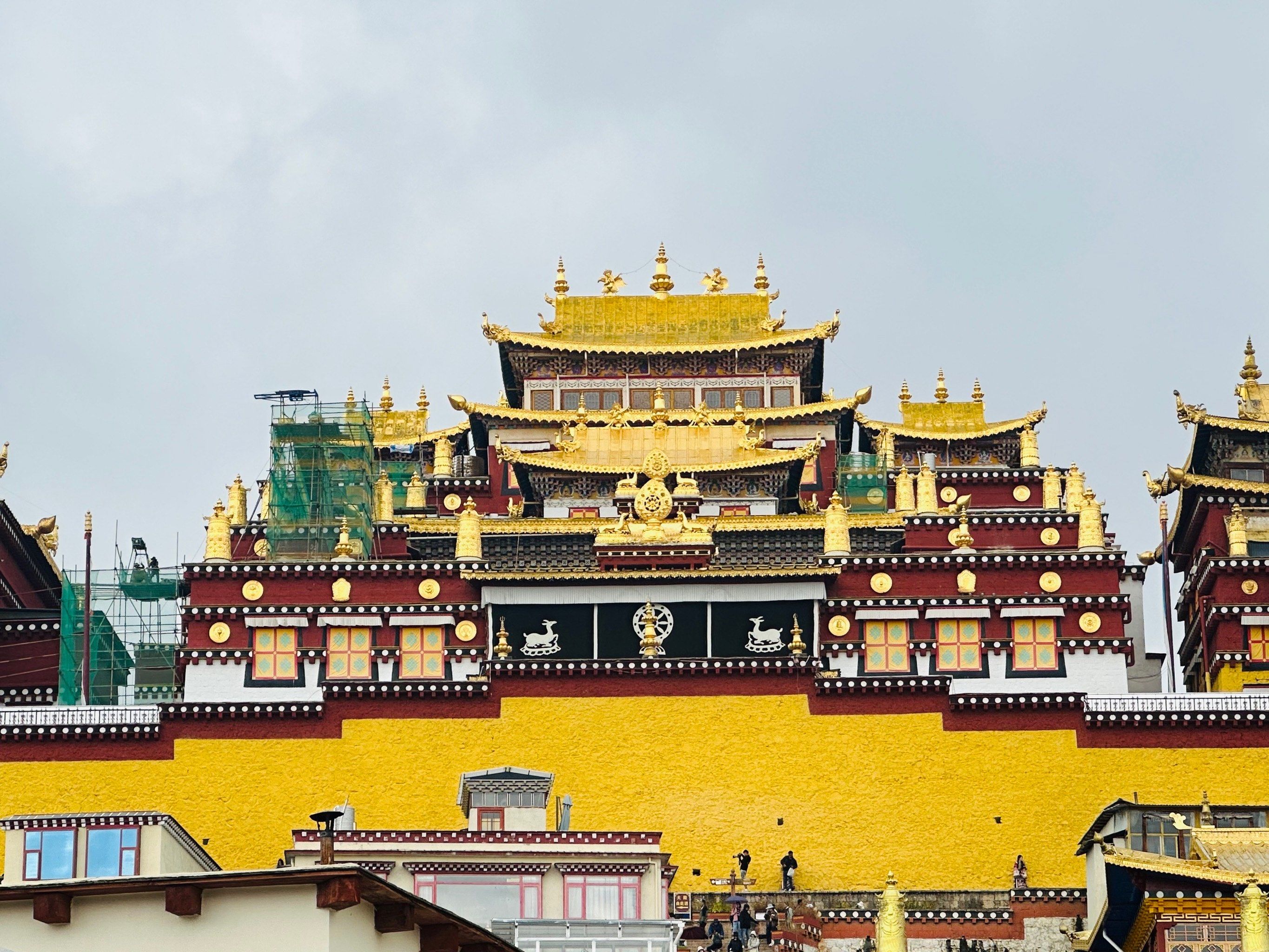
Main Temple Halls (Zhacang & Jikang)
Two grand temple halls with gilded copper roofs, housing massive Buddha statues, ancient thangka paintings, palm-leaf scriptures, and hundreds of golden lamps. The interior is rich with Tibetan Buddhist art and iconography.
The 108 columns in the main hall blend Tibetan and Han Chinese architectural styles — a unique feature of Yunnan's border monasteries. Photography is usually not permitted inside the main halls.
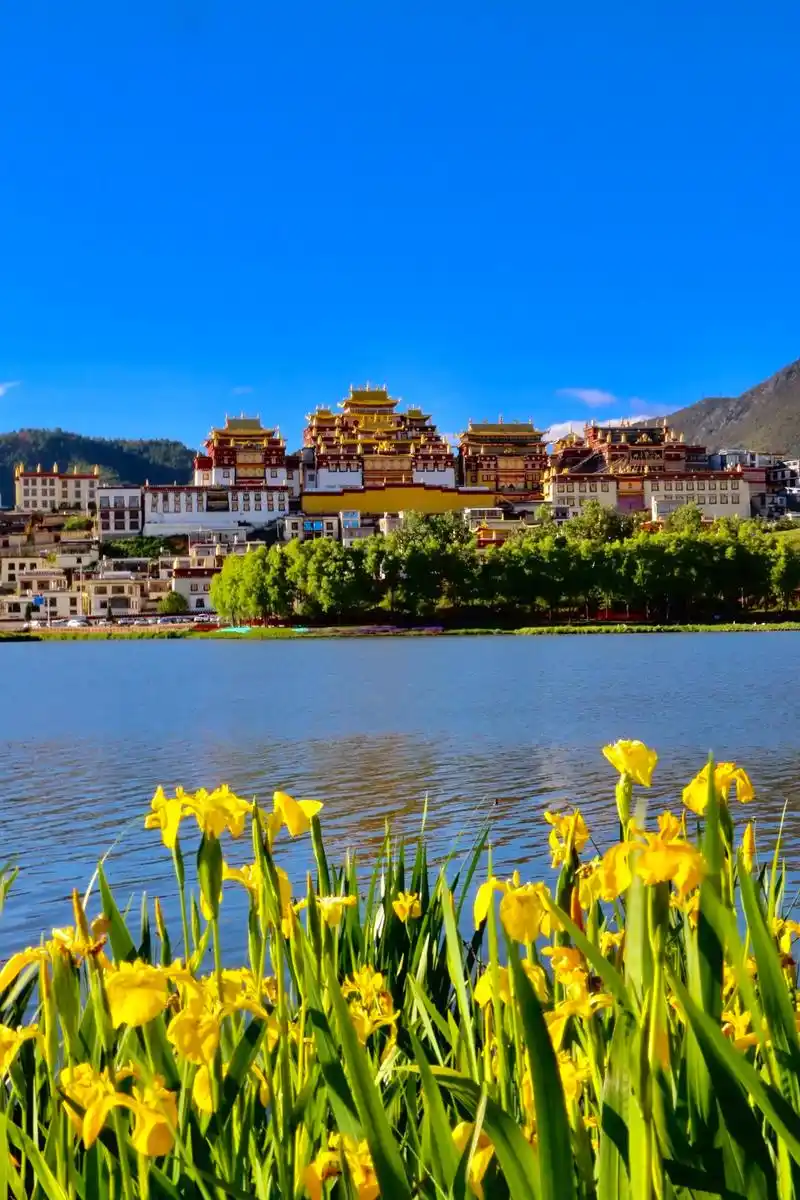 Universal Appeal
Lake La Mu Yangcuo (拉姆央措)
A small sacred lake below the monastery that perfectly reflects the entire monastery complex on calm days. This is where the classic 'Little Potala' p...
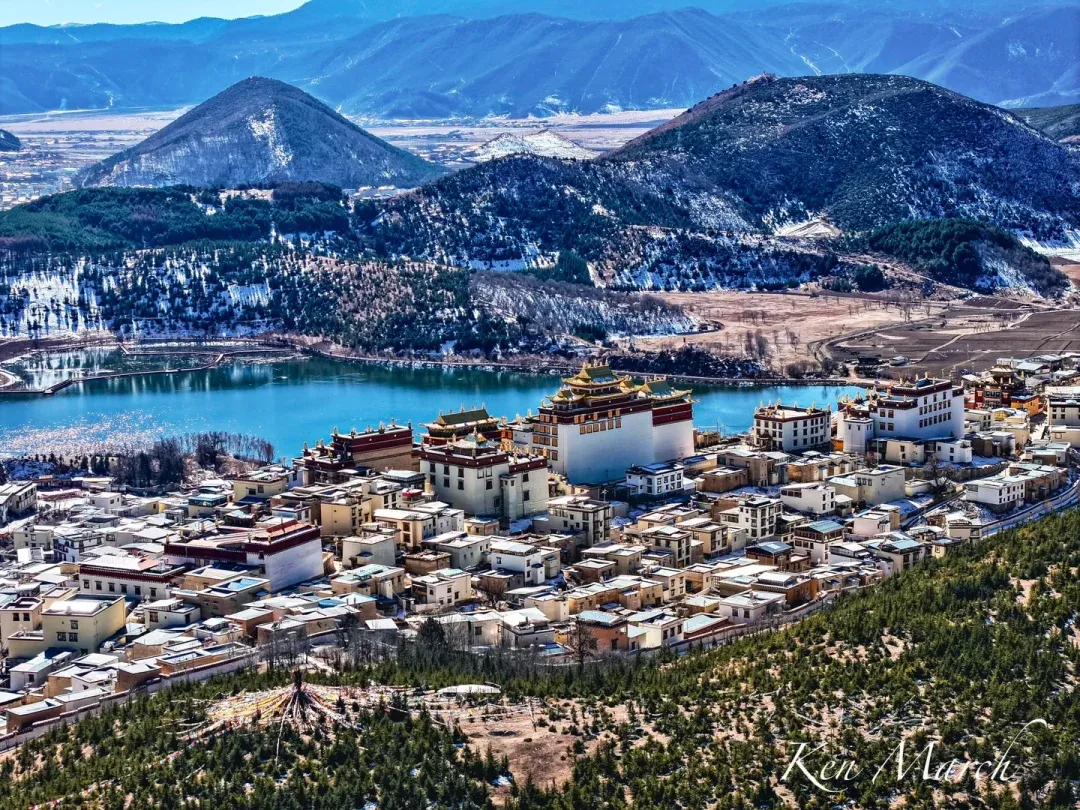 Culturally Interesting
The Monastery Village
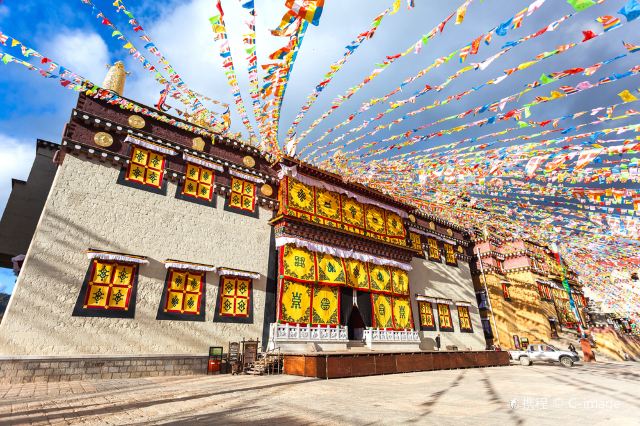
Surrounding the main temples is a living Tibetan village where monks reside in traditional dormitories. Narrow lanes wind between whitewashed building...
What Most Visitors Miss
The lake reflection at sunrise/sunset
Most visitors take the shuttle bus directly to the monastery and skip the lake entirely. The reflection of the golden-roofed monastery in the still lake water is the single most photogenic image of the entire Shangri-La region.
Conversations with monks
Some monks, especially younger ones, enjoy chatting with visitors (in Chinese). They can share insights about monastic life that no guide book captures. Be respectful, ask permission, and don't photograph without consent.
Walking up instead of taking the shuttle bus
The walk from the visitor center through the Tibetan village to the monastery takes about 30-40 minutes and passes through beautiful residential areas. The shuttle bus skips all of this.
Plan Your Visit
How Long to Visit
1-1.5 hours (shuttle bus up, climb stairs, see main halls, come down
include guided tour of halls, walk the monastery village, visit the lake for photos
Half day (everything above plus the Tibetan village exploration, multiple temple halls, and lingering for sunset light on the golden roofs
Smart Route
Take bus #3 from Dukezong (¥2)
buy ticket at visitor center (or ask our team to pre-arrange a taxi and tickets if you'd rather not navigate public transport at altitude)
walk down to the lake first for reflection photos (15 min)
take shuttle bus to monastery base
climb the 146 steps to main halls
explore the temple interiors with a guide
wander the monastery village lanes
take shuttle bus back
walk through the Tibetan village to the visitor center.
Best Time to Visit
Early morning (7:30-9:00 AM) before tour buses arrive — the monastery is most spiritual when quiet
Mid-morning to early afternoon when Chinese tour groups flood the complex
By Season
Spring
Summer
(June-September) has the greenest surroundings and best lake reflections. Autumn and winter offer clearer skies and fewer crowds.
Autumn
and winter offer clearer skies and fewer crowds. Winter can be bitterly cold at 3,380m.
Winter
offer clearer skies and fewer crowds. Winter can be bitterly cold at 3,380m.
Visit just before closing time (5-6 PM) in September-October for the most magical light — the setting sun turns the golden roofs into liquid fire against deep blue sky, with almost no tourists remaining.
What to Skip
The monk-staffed gift shops inside the monastery — some visitors feel pressured to buy prayer items. The shuttle bus back can be skipped if you want to walk through the village.
Pro Tips
If driving, you can drive up the hill to the monastery directly (free parking near the top), bypassing the visitor center and shuttle bus entirely. Some visitors report being able to enter the monastery village from the back without purchasing a ticket, as it's a living village — but this avoids the guided experience.
Photo Spots
Lake La Mu Yangcuo — monastery reflection
Visit before 9 AM or after 5 PM for calm water and golden light. Use a polarizing filter to enhance the reflection.
Top of the monastery stairs — panoramic view
Turn around after climbing the 146 steps for a sweeping view of the lake, village, and surrounding mountains.
Monastery village lanes with prayer flags
Colorful prayer flags strung between monk dormitories create photogenic frames. Early morning light is best.
Pair With
Dukezong Ancient Town (独克宗古城)
15 minutes by bus #3 or 5 minutes by taxi
The historic Tibetan old town of Shangri-La — combine with Songzanlin for a full day of Tibetan culture.
Pudacuo National Park (普达措国家公园)
30-40 minutes by car
Shangri-La's other top attraction — pristine alpine lakes and forests. A different mood from the monastery's spiritual intensity.
Napa Lake (纳帕海)
20-30 minutes by car
A seasonal lake and wetland with grazing yaks — the natural landscape surrounding Shangri-La's cultural sites.
Tickets & Access
Admission + shuttle bus
Price varies seasonally. Shuttle bus is included — ¥10 each way if purchased separately.
Local guide (often included)
Tibetan guides explain religious significance — highly recommended
Opening Hours
07:30-18:00 (March 20 - December 31). Winter hours may be shorter.
How to Buy
Buy at visitor center ticket window with passport. Shuttle bus departs from visitor center to monastery.
Passport: Yes — passport required for foreigners to purchase tickets.
Queue Situation
Shuttle bus waits of 10-15 minutes are typical. The monastery itself rarely feels queued, just crowded in specific halls during peak times.
Tips & Warnings
Altitude of 3,380m causes breathlessness on the stairs
The 146 steps to the main hall are genuinely tiring at this altitude. Take breaks, climb slowly, and don't rush. Bring water. If you've just arrived in Shangri-La, consider visiting on your second day.
Active religious site — dress and behave respectfully
Cover shoulders and knees. Remove hats inside temple halls. Walk clockwise around Buddhist structures (following the direction of the prayer wheels). Don't photograph inside temples unless explicitly permitted. Don't point at or touch religious statues.
Tour group congestion in the main halls
Visit early morning or late afternoon to avoid the worst crowds. If a large group enters a hall, wait outside or explore the village lanes until they move on. Our concierge can advise you on the quietest time slots based on current tour group schedules — just message us the morning of your visit.
What to Bring
Wear
Warm layers (cold at 3,380m even in summer). Clothing that covers shoulders and knees out of respect. Comfortable shoes for climbing steep stairs. Sun protection.
Bring
Passport. Camera. Water. Warm jacket. Sunscreen. Oxygen canister if altitude-sensitive.
Don't Bring
Nothing specific, but leave large bags — you'll be climbing stairs.
Physical Reality
moderate-strenuous
146 steep steps from the monastery base to the main halls, at 3,380m altitude. This is the most physically demanding part. The rest is flat walking through the village and lake area. No wheelchair access to the main halls.
Foreigners Watch Out
- Passport is required for ticket purchase — bring your physical passport.
- No photography inside the main temple halls — this is strictly enforced and deeply important to the monks.
- The shuttle bus is included in the ticket price — you don't need to pay separately unless you want to ride it multiple times.
- Butter tea may be offered if monks invite you — accepting is a sign of respect. It tastes salty, not sweet. Sip slowly.
- Some guides may encourage you to make monetary offerings or buy prayer lamps — this is voluntary and you should not feel pressured.
If Things Go Wrong
Struggling with altitude on the stairs
→ Rest on the landings — there are several rest points on the staircase. Don't push through. The view from partway up is still excellent.
Arrived to find it too crowded and commercial
→ Escape into the monastery village's back lanes where tourists rarely venture. The residential areas are peaceful and authentic.
Useful Chinese
Tap to reveal the English meaning