About Jing'an Temple
“Gold and glass collide — a pocket of ancient Buddhist serenity humming with incense and chanting, completely encased by Shanghai's most aggressively modern commercial district.”
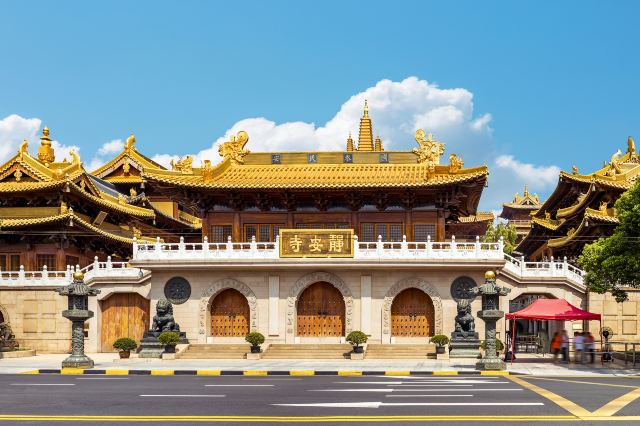
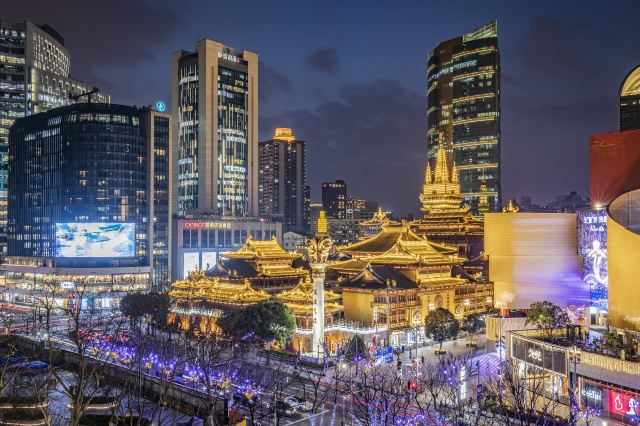
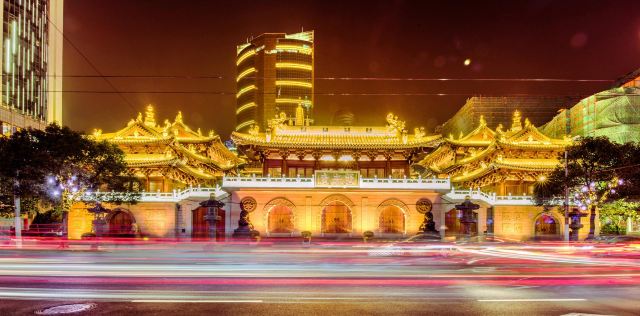
Jing'an Temple is a spectacular visual paradox: a gleaming golden Buddhist temple surrounded on all sides by luxury malls and glass skyscrapers in one of Shanghai's priciest neighborhoods. Founded in 247 AD during the Three Kingdoms period, it's one of Shanghai's oldest temples and the namesake of the entire Jing'an district. The current buildings are a 1998 reconstruction in Song Dynasty style, covered in copper-tiled golden roofs that catch the sunlight and look absolutely stunning at night when lit up. Inside, you'll find a 15-ton pure silver Shakyamuni Buddha, a 6.2-meter carved camphor wood Guanyin statue, an 11-ton jade Buddha, and a 7.3-ton peace bell. The temple is genuinely active — monks chant daily and locals come to pray, burn incense, and throw coins into the bronze tripod. At 50 RMB admission, some visitors feel the small footprint doesn't justify the price, especially compared to free temples elsewhere in China. But what you're paying for is the unique urban contrast, the quality of the Buddhist art inside, and a surprisingly peaceful spiritual moment in the heart of Shanghai's commercial madness. Skip it if you've already seen grander temples, but for a first-timer in Shanghai, the golden-roofs-against-skyscrapers scene is unforgettable.
Top Questions from Travelers
Why This Place Matters
Jing'an Temple's survival in the heart of Shanghai's most expensive real estate is itself a story about Chinese culture. Founded in 247 AD — before Shanghai even existed as a city — the temple literally predates the metropolis that grew around it. The Jing'an district is named after the temple, not the other way around. Through dynasties, wars, the Cultural Revolution (when it was gutted and repurposed), and Shanghai's explosive modernization, the temple kept being rebuilt. The current reconstruction was completed in 1998 and expanded in 2010, deliberately choosing Song Dynasty architectural style to honor its heritage. The golden rooftops aren't just decorative — they're copper-tiled, a traditional Buddhist temple construction method symbolizing the dharma's radiance. The temple maintains an active monastic community and daily services, making it a genuine religious institution rather than just a museum. For many Shanghainese, Jing'an Temple is where you go for peace and safety blessings (as distinct from Longhua Temple for career luck or Jade Buddha Temple for wealth). That this thriving spiritual center sits between luxury malls says something profound about how China holds tradition and modernity in the same hand.
Need help planning?
ChinaPal handles everything
- Book English-speaking guides
- Arrange transport & tickets
- Real-time help during your visit
- Restaurant reservations nearby
Highlights
4 iconic experiences that define a visit
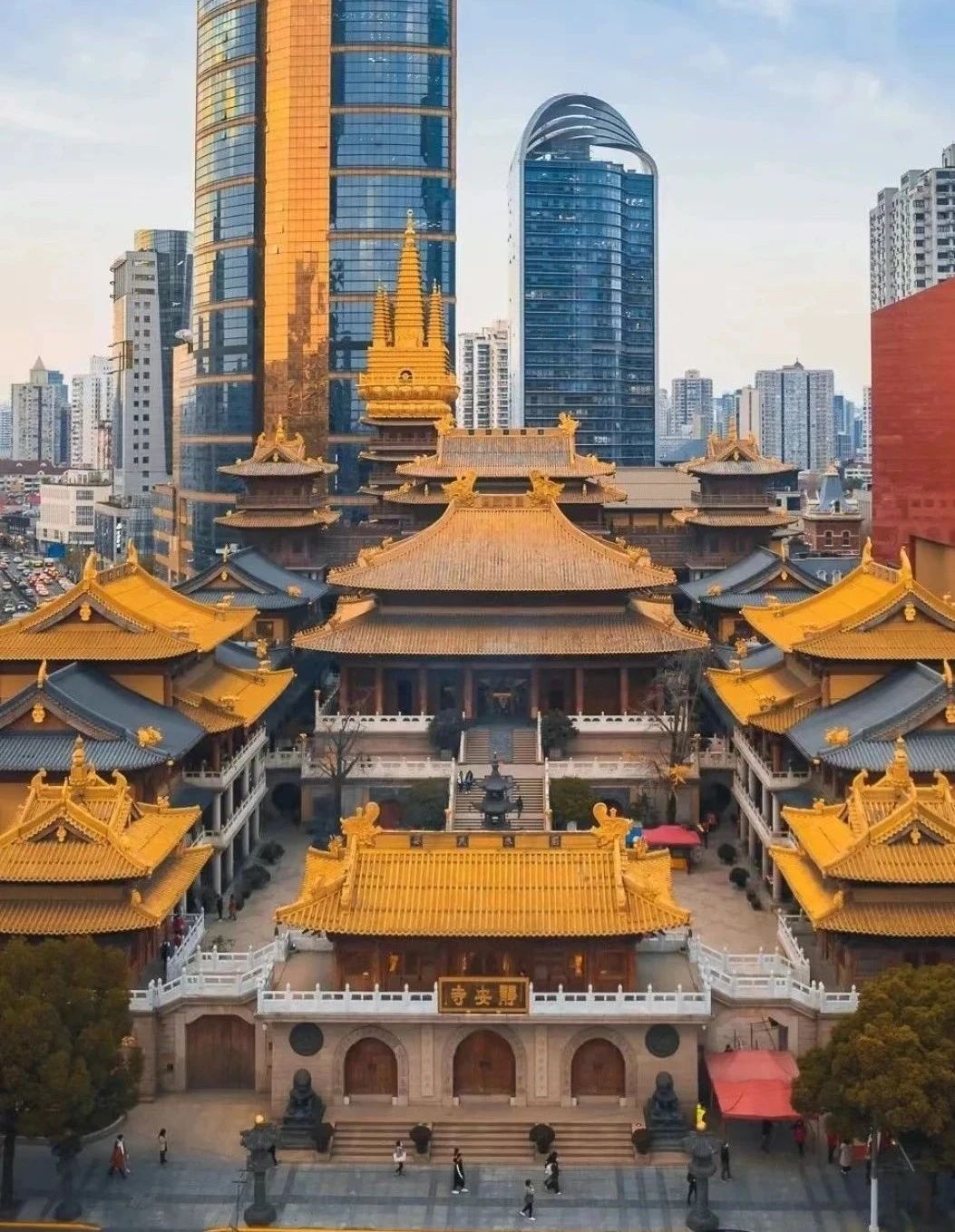
Golden rooftops against the skyline
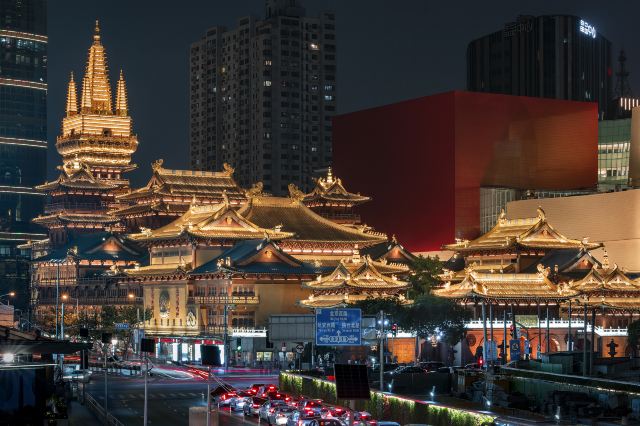
The temple's copper-tiled roofs gleam gold in sunlight, creating an extraordinary visual contrast with the glass-and-steel skyscrapers towering on every side. This surreal juxtaposition — ancient Buddhist gold architecture floating in a sea of modern luxury — is the temple's signature image and unlike anything else in Shanghai.
This is the money shot and the reason to visit. The contrast between ancient and ultra-modern is something you genuinely can't see anywhere else at this scale. Night illumination makes it even more dramatic.
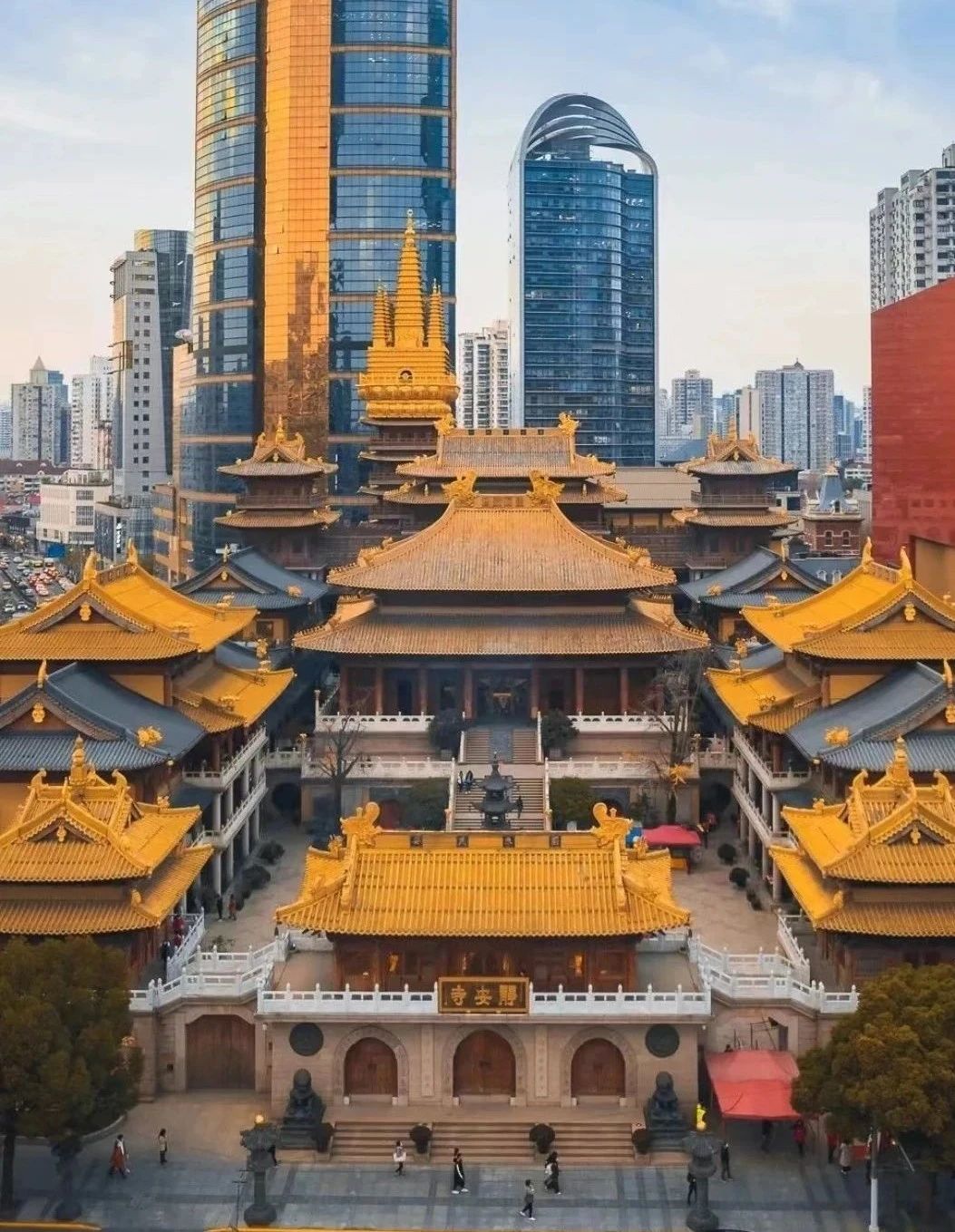 Culturally Interesting
Grand Hall (大雄宝殿) with 15-ton silver Buddha
The main hall houses a massive Shakyamuni Buddha cast from 15 tons of pure silver — one of the most valuable Buddhist statues in China. The hall itsel...
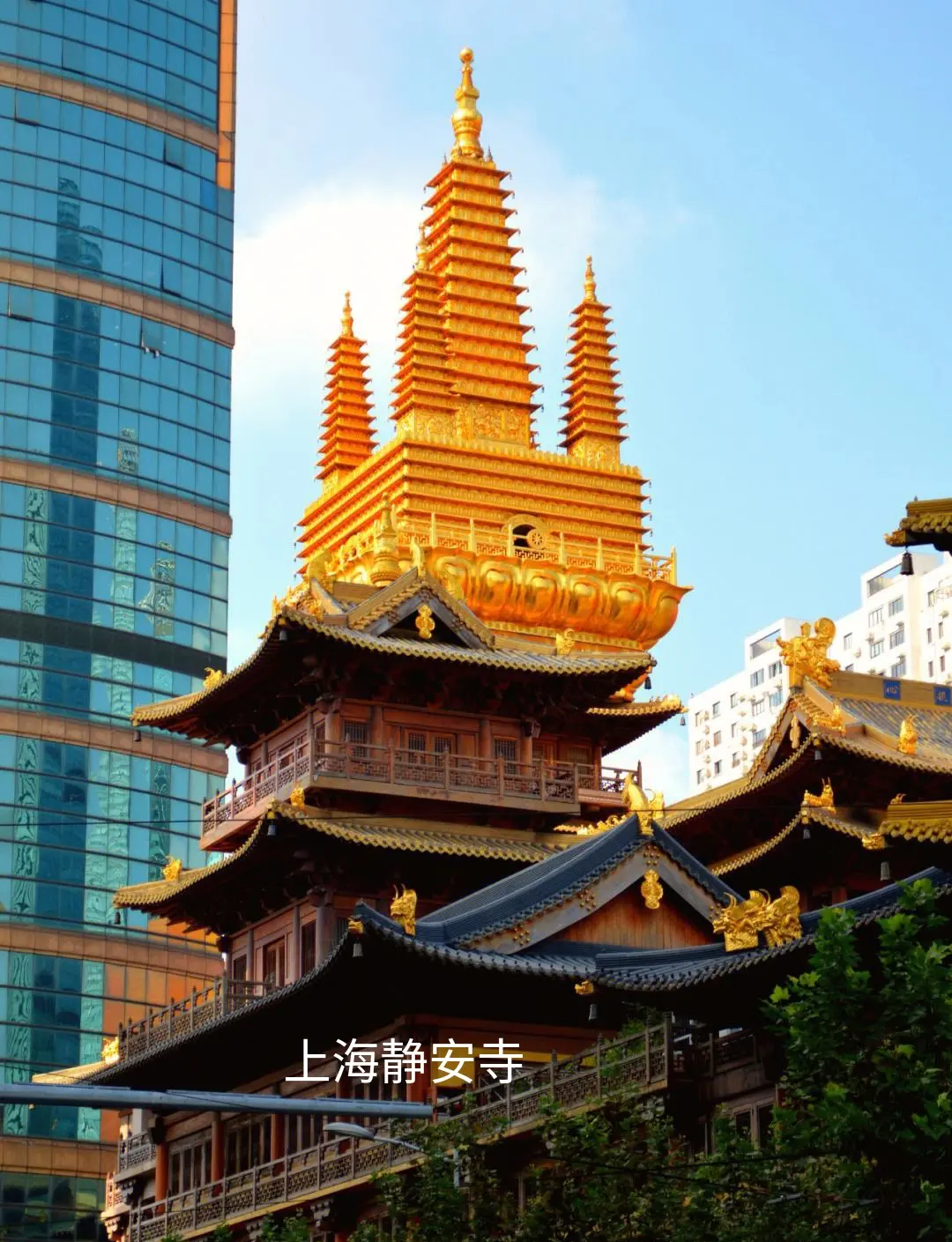 Culturally Interesting
Jade Buddha and Camphor Wood Guanyin
The side halls contain a 3.87-meter, 11-ton Burmese white jade Shakyamuni Buddha and a 6.2-meter Guanyin carved from a single millennium-old camphor t...
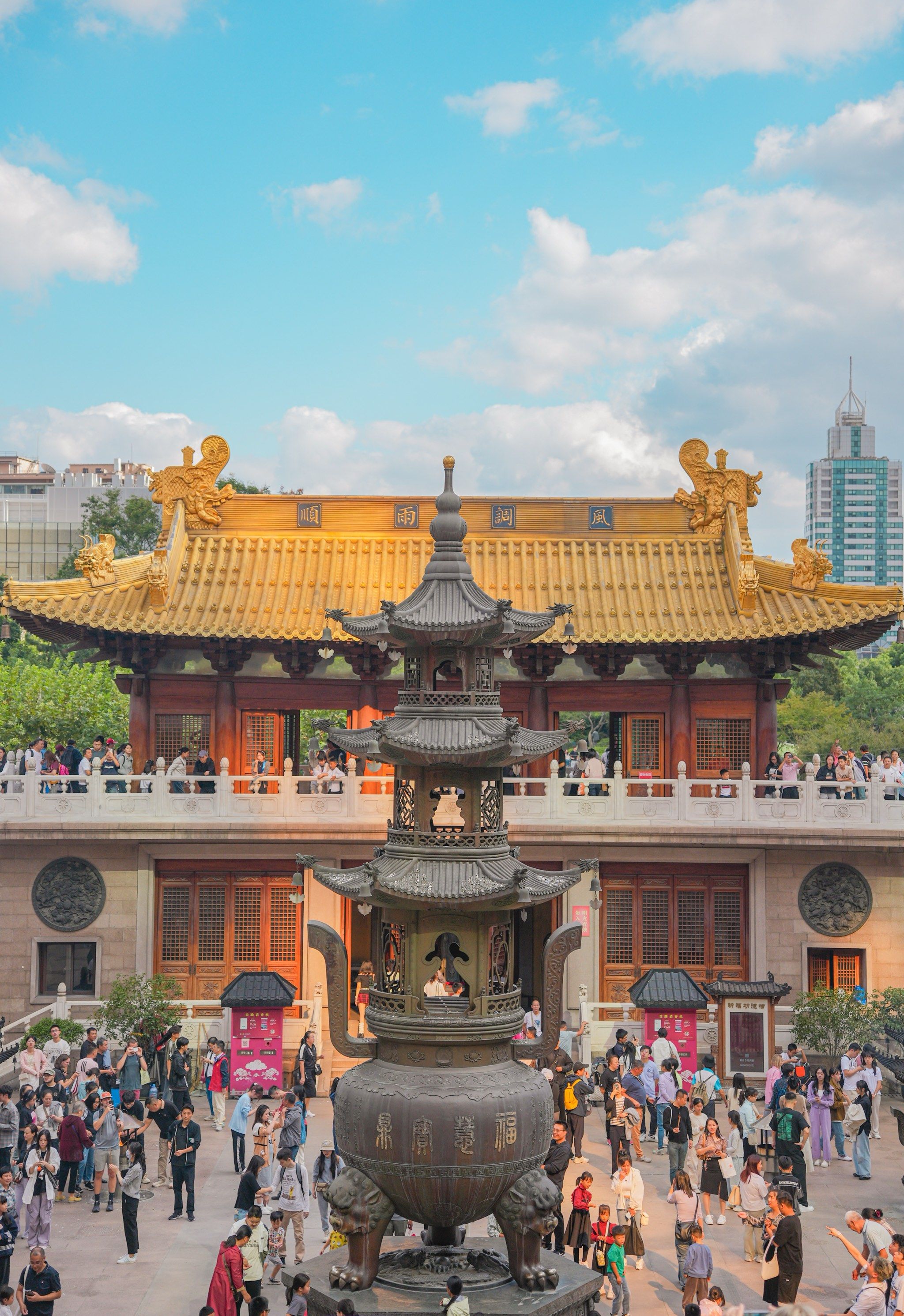 Culturally Interesting
Peace Bell (和平钟) — 7.3 tons
In the bell tower, a precisely cast 7.3-ton bronze bell produces a resonance that sustains for three minutes after being struck. It's one of the large...
What Most Visitors Miss
The night illumination of the temple exterior
Most visitors come during the day when the temple is open, but the golden roofs lit up at night against the neon skyline is arguably the most photogenic version of Jing'an Temple. You don't need a ticket — just stand outside or on the pedestrian bridge after dark.
Free admission on lunar 1st and 15th
Most tourists don't realize admission is free twice a month on the Chinese lunar calendar. Check a lunar calendar app before your trip — if your dates align, you save 50 RMB per person. Not sure if your visit falls on a free day? Message us your dates and we can check the lunar calendar for you.
The 'Sixth Spring Under Heaven' (天下第六泉)
A restored ancient spring at the base of the bell tower, historically ranked as the sixth-best spring in China for tea water. Most visitors walk right past it without realizing its historical significance.
Plan Your Visit
How Long to Visit
30-45 minutes (walk through main halls, take photos of the golden roofs
1-1.5 hours (explore all halls carefully, observe worshippers, light incense, appreciate the architecture
attend morning chanting, explore every hall, combine with shopping at adjacent malls and a walk through nearby Jing'an Park
Smart Route
Exit Metro Line 2 or 7 at Jing'an Temple Station (Exit 1 or 5)
Buy tickets at the main entrance on Nanjing West Road
Enter through the mountain gate (山门)
Bell tower (left) and drum tower (right)
Grand Hall for the silver Buddha
East hall for camphor Guanyin
West hall for jade Buddha
Exit and cross to Jing'an Park for a contrasting green space
Walk the pedestrian bridge for elevated temple photos
If evening, wait for the night illumination.
Best Time to Visit
Early morning right at 7:30 AM opening — fewer crowds, you may catch monks' morning prayers, and the morning light on the golden roofs is beautiful
Weekends mid-morning to early afternoon — heavy crowds of both tourists and worshippers
By Season
Spring
and autumn are ideal for comfortable walking weather. Summer is hot and humid in Shanghai, but the temple visit is mostly shaded.
Summer
is hot and humid in Shanghai, but the temple visit is mostly shaded. Winter is cold but the golden roofs against grey skies are dramatic.
Autumn
are ideal for comfortable walking weather. Summer is hot and humid in Shanghai, but the temple visit is mostly shaded.
Winter
is cold but the golden roofs against grey skies are dramatic. Chinese New Year and Buddha's birthday bring special ceremonies but extreme crowds.
Visit on a weekday morning, explore the temple, then cross to Jing'an Park for a quiet stroll, and finish at the pedestrian bridge nearby for an elevated photo of the temple roofs against the skyline. Return at dusk for spectacular night photography of the illuminated temple.
What to Skip
Don't spend too much time in the gift shop area — it's small and standard temple merchandise. If you're on a tight schedule, the bell and drum towers are the lowest priority compared to the three main statue halls.
Pro Tips
Bring coins to throw into the bronze tripod in the courtyard — it's a fun local tradition for good luck. Arrive early on weekdays for the most peaceful experience. Combine with Jing'an Park (free, across the street) for a full morning. The surrounding area is Shanghai's premier shopping district — Jing'an Kerry Centre, Réel, and Jiuguang Department Store are all within a 5-minute walk.
Photo Spots
Pedestrian overpass bridge near the temple
This elevated vantage point gives you the classic shot of golden roofs against the glass skyscrapers. Visit at sunset for warm light or after dark for the illuminated version.
Main courtyard looking up at the Grand Hall
Stand in the courtyard and shoot upward to capture the golden eaves, ornate brackets, and sky. Include the bronze incense tripod with smoke rising for atmosphere.
Nanjing West Road looking toward the temple
Stand on the sidewalk across the street for a wide shot showing the temple squeezed between towering modern buildings. Evening is best when both the temple and city lights are on.
Inside the courtyard at night (from outside the gate)
Even after closing, you can often see the illuminated buildings through the gate. The warm golden glow against the dark sky is magical.
Pair With
Jing'an Park (静安公园)
1-minute walk across the street
Directly across the street — a free, tranquil green space that provides a lovely contrast after the temple visit. Good for a rest or people-watching.
Nanjing West Road shopping district
Already there — the temple sits in the middle of it
Shanghai's premier luxury shopping street surrounds the temple. Jiuguang Department Store, Jing'an Kerry Centre, and Réel are right there — combine spiritual and material indulgence.
Jade Buddha Temple (玉佛禅寺)
15-minute taxi or 25-minute metro ride
If Jing'an Temple sparked your interest in Shanghai's Buddhist heritage, the Jade Buddha Temple is larger and houses two famous jade Buddha statues brought from Burma. Together they tell the story of Buddhism in modern Shanghai.
Tickets & Access
Admission (香花券)
Standard entry to all open halls
Incense (optional)
Buy at entrance if you want to participate in offerings
Free admission days
1st and 15th of each lunar month (excluding Chinese New Year)
Opening Hours
7:30 AM - 5:00 PM daily. Some visitors report being turned away by 4:30 PM. The exterior is visible and photographable 24/7, and the night illumination makes evening exterior viewing worthwhile.
How to Buy
Buy at the entrance by scanning a QR code with Alipay or WeChat Pay. Some visitors can also pay via the temple's WeChat mini-program. On-site staff assist with the process.
Passport: Not needed for ticket purchase — it's a simple QR payment. No ID verification required.
Queue Situation
Minimal queues on weekdays — walk right in. Weekend mornings can have 5-15 minute waits. Free admission days (1st/15th lunar) can see significant queues. The queue system is straightforward.
Tips & Warnings
The temple compound is smaller than expected
Multiple reviewers express surprise at the compact size relative to the 50 RMB price tag. Set expectations: this is a city-center temple, not a mountain monastery. The value is in the art quality and the urban contrast, not the acreage.
Payment can be confusing for foreigners
The ticket system uses QR code scanning that assumes you have Chinese mobile payment. Staff at the entrance can help foreigners navigate this. Have Alipay or WeChat Pay set up before you arrive. Some reports suggest cash may not be readily accepted. If you are stuck at the entrance and cannot get the payment to work, message our team — we can purchase the ticket on your behalf and send you a confirmation.
It closes earlier than you'd expect
Last entry is around 4:30 PM despite the official 5:00 PM closing. Don't plan a late afternoon visit thinking you can squeeze in at 4:45. Morning visits are better in every way.
Some visitors feel it's too commercialized
A few reviewers note the temple feels more like a paid tourist attraction than a spiritual space. If authentic temple atmosphere is your priority, you may prefer Longhua Temple or Jade Buddha Temple in Shanghai instead.
What to Bring
Wear
Dress modestly out of respect — shoulders and knees covered is appreciated though not strictly enforced. Comfortable shoes for stone-paved courtyards. No special dress code beyond basic temple courtesy.
Bring
Phone with Alipay or WeChat Pay (essential for tickets). Camera. Small coins for the tripod tradition. Tissue paper for restrooms. Water bottle — there's no water fountain inside.
Don't Bring
No need for large bags — the temple is compact. Avoid bringing food to eat inside the temple grounds.
Physical Reality
light
Very easy physically — the temple compound is flat and compact. Total walking is minimal (under 1,000 steps to see everything). Some halls have small thresholds to step over. Main pathways are stone-paved and level.
Foreigners Watch Out
- Mobile payment is essentially required — the QR code ticket system assumes Alipay or WeChat Pay. Set up one of these before visiting. Staff can help at the entrance, but having it ready saves time and frustration. If you need help getting Alipay set up on your phone, our team can walk you through it step by step via chat.
- The temple is an active place of worship. Be respectful: don't point at Buddha statues, remove hats in halls, don't step on thresholds, and keep voice levels low in prayer areas. Observe what locals do and follow suit.
- Restrooms are in the basement level. Bring your own toilet tissue — this is standard practice across China. The restroom situation here is better than most temples.
- The surrounding Jing'an area is one of Shanghai's most expensive neighborhoods. Restaurant and cafe prices nearby will be premium. Expect to pay ¥50-100+ for a simple meal in the immediate vicinity.
If Things Go Wrong
Can't get the QR code ticket to work
→ Ask the entrance staff for help — they deal with foreign visitors regularly. Try switching between Alipay and WeChat Pay. Some visitors report that Trip.com app also sells tickets. Our concierge can also buy the ticket remotely for you if the on-site options fail — just message us.
Temple is too crowded to enjoy
→ If you hit a crowd surge (weekend or holiday), focus on the side halls which are usually less packed than the Grand Hall. The jade Buddha and camphor Guanyin halls often have breathing room even when the main hall is shoulder-to-shoulder.
Arrived after closing time
→ The exterior is stunning even when closed, especially at night when the golden roofs are illuminated. Walk to the pedestrian overpass for elevated photos. The surrounding Nanjing West Road shopping district is vibrant in the evening.
Useful Chinese
Tap to reveal the English meaning