About Lingyin Temple / Temple of the Soul's Retreat
“Ancient, reverent, and surprisingly alive — incense smoke curling through massive wooden halls while monks in saffron robes pass tourists snapping photos, all wrapped in misty mountain forest.”
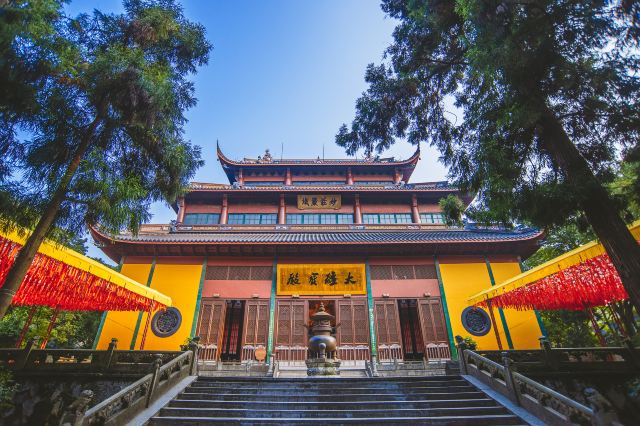
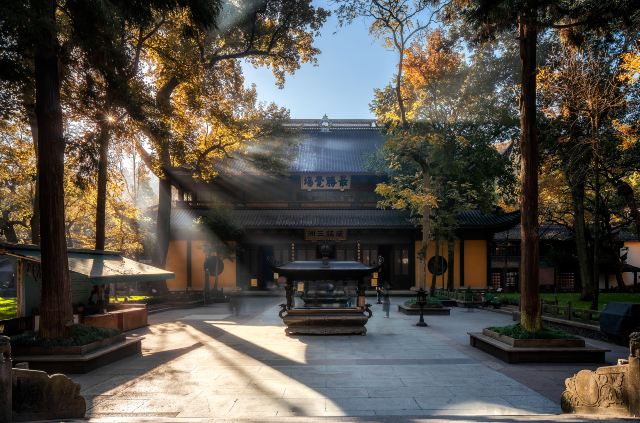
Lingyin Temple is one of China's most important and visited Buddhist temples, and it earns that status. The compound is enormous — multiple temple halls, a mountain full of ancient stone carvings (Feilai Peak), and lush forest surroundings that feel worlds away from Hangzhou's urban bustle. The 24.8-meter wooden Buddha in the Great Hall is genuinely awe-inspiring, and the 500 Arhat Hall with its individual bronze monk statues is fascinating. Feilai Peak's cliff carvings date back to the 10th century and function as an open-air sculpture museum. The temple is still an active place of worship — monks chant, incense drifts, and believers pray alongside tourists. The downside: it draws nearly 11 million visitors per year, so expect significant crowds especially on weekends and holidays. Traffic getting there can be terrible (1+ hour delays on weekends). As of December 2025, entry is free but requires advance reservation through WeChat/Alipay. Best visited early morning when the mist and quiet create the spiritual atmosphere the temple deserves.
Top Questions from Travelers
Why This Place Matters
Lingyin Temple was founded in 326 AD by the Indian monk Huili, who traveled to Hangzhou and recognized the small mountain (Feilai Peak) as resembling a peak from India — he declared it must have 'flown here' from the heavens, giving the peak its name. The temple became one of the most powerful Buddhist institutions in China, particularly during the Five Dynasties and Song Dynasty periods when Hangzhou was the imperial capital. The Qing Dynasty Emperor Kangxi visited in 1689 and renamed it 'Yunlin Chan Temple' (Cloud Forest Zen Temple). It survived the Cultural Revolution largely intact — an extraordinary feat — partly because Premier Zhou Enlai personally intervened to protect it. Today it remains one of China's most active Zen Buddhist monasteries, with a community of monks in residence.
Need help planning?
ChinaPal handles everything
- Book English-speaking guides
- Arrange transport & tickets
- Real-time help during your visit
- Restaurant reservations nearby
Highlights
4 iconic experiences that define a visit
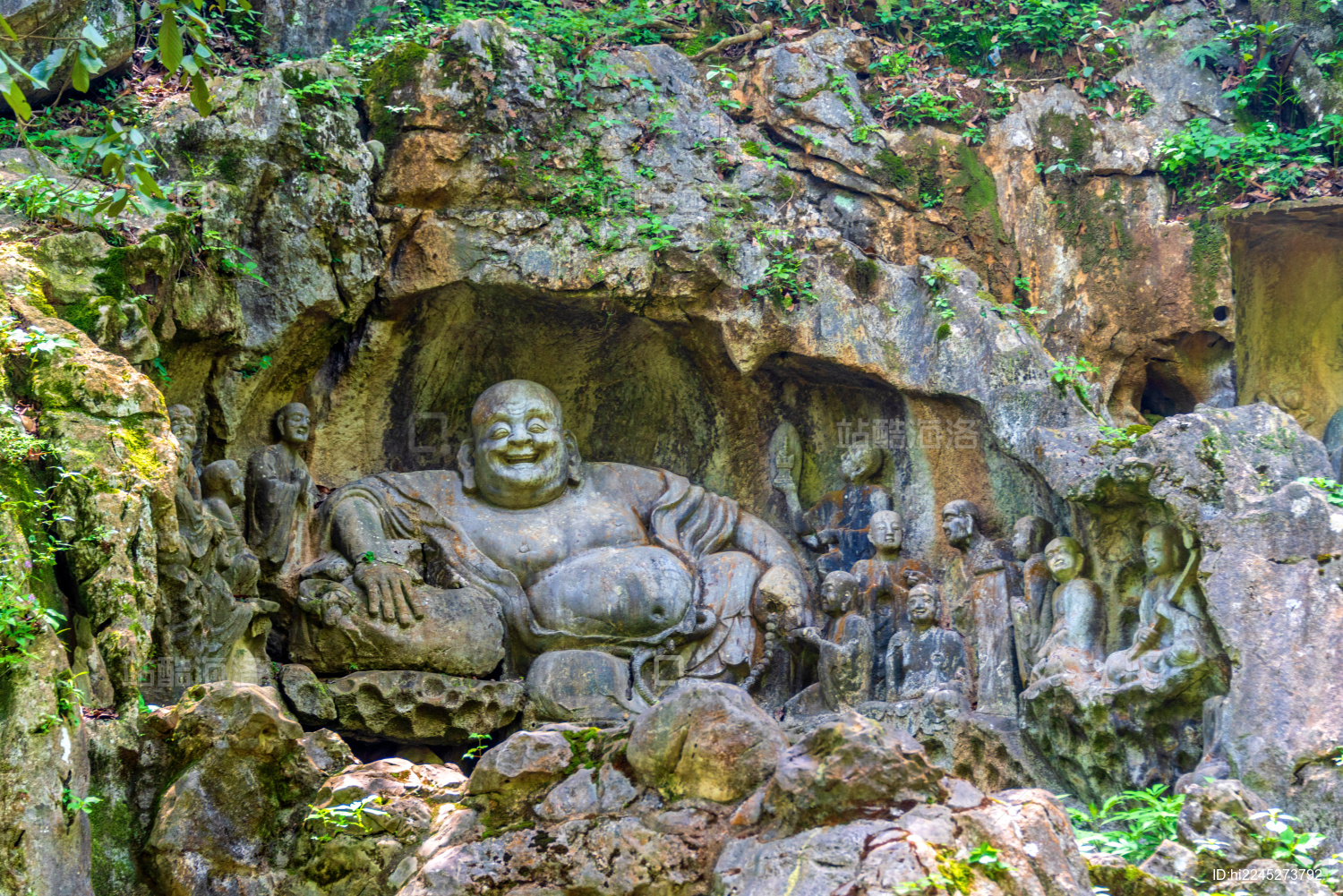
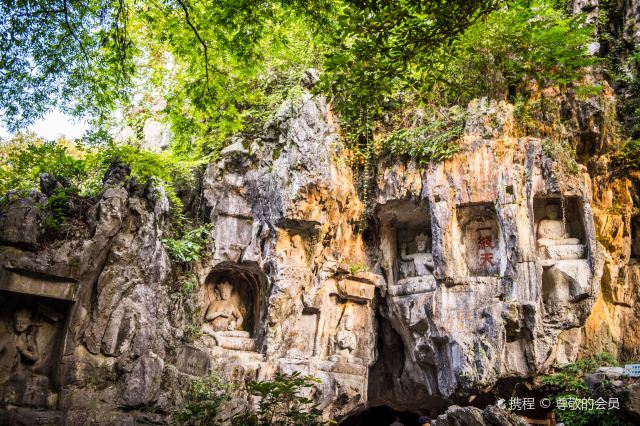
Feilai Peak stone carvings (飞来峰造像)
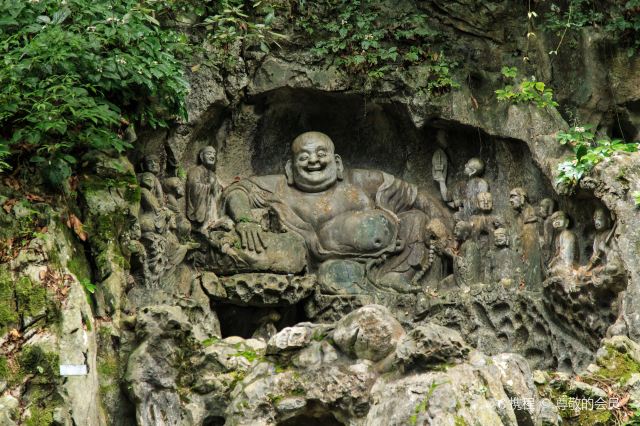
Over 340 Buddhist statues carved into cliff faces from the 10th-14th centuries — an open-air gallery of Song and Yuan dynasty art including the iconic Laughing Buddha (Maitreya), 18 Arhats, flying apsaras, and Guanyin figures. This is one of the most important grotto art sites in southern China.
The carvings span 400 years of artistic evolution and you can trace how styles changed across dynasties. The large Laughing Maitreya is the oldest known 'big belly Buddha' sculpture in China — the one that became the worldwide image of the 'Laughing Buddha.'
 Universal Appeal
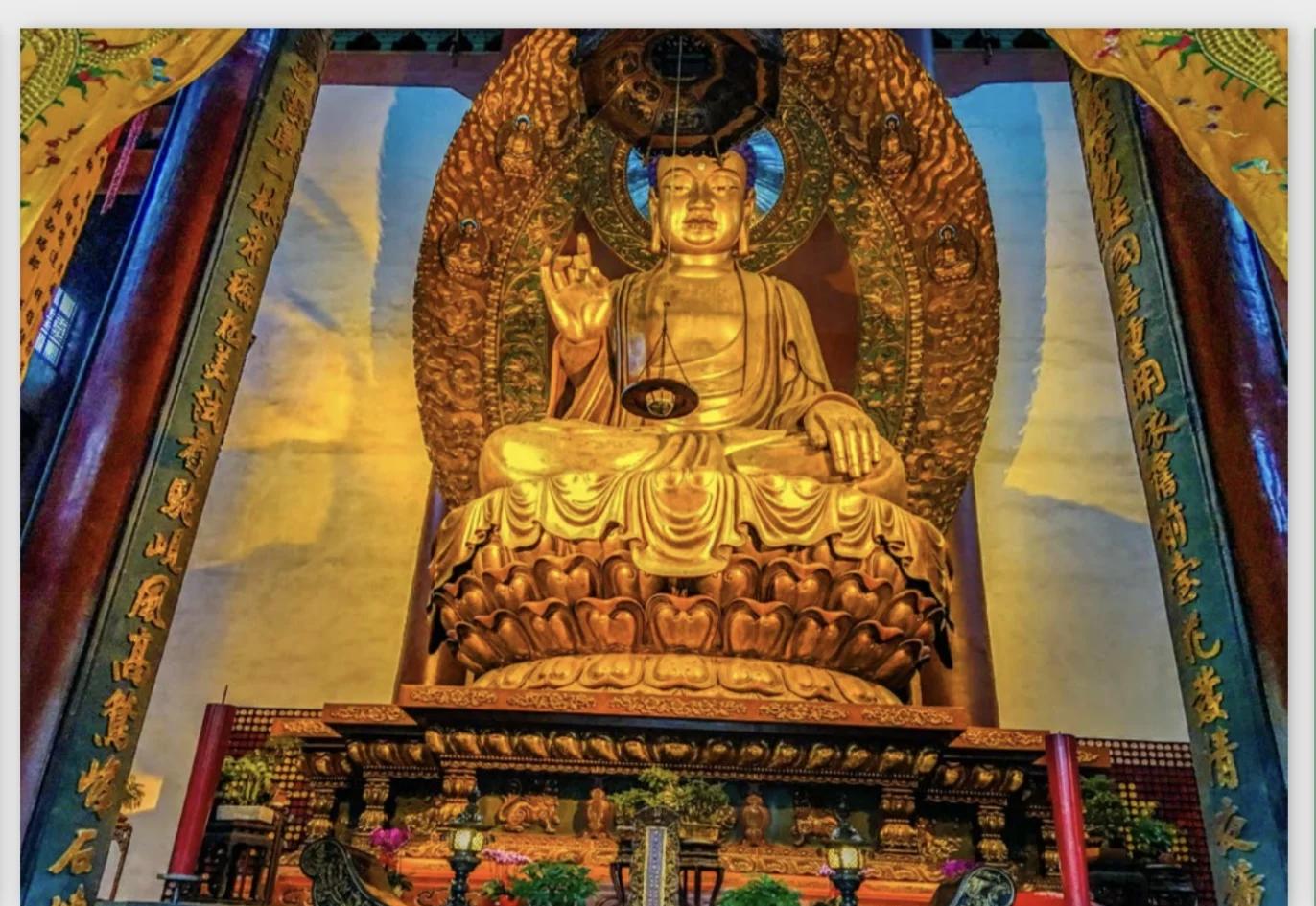
Great Hero Hall and 24.8m wooden Buddha (大雄宝殿)
The main hall houses one of China's tallest wooden Buddha statues — a 24.8-meter camphorwood Sakyamuni in lotus position. Behind it, the 'Island of Bu...
 Universal Appeal
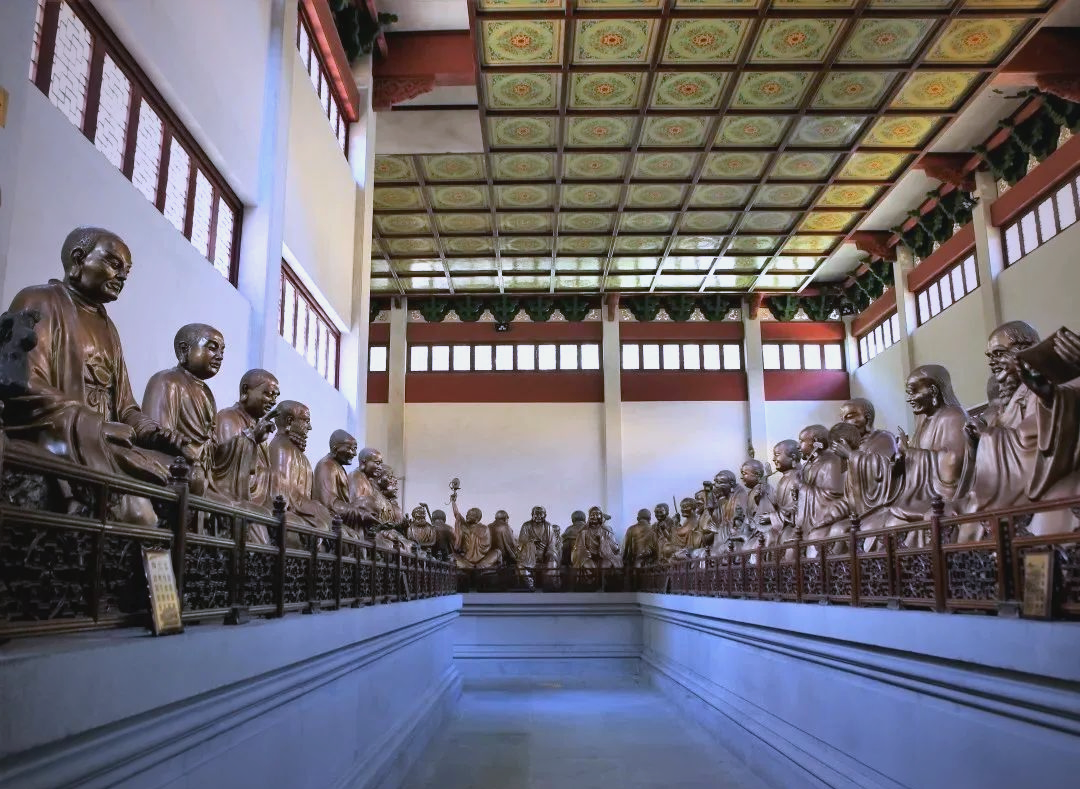
Five Hundred Arhat Hall (五百罗汉堂)
A hall containing 500 individually crafted bronze statues of Buddhist arhats (enlightened monks), each with a unique face, pose, and expression. You c...
 Culturally Interesting
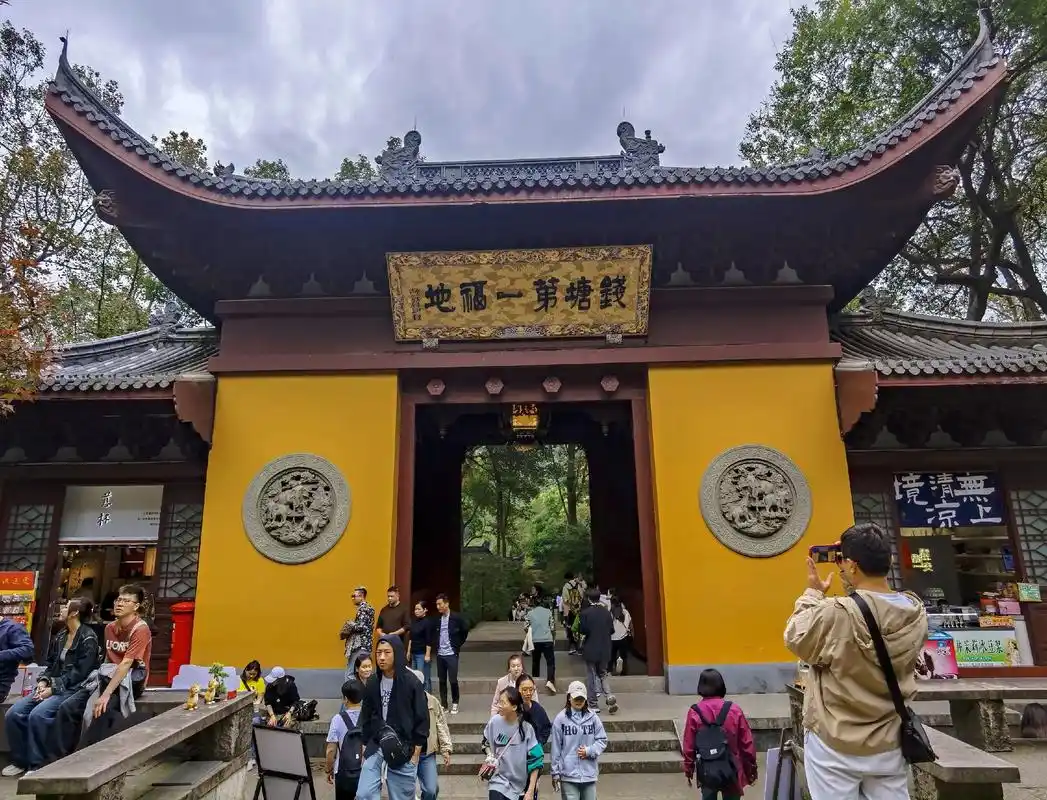
Yongfu Temple (永福寺)
A quieter, more contemplative temple higher up the mountain within the same scenic area. Less crowded than Lingyin with beautiful gardens, tea houses,...
What Most Visitors Miss
The 700-year-old Weituo statue in the Heavenly King Hall
Behind the Laughing Buddha in the entrance hall, facing inward, is a rare Southern Song dynasty Weituo guardian figure carved from camphorwood — over 700 years old and one of the most important wooden sculptures in China. Most visitors walk right past it.
Taoguang Temple and the mountain trails above
The highest temple in the complex, with panoramic views of the surrounding mountains and a lovely tea house. Almost empty compared to Lingyin below. The trail up is shaded and peaceful.
The vegetarian noodle shop outside the temple
A simple noodle stall near the entrance sells素面 (vegetarian noodles) that multiple reviewers describe as 'simple and delicious.' It's a beloved Lingyin tradition — eat a bowl after your visit.
Plan Your Visit
How Long to Visit
1.5-2 hours (Feilai Peak carvings + Lingyin Temple main halls
Feilai Peak + all Lingyin Temple halls including 500 Arhat Hall + brief garden exploration
Full day (Lingyin Temple + Yongfu Temple + Taoguang Temple + hiking up North Peak + tea at a nearby temple cafe
Smart Route
Arrive at 7:30 AM opening
walk through Feilai Peak stone carvings along the stream path
enter Lingyin Temple main compound
Great Hero Hall (front and back)
Five Hundred Arhat Hall
continue uphill to Yongfu Temple for tea and quiet
optionally continue to Taoguang Temple
descend and eat vegetarian noodles near the exit. By starting early, you'll experience the spiritual morning atmosphere and finish the main temple before crowds peak around 10 AM.
Best Time to Visit
Arrive at opening (7:30 AM) for the most serene experience — morning mist among the peaks, far fewer visitors, and the sound of monks' morning chanting
Weekend afternoons and any Chinese public holiday — the temple can receive 50,000+ visitors in a single day
By Season
Spring
(March-May) is the most beautiful — cherry blossoms and magnolias bloom throughout the grounds, mist creates ethereal atmosphere. Autumn (September-November) has clear weather and red maple leaves.
Summer
is hot and humid. Winter is cold but offers the most peaceful visits with fewest crowds.
Autumn
(September-November) has clear weather and red maple leaves. Summer is hot and humid.
Winter
Rainy days are actually ideal — the temple in rain or light mist is hauntingly beautiful and visitor numbers drop dramatically. Bring an umbrella and embrace the atmosphere.
What to Skip
The incense vendors outside the gate — free incense is provided inside the temple. The gift shops inside are overpriced. Don't try to drive there on weekends — the traffic is legendary. Use public transport or taxi and walk the last stretch.
Pro Tips
The temple offers a free incense-lighting experience inside — look for the distribution point after entering. If you're interested in Buddhism, morning chanting sessions are open to visitors (arrive before 7:30 AM). The Cold Spring Pavilion (冷泉亭) near the stream is a peaceful rest spot. Take bus Y1 or Y2 to the entrance to avoid traffic gridlock.
Photo Spots
Feilai Peak Laughing Buddha carving
The iconic rotund Maitreya is best photographed in morning light. Stand across the stream for the classic composition with water in foreground.
Great Hero Hall exterior with incense smoke
Early morning when monks light the first incense creates atmospheric smoke drifting across the grand hall facade. Use natural mist and smoke for ethereal shots.
Feilai Peak stream path
After rain, the mossy stones and flowing water alongside ancient carvings create magical forest temple imagery.
Pair With
West Lake (西湖)
15 minutes by bus or taxi
Hangzhou's defining attraction is just 3 km east. After the mountain temple, the peaceful lakeside walk and boat rides offer a different kind of beauty. Classic Hangzhou day: Lingyin Temple morning, West Lake afternoon.
Longjing Tea Plantation (龙井茶园)
10 minutes by taxi
One of China's most famous tea-growing areas is on the hillside between Lingyin Temple and West Lake. Stop for a tea tasting and learn about Dragon Well green tea.
Meijiawu Tea Village (梅家坞)
10 minutes by car
A picturesque tea village just west of the temple area, offering farm-to-cup Longjing tea experiences in a tranquil hillside setting. Perfect afternoon extension.
Tickets & Access
Feilai Peak Scenic Area + Lingyin Temple
Reservation required via WeChat/Alipay mini-program at least 1 day in advance
Yongfu Temple (永福寺)
Beautiful quieter temple higher up the mountain
Taoguang Temple (韬光寺)
Highest temple with mountain views
Guided tour (English)
Available via Klook or private guides — highly recommended for cultural context
Opening Hours
Daily 7:30-18:00 (last entry 17:30). During national holidays, opens 30 minutes earlier and closes 30 minutes later.
How to Buy
WeChat/Alipay mini-program '杭州灵隐飞来峰'. For foreigners who can't access these apps, ask your hotel concierge to book, or use Trip.com/Klook for guided visit packages that handle the reservation.
Passport: Yes — passport is needed for the reservation. Some reports indicate foreigners can present passport at the entrance if unable to use the mini-program, but this is not guaranteed.
Queue Situation
The entrance queue can be long on weekends (30-60 minutes) even with reservations, as staff check QR codes. Weekday mornings have minimal waits. Traffic getting to the temple area is often worse than the queue itself — allow extra time.
Tips & Warnings
Traffic getting to the temple is notoriously terrible on weekends
The roads to Lingyin Temple gridlock on weekends and holidays — a 20-minute drive can become 1.5 hours. Take the Y1 or Y2 tourist bus, metro + bus combination, or arrive by taxi before 8 AM. After 4 PM, getting a DiDi/taxi out is equally difficult. If you'd rather avoid the traffic headache entirely, our team can arrange early-morning transport that gets you there before the gridlock starts.
The reservation system excludes same-day bookings
You must book at least 1 day in advance through the WeChat/Alipay mini-program. If you arrive without a reservation, you will be turned away. Plan ahead.
The complex involves a lot of stairs and uphill walking
Wear comfortable shoes. The path to Yongfu and Taoguang temples involves sustained uphill climbing. There is no shuttle or cable car within the Lingyin complex itself (there is a cable car to North Peak, but that's a separate experience).
Very limited English interpretation
Without a guide, you'll see beautiful architecture and statues but miss the rich historical and spiritual context. Book an English-speaking guide through Klook or hire one at the entrance for ¥150-300. Our team can connect you with a vetted English-speaking guide who specializes in Buddhist temple history.
What to Bring
Wear
Modest clothing covering shoulders and knees (this is a religious site). Comfortable walking shoes for stairs and mountain paths. Layers — the forested mountain area is cooler than the city.
Bring
Passport/ID matching your reservation. Water. Camera (no flash inside halls). Umbrella — mountain weather changes quickly. Cash for vegetarian noodles and tea.
Don't Bring
Revealing clothing. Large tripods (impractical in crowds). Meat or alcohol (out of respect for the Buddhist environment).
Physical Reality
moderate
The Feilai Peak path and main Lingyin Temple halls are mostly flat with some stairs. The walk up to Yongfu and Taoguang temples involves significant stair climbing (300+ steps). Total walking distance for the full complex is 3-5 km with elevation changes.
Foreigners Watch Out
- The free-entry reservation system requires WeChat or Alipay mini-programs, which most foreigners don't have. Ask your hotel to make the reservation using your passport number, or book a guided tour through Klook/Trip.com that includes entry. Our concierge can make the reservation for you using your passport number — just message us with your preferred date and we'll handle it.
- No-show penalties are strict: missing your reservation without cancelling suspends your booking privileges for 30 days (first offense), 60 days (second), 90 days (third).
- Payment for any purchases inside (vegetarian meals, tea, souvenirs) is almost exclusively mobile payment. Bring cash as backup.
- The temple is sacred — avoid wearing revealing clothing, don't sit on altar steps, don't point at Buddha statues, and step over (never on) the high wooden thresholds of temple doors.
- Be wary of 'monks' outside the temple grounds who approach offering blessings and then demand money — legitimate monks do not solicit on the street.
If Things Go Wrong
Can't make a reservation through the mini-program as a foreigner
→ Ask your hotel front desk to make the reservation for you using your passport number. Most Hangzhou hotels are familiar with this process. Or message our concierge directly — we can make the reservation on your behalf within minutes.
Stuck in traffic getting to or from the temple
→ If going: get out of the car/taxi and walk the last 1-2 km — it's often faster. If leaving: walk to the main road (Lingyin Road) and take bus Y1/Y2 toward the city, or walk to the nearby botanical garden area and get a taxi from there.
Useful Chinese
Tap to reveal the English meaning