About Reed Flute Cave
“An underground disco meets natural history museum — nature's 180-million-year masterpiece lit up like a nightclub, where every stalactite gets a name, a story, and its own colored spotlight.”
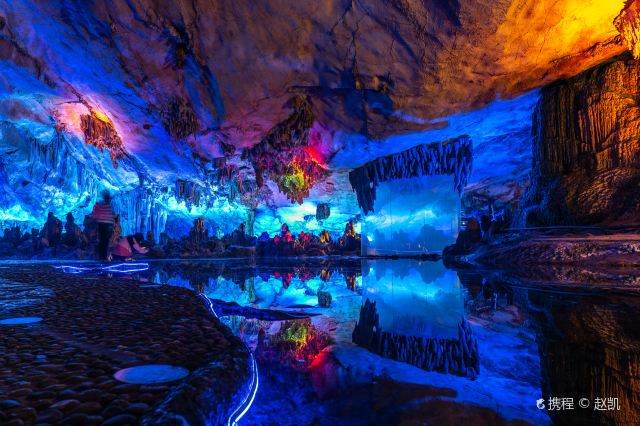
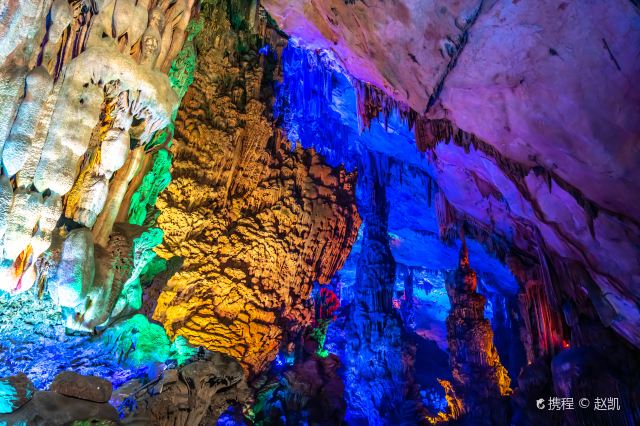
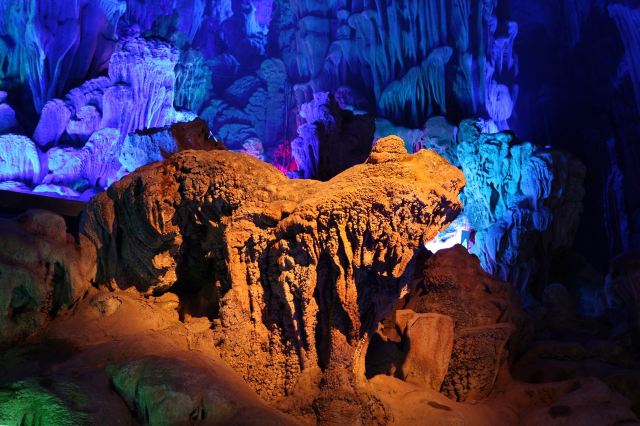
Reed Flute Cave is Guilin's most famous underground attraction — a 500-meter U-shaped walking route through a massive limestone cave system filled with stalactites, stalagmites, stone pillars, and rock formations, all illuminated by intensely colorful LED lighting. The cave has been a tourist attraction for over 1,200 years, with Tang Dynasty (792 AD) ink inscriptions still visible on the walls. The formations are genuinely impressive — some pillars soar 30+ meters, and the Crystal Palace chamber is breathtakingly large. A free Chinese-language guided tour accompanies each group, pointing out formations that resemble animals, landscapes, and mythological scenes. The cave's biggest polarizing factor is the lighting: some visitors find the rainbow-colored LEDs magical and enhancing, while others think it makes the cave look artificial and kitschy. If you prefer caves in their natural state, this may disappoint. If you appreciate the spectacle and theatricality, you'll love it. The cave is commercially managed with a clear tourist infrastructure — including a monorail to the entrance, gift shops, and somewhat aggressive vendors on exit. At 90 RMB, it's moderately expensive for what amounts to a 60-90 minute visit. Still, it's a unique Guilin experience and the formations themselves are objectively spectacular.
Top Questions from Travelers
Why This Place Matters
Reed Flute Cave gets its name from the reeds growing at its entrance, which locals historically used to make flutes. The cave's documented tourist history stretches back over 1,200 years — Tang Dynasty poets and officials left their marks on the walls in ink, making it one of China's longest-running tourist destinations. In the 1940s, the cave served as a refuge for civilians fleeing Japanese bombing. After 'rediscovery' in 1959 and official opening in 1962, the cave became a showcase for visiting dignitaries — over 100 heads of state have toured it, earning it the nickname 'State Guest Cave' (国宾洞). Nixon's visit in 1972 put it on the international map. The cave represents a distinctly Chinese approach to natural wonders — rather than preserving them in a raw state, the tradition is to enhance and interpret them through lighting, naming, and storytelling, turning geology into narrative art.
Need help planning?
ChinaPal handles everything
- Book English-speaking guides
- Arrange transport & tickets
- Real-time help during your visit
- Restaurant reservations nearby
Highlights
3 iconic experiences that define a visit
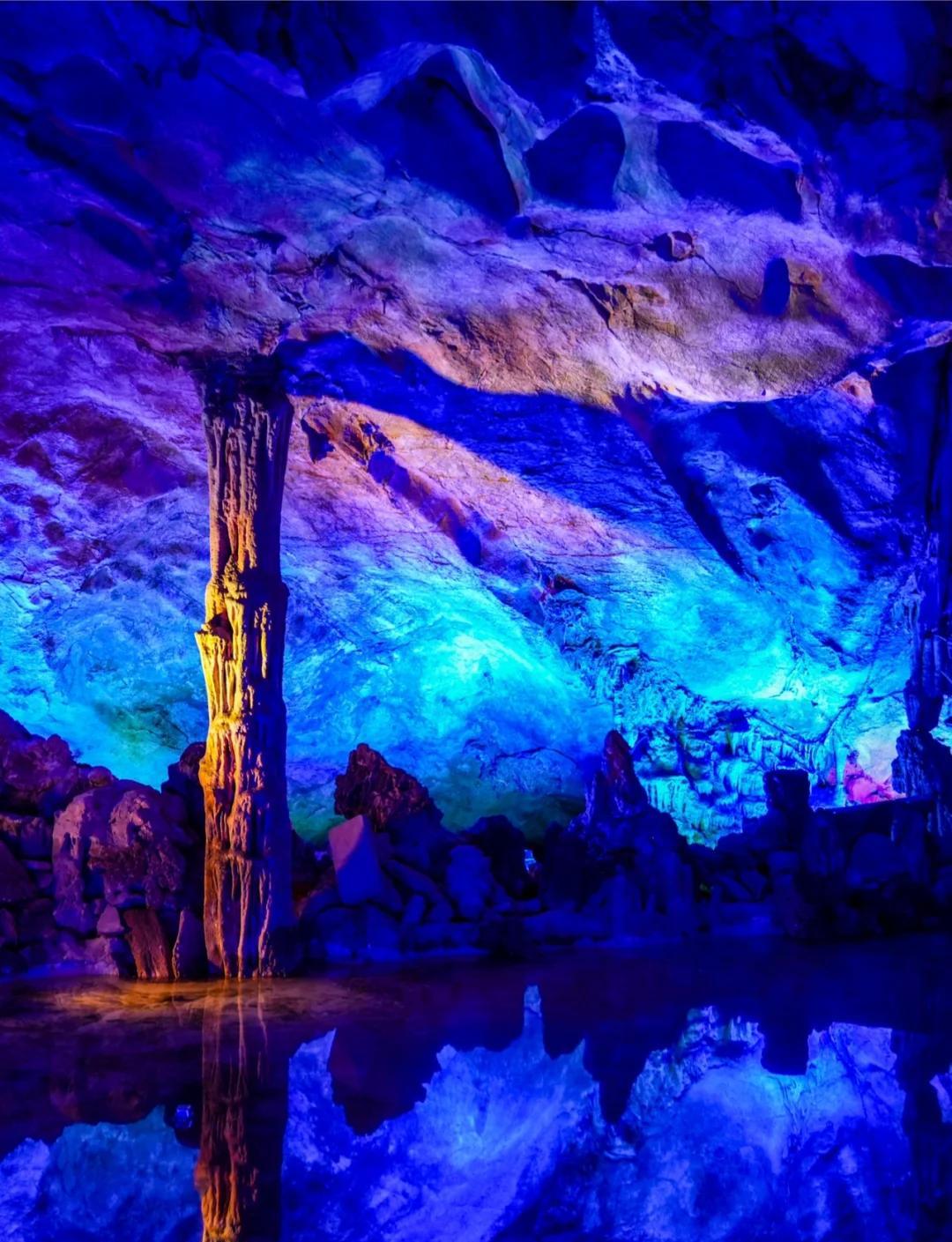
Crystal Palace (水晶宫)
The cave's largest and most spectacular chamber — a vast underground space where stalactites hang like enormous chandeliers from the ceiling, illuminated to create the effect of a glittering palace. The scale of this chamber is genuinely jaw-dropping.
Even if you're not a fan of the colored lighting elsewhere in the cave, the Crystal Palace's sheer scale and density of formations is objectively impressive. This is the photo-worthy centerpiece of the visit.
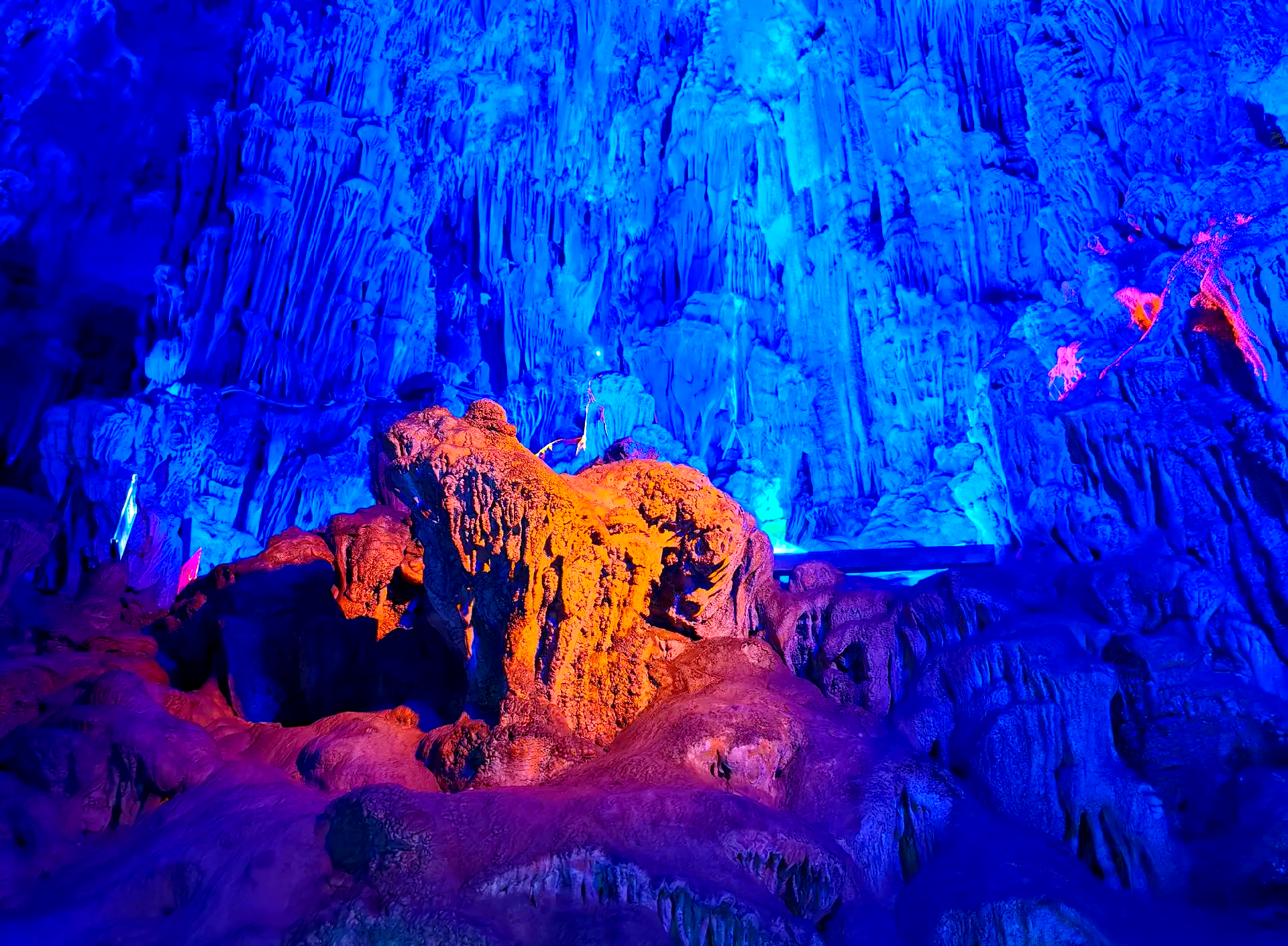 Culturally Interesting
Tang Dynasty inscriptions (唐代壁书)
Over 70 inscriptions in ink on the cave walls date back to the Tang Dynasty (as early as 792 AD), making this one of China's longest-documented touris...
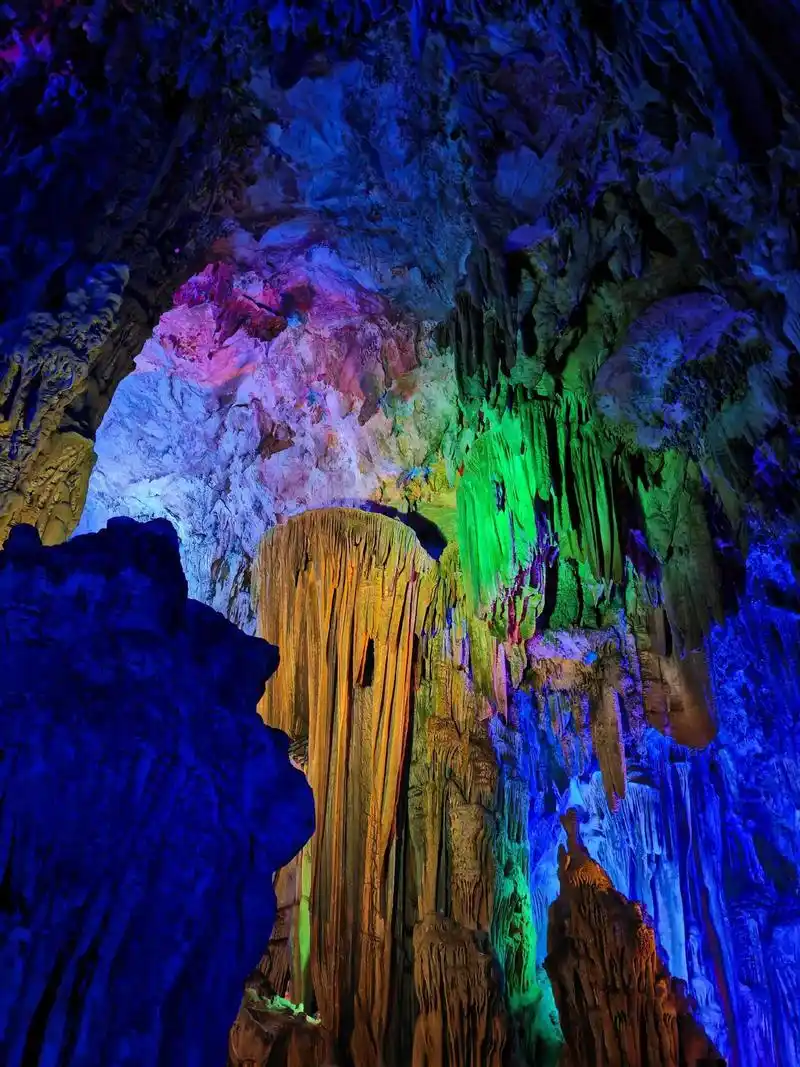 Culturally Interesting
Flower and Fruit Mountain & other named formations
The cave features dozens of formations named for their resemblance to animals, people, landscapes, and mythological scenes — lions, mushrooms, a hermi...
What Most Visitors Miss
The outdoor scenery around the cave entrance
The surrounding Ludi Park has beautiful karst hill views and a scenic lake that most visitors rush past. The views from the hillside near the cave entrance are quintessential Guilin scenery.
The cave's natural temperature as a summer escape
The cave maintains 20°C year-round — a blessed relief during Guilin's sweltering summer. Some locals visit primarily for the natural air conditioning rather than the formations.
Lujia Village nearby for authentic Guilin rice noodles
The nearby village has simple restaurants serving excellent Guilin mifen (rice noodles) at local prices, far better and cheaper than tourist area restaurants.
Plan Your Visit
How Long to Visit
cave tour only, straight through
1.5-2 hours (cave tour + time for photos + surrounding park area
2.5-3 hours (cave tour + monorail + exploring Ludi Park + snack stop at nearby Lujia Village
Smart Route
Take Bus No. 3 or a taxi to the cave
Skip the monorail and walk up to the entrance (10-minute uphill walk, good exercise)
Join the guided cave tour
Take your time in the Crystal Palace for photos
Exit through the gift shop area
Walk down to Lujia Village for rice noodles before heading to your next destination.
Best Time to Visit
Arrive around 11:00 AM - 12:00 PM to avoid the worst crowds (peak is around 2 PM)
Afternoon (2:00-4:00 PM) when tour groups flood in
By Season
Spring
The cave is comfortable year-round since it maintains a constant 20°C
Summer
April-May and September-October offer the best weather for the outdoor portions
Autumn
Summer (June-August) is Guilin's rainy season but the cave is unaffected by rain
Winter
Visit at opening time (8:00 AM in winter, 7:30 AM in summer) for the smallest crowds. You'll have more space to photograph formations without other tourists in your shots.
What to Skip
The monorail/tram to the entrance — it's overpriced for a short ride and the walk is manageable. The 'secret garden' add-on section that some ticket sellers upsell — it's underwhelming laser lights and not worth the extra cost. The exit area gift shops and herbal medicine sellers — several visitors report aggressive sales tactics and overpriced products.
Pro Tips
Book your ticket through Trip.com or a travel agent for a small discount versus the walk-up price. The cave is best paired with Elephant Trunk Hill for a complete Guilin day. Wear shoes with serious grip — the cave floor gets genuinely slippery from constant dripping water.
Photo Spots
Crystal Palace chamber
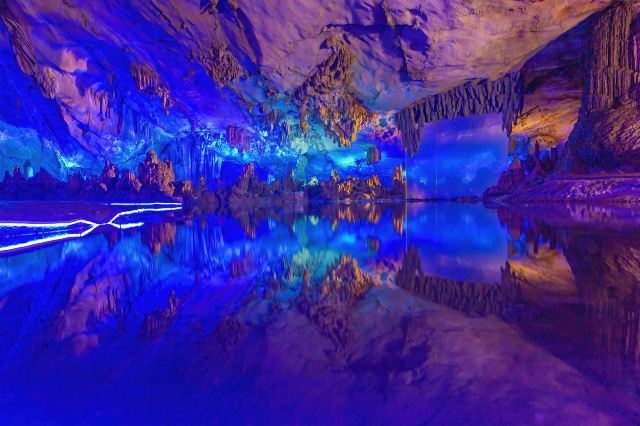
Use your phone's night/low-light mode. The reflections in the still water on the chamber floor create stunning mirror effects. Position yourself near the water for double-exposure compositions.
The reflective pool section
One visitor described rounding a corner and thinking they were looking into a deep abyss — it was actually a shallow reflective pool mirroring the stalactites above. This optical illusion makes for mind-bending photography.
Outside the cave — hilltop views of Guilin karst scenery
Before or after entering the cave, take a moment at the hilltop entrance area to photograph the surrounding karst hills and Peach Blossom River. Late afternoon light is best.
Pair With
Elephant Trunk Hill (象鼻山)
20-minute taxi ride to central Guilin
Guilin's most iconic landmark — the elephant-shaped karst hill is a natural pairing for a Guilin city sightseeing day.
Li River Cruise (漓江)
30 minutes to the cruise departure point
The quintessential Guilin experience — a boat cruise through dramatic karst mountains to Yangshuo. Perfect for the day after visiting Reed Flute Cave.
Seven Star Park (七星公园)
25-minute taxi ride east
Another major Guilin city attraction with caves, karst peaks, and gardens — can be combined with Reed Flute Cave for a full day of Guilin city sightseeing.
Tickets & Access
Adult entrance ticket
Includes free Chinese-language guided tour inside cave
Half-price ticket (students, seniors, etc.)
Students with valid ID, seniors 65+
Sedan chair ride to entrance
For those unable to climb stairs to cave entrance
Monorail/tram to entrance
Saves climbing the hill — not essential for most visitors
Opening Hours
April-November: 7:30 AM - 6:00 PM. December-March: 8:00 AM - 5:30 PM.
How to Buy
Walk-in ticket purchase at the cave entrance. Also available on Trip.com, Meituan, or through Guilin hotel concierges.
Passport: Yes — foreign passports accepted for ticket purchase.
Queue Situation
Groups enter every 20-30 minutes. During peak season/holidays, waits of 30-60 minutes are common. Off-peak weekday mornings have minimal waits.
Tips & Warnings
The colored lighting is polarizing
If you prefer natural cave experiences, the rainbow LED lighting will feel kitschy and artificial. Go in expecting a spectacle rather than a nature experience, and you'll enjoy it more. The formations themselves are genuinely world-class — the lighting is just the presentation layer.
Can be very crowded and noisy
Tour groups with amplified megaphone guides create a lot of noise in the echoing cave. Management is trying to switch to whisper headsets but progress is slow. Visit early morning on weekdays for the quietest experience.
Aggressive vendors at the exit
Multiple visitors report pushy sellers of herbal medicine, pearl jewelry, and souvenirs at the exit area. One visitor reported a friend being 'scammed' into buying overpriced items. Walk through firmly and politely decline. Don't feel pressured. If you feel pressured or uncomfortable, message our team — we can call the vendor on your behalf or help you report the situation.
Many stairs and slippery surfaces inside
The cave involves significant stair climbing (up and down) on wet, potentially slippery surfaces. Not suitable for visitors with serious mobility issues. Sedan chair service (¥300 each way) can get you to/from the entrance but the interior still has stairs. If someone in your group can’t manage the stairs, message us and we’ll suggest alternative Guilin attractions that suit their mobility level.
What to Bring
Wear
Sneakers or hiking shoes with excellent grip — this is non-negotiable due to the wet cave floor. Bring a light jacket or sweater as the cave is 17-20°C regardless of outside temperature. Avoid flip-flops, sandals, or heels.
Bring
Camera (no flash). Water bottle. Light jacket. Small flashlight or phone torch (lighting may be dim between sections). Cash for sedan chair or monorail if needed.
Don't Bring
Umbrellas (not needed inside). Large bags (cumbersome in narrow passages). Flash photography equipment.
Physical Reality
moderate
The route involves approximately 500 meters of walking with significant stair sections — both ascending and descending. The path is paved but frequently wet and slippery from dripping water. Low headroom in some sections requires ducking. The uphill walk from parking to cave entrance adds another 10 minutes of climbing (avoidable via monorail). Total step count is roughly 3,000-5,000 including all stairs.
Foreigners Watch Out
- The guided tour is in Chinese only. English audio guides or English-speaking guides are limited — ask at the ticket office for availability or arrange in advance through a tour company.
- Photography is allowed but flash is prohibited — it damages the formations and startles other visitors in the dark cave. Your phone's night mode will produce better results than flash anyway.
- The ticket price for foreigners is the same as for Chinese visitors. Student discounts require a valid student ID (international student cards generally accepted).
- The cave is not wheelchair accessible — there are many stairs with no elevator alternative inside the cave itself.
If Things Go Wrong
The cave is too crowded to enjoy
→ Let your tour group pass ahead and linger in each chamber for a few minutes before the next group catches up. The gaps between groups provide brief windows of relative solitude.
Can't handle the stairs or slippery conditions
→ Hold the handrails, wear grippy shoes, and take it slowly. The sedan chair service can get you to and from the entrance, but the cave interior stairs cannot be avoided.
Useful Chinese
Tap to reveal the English meaning