
About Longji Rice Terraces / Dragon's Backbone Rice Terraces
“Awe-inspiring, remote, and grounding — like discovering that an entire mountainside is a work of art made by human hands over centuries, with wisps of cloud drifting through rice paddies and roosters crowing from wooden stilt houses.”
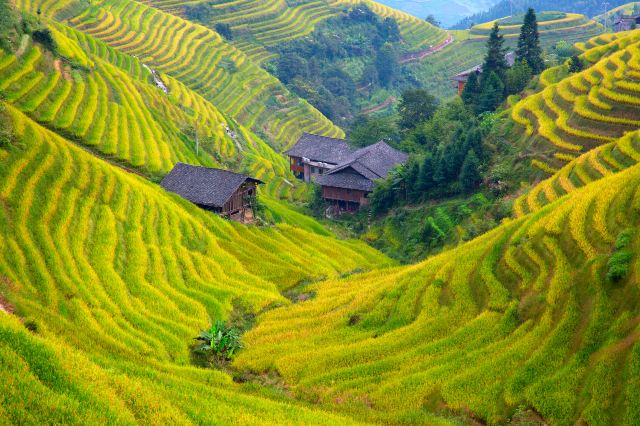
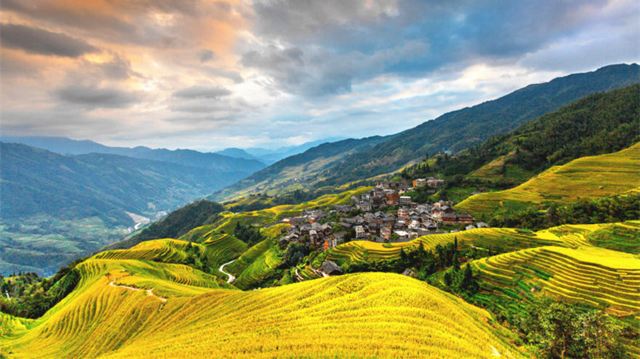
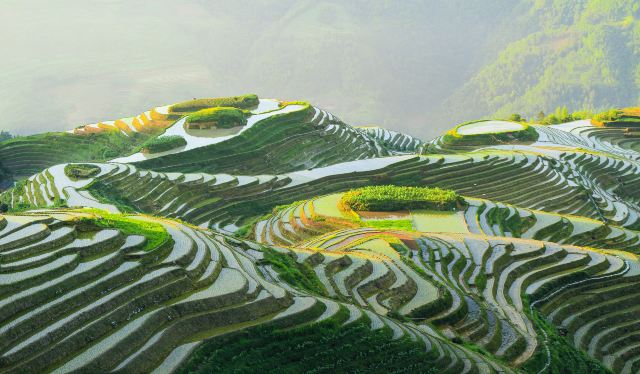
The Longji Rice Terraces are genuinely jaw-dropping in scale — 66 square kilometers of terraced fields sculpted into steep mountainsides over 700+ years by Zhuang and Yao ethnic minorities. The terraces look different every season: flooded mirror pools in spring, lush green in summer, golden at harvest in autumn, and occasionally snow-dusted in winter. There are three main areas: Ping'an (most accessible, best for day trips), Jinkeng/Dazhai (largest, most dramatic, has a cable car), and Ancient Zhuang Village (smallest, least touristy). The hiking is the main activity — paved stone paths wind through terraces and villages, with viewpoints at the top offering panoramic views. However, getting here is a 2-2.5 hour drive from Guilin on winding mountain roads, the last stretch on narrow switchbacks that can cause car sickness. Stairs are steep and numerous — this is genuinely not suitable for people with mobility issues. An overnight stay is strongly recommended (and pretty much required to catch sunrise/sunset). Village guesthouses are basic but atmospheric, and the food (bamboo rice, bamboo chicken, smoked pork) is excellent. Weather is unpredictable — fog can completely block the views. Come during the right season and with clear weather, and this is world-class scenery. Come on a foggy day or in the dead of winter, and you'll wonder why you made the long journey.
Top Questions from Travelers
Why This Place Matters
The Longji Rice Terraces were first carved during the Yuan Dynasty (700+ years ago) by Zhuang and Yao ethnic minorities who had no flat land to farm. Using only hand tools and fire-clearing techniques over centuries, they transformed entire mountainsides into productive farmland — the terraces eventually reaching their current scale during the Ming and Qing Dynasties. The irrigation system is ingenious: water diverted from mountain springs cascades from the highest terrace to the lowest, feeding each paddy in turn. In 2018, the terraces were recognized as a Globally Important Agricultural Heritage System. The two main ethnic groups maintain distinct cultures: the Zhuang people live in lower villages with distinctive stilt houses, while the Red Yao people live higher up — the Yao women are famous for never cutting their hair, which can exceed 1.8 meters in length. The terraces are still actively farmed, though increasingly for tourism aesthetics (one crop per year for visual impact) rather than purely for food production.
Need help planning?
ChinaPal handles everything
- Book English-speaking guides
- Arrange transport & tickets
- Real-time help during your visit
- Restaurant reservations nearby
Highlights
4 iconic experiences that define a visit
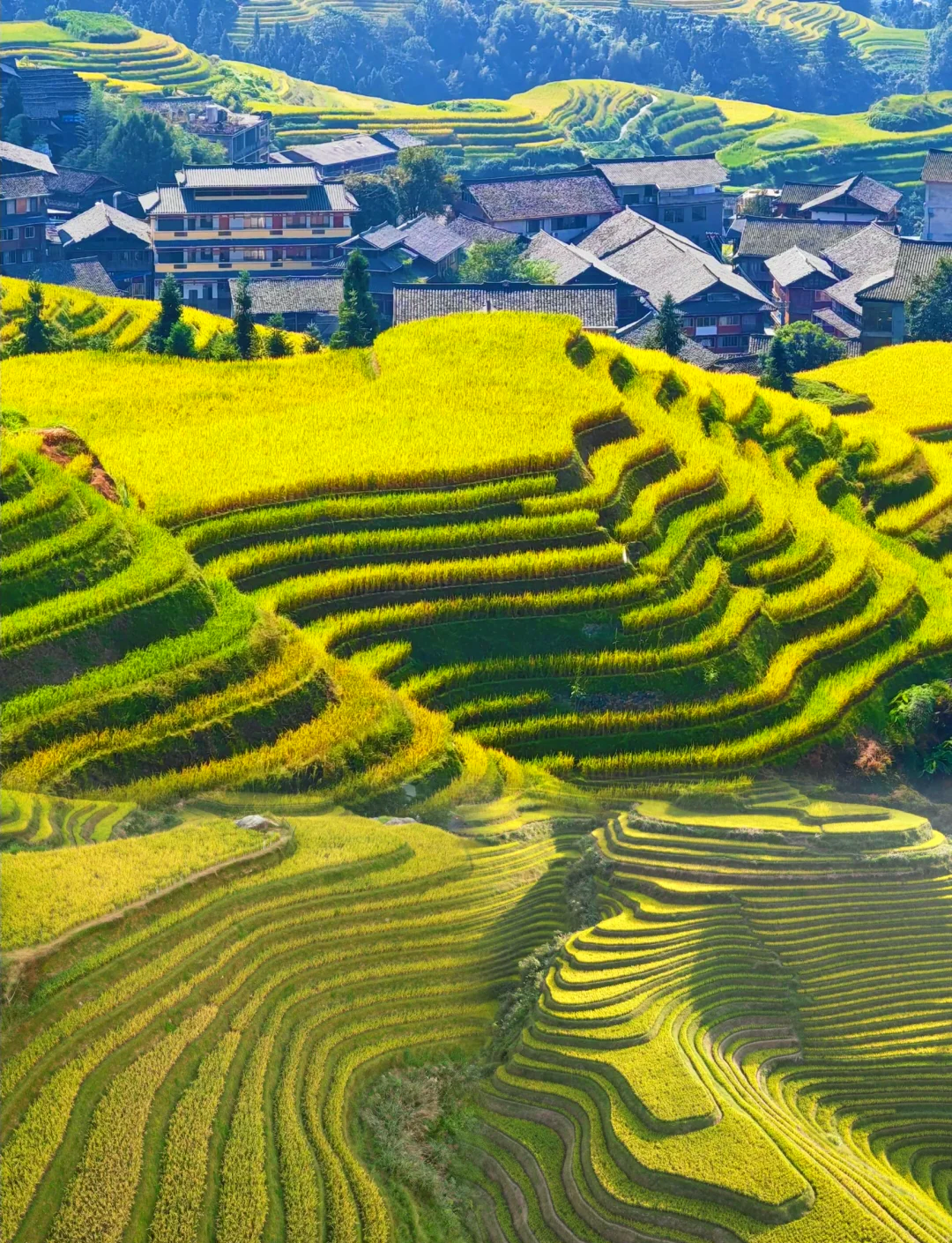
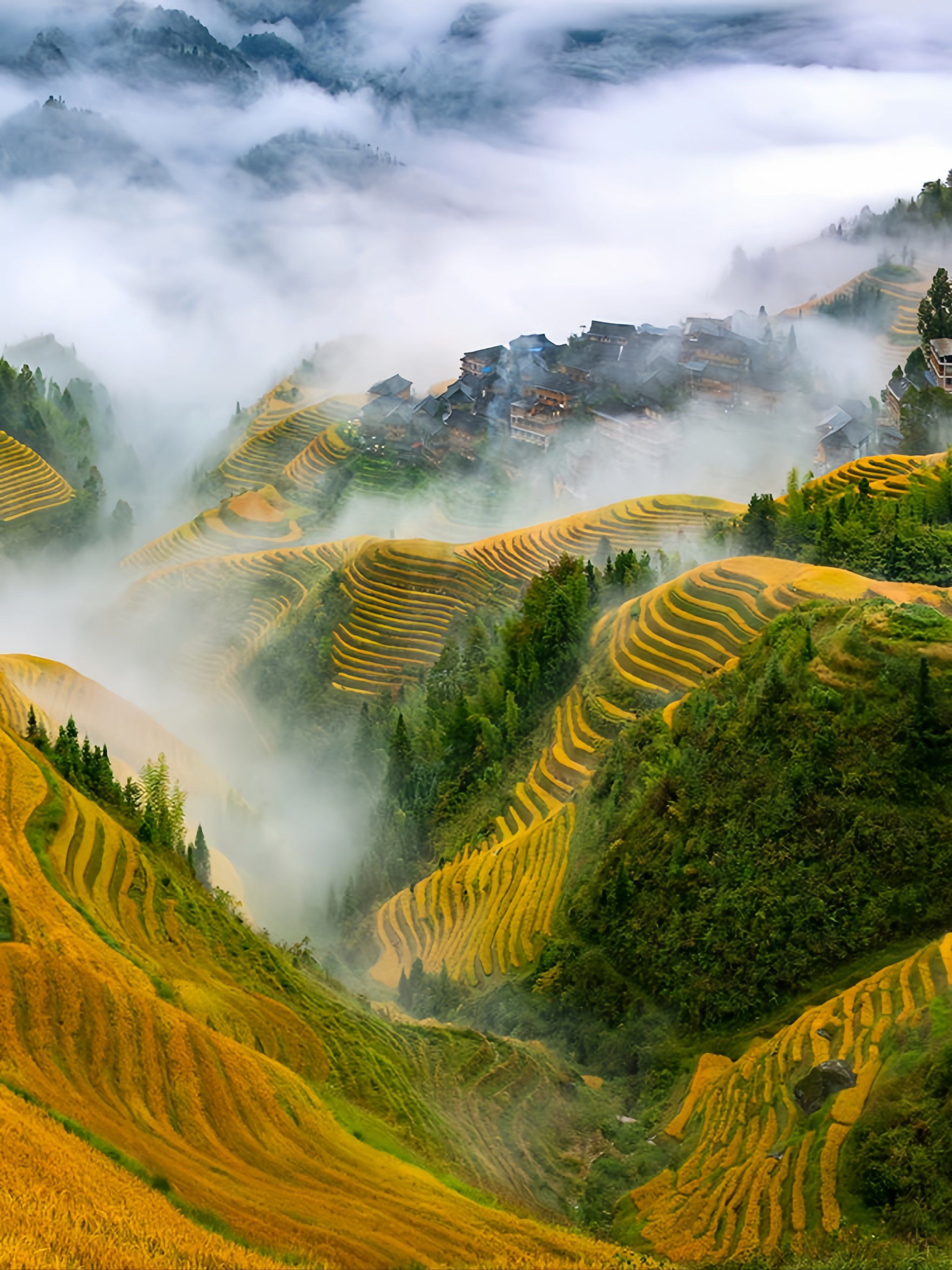
Seven Stars Accompany the Moon (七星伴月) — Ping'an
The most iconic viewpoint in the entire terraces: seven small round rice paddies surrounding one larger paddy, creating a pattern that looks like seven stars around a moon. The curved lines of the terraces radiate outward in every direction.
This is the image you've seen in every guidebook and travel poster. In flooded season (May-June), the pools reflect the sky. In harvest season (September-October), it's a golden mosaic.
 Universal Appeal
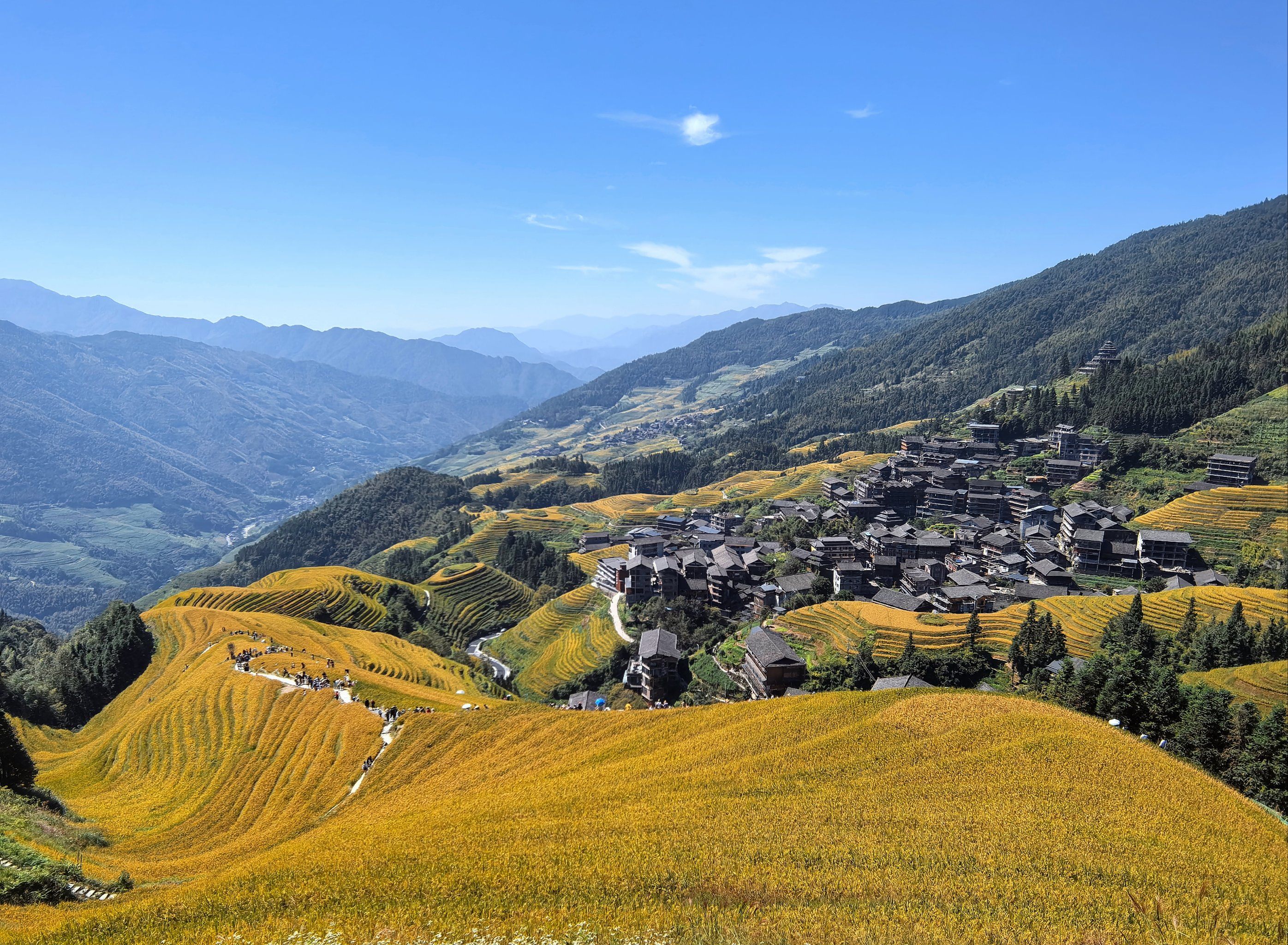
Nine Dragons and Five Tigers (九龙五虎) — Ping'an
A viewpoint where nine mountain ridges resemble dragons and five hilltops look like crouching tigers. The terraces cascade down the ridges in sweeping...
 Universal Appeal
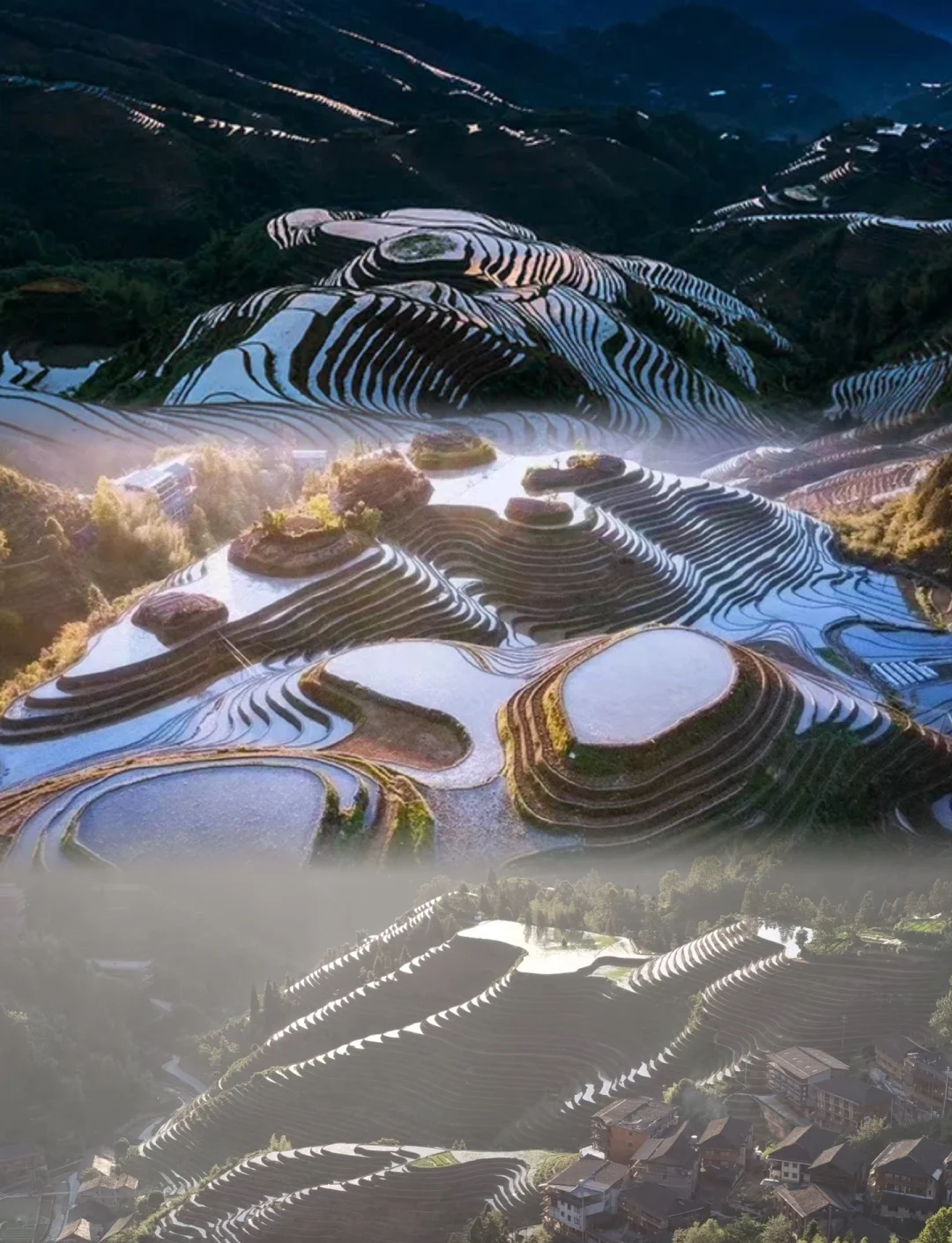
Golden Buddha Peak (金佛顶) — Jinkeng/Dazhai
The highest viewpoint in the Jinkeng area, accessible by cable car. From 1,180m elevation, you look down on the largest continuous section of terraces...
 Culturally Interesting
Ethnic Minority Village Life
The Zhuang people inhabit the lower villages (Ping'an, Ancient Zhuang Village) and the Red Yao people live higher up (Dazhai/Jinkeng). Traditional sti...
What Most Visitors Miss
Walking through the terraces themselves (not just viewing from above)
Most visitors go straight to viewpoints and cable cars. But the narrow stone paths between flooded paddies, with the sound of water cascading from tier to tier and the smell of fresh earth, is a completely different and more intimate experience than the panoramic overlooks.
Nighttime illuminated terraces
Some areas light up the terraces at night — walking among the glowing fields with only a flashlight is magical and almost tourist-free. Only overnight visitors experience this.
The food — especially bamboo chicken and bamboo rice
Bamboo chicken (竹筒鸡) and bamboo rice (竹筒饭) are local specialties cooked inside fresh bamboo tubes over an open flame. The bamboo imparts a distinctive aroma. Most day-trippers rush through without eating. Multiple reviewers across all platforms rave about these dishes.
Ancient Zhuang Village (龙脊古壮寨)
The smallest and least visited of the three areas, with the most authentic Zhuang stilt houses and an Ethnic Minority Museum. Almost no foreign tourists come here. It's the closest to the park entrance (1.5 hours from Guilin).
Plan Your Visit
How Long to Visit
drive up, cable car to one viewpoint, drive back — but you'll feel rushed and miss the magic
1 night / 2 days (arrive afternoon, hike to sunset viewpoint, overnight in village guesthouse, sunrise hike, explore second area, depart after lunch
2-3 nights (explore both Ping'an and Jinkeng, hike the 5-hour trail between them, experience village life, catch sunrise and sunset from different viewpoints
Smart Route
Day 1: Drive from Guilin (2-2.5 hours)
check in at a guesthouse in Ping'an or Dazhai (田头寨)
afternoon hike to nearest viewpoint for sunset photos
dinner at guesthouse (order bamboo chicken in advance)
walk the illuminated terraces at night. Day 2: Wake early for sunrise from a viewpoint
breakfast
hike to second area or take cable car
explore village
lunch
depart for Guilin by early afternoon to avoid traffic.
Best Time to Visit
Sunrise (from a hilltop viewpoint) and golden hour before sunset
Rainy days with heavy fog — you may see literally nothing from the viewpoints
By Season
Spring
Late May-early June: flooded paddy 'mirror' effect — the most photographed season
Summer
June-September: lush green terraces, but hot and rainy
Autumn
Late September-mid October: golden harvest — the most popular season
Winter
Late October-February: brown/empty fields; occasional snow is stunning but rare
The rice harvest typically begins around October 15-20. After that, the golden color disappears rapidly. If you're coming for the gold, arrive before October 15. For the flooded mirror effect, late May is ideal. Check recent visitor photos online before booking your trip — conditions change week by week.
What to Skip
Skip the Huangluo Long Hair Village performance (¥80) if you're short on time — it's increasingly commercialized and the best views are of the terraces, not stage shows. Skip trying to visit both Ping'an and Jinkeng in a single day trip from Guilin — you'll spend more time in a car than at the terraces.
Pro Tips
Stay in Dazhai/田头寨 (Tiantou Village) for the most convenient access to multiple Jinkeng viewpoints without using the cable car. Book your guesthouse first and ask the owner to arrange transport from Guilin — they often have partnerships with drivers and can get you door-to-door service. Bring a drone if you have one — the aerial perspective is extraordinary and several viewpoints are far from crowds. Arrive by early afternoon to beat traffic and catch sunset; depart by noon the next day.
Photo Spots
Seven Stars Accompany the Moon viewpoint (Ping'an)
Late afternoon golden hour light is ideal. In May-June, the flooded fields create mirror reflections. In September-October, golden rice creates the postcard shot. A telephoto lens isolates the 'seven stars and moon' pattern.
Golden Buddha Peak (Jinkeng) at sunrise
Wake before dawn and hike or take the first cable car up. Bring a tripod for low-light shots. Cloud seas below the summit are common in spring and autumn mornings — magical when they part to reveal the terraces below.
Walking through the terraces at close range
Leave the main viewpoints and walk the narrow paths between paddy fields. In flooded season, the reflections and water-cascade sounds create intimate, meditative compositions. A wide-angle lens captures the depth of the terraces from inside.
Village stilt houses with terraces behind
Dazhai/田头寨 village has several spots where traditional wooden houses frame the terraces behind them. Overcast or misty conditions create an ethereal, painterly quality. Morning cooking smoke adds atmosphere.
Pair With
Guilin city attractions (Elephant Trunk Hill, Sun and Moon Pagodas)
2-2.5 hours by car from the terraces
Most visitors base themselves in Guilin before or after the terraces. The city's karst landscape landmarks are a natural complement and don't require significant additional travel.
Huangluo Yao Village (黄洛瑶寨)
At the entrance to the scenic area — you pass through it
At the foot of the Ping'an terraces, this Red Yao village is famous for its women's extraordinarily long hair (Guinness record: longest group hair). Cultural performances daily. It's on the way — no detour needed.
Yangshuo and Li River
4+ hours by car (better done as separate multi-day trips)
If you're exploring Guilin's region, combining the terraces with a Li River cruise to Yangshuo creates a comprehensive Guangxi nature trip. Note: Yangshuo is 4+ hours from the terraces, so plan separate days.
Tickets & Access
Scenic area admission (covers all villages)
Valid for 3 days — covers Ping'an, Jinkeng/Dazhai, and Ancient Zhuang Village
Cable car (Jinkeng area only) — one way
From Dazhai parking lot to Golden Buddha Peak — saves a steep 30-45 minute climb
Cable car — round trip
Small 4-person gondola, about 15-20 minutes each way
Electric shuttle/golf cart (Ping'an area)
From Ping'an parking lot to Nine Dragons and Five Tigers viewpoint
Children 1.2-1.4m / Seniors 60-64
With valid ID
Seniors 65+ / Children under 1.2m
With valid ID
Opening Hours
Scenic area: open all day, year-round. Ticket gates: approximately 9:00 AM - 6:00 PM. Cable car (Jinkeng only): operates during daylight hours.
How to Buy
Walk-up at ticket gates, or through Trip.com/Klook for packages with transport from Guilin. Many guesthouse owners will arrange tickets and transport if you book accommodation through them. If you'd rather not juggle bookings across multiple platforms, our concierge team can arrange the full package — tickets, transport from Guilin, and guesthouse coordination — in a single message.
Passport: Foreigners can purchase tickets with passport at the gate. Some ticket machines are ID-card-only — use the staffed windows.
Queue Situation
During National Day (Oct 1-7) and peak weekends, shuttle bus queues inside the scenic area can exceed 1-2 hours. Cable car queues of 30-60 minutes are common in peak season. Off-peak, there are virtually no queues anywhere.
Tips & Warnings
The mountain road is narrow, winding, and can cause severe car sickness
The last 27km from the scenic area entrance to the villages is all switchback mountain road. Take motion sickness medicine if you're prone to it. The shuttle buses drive aggressively on these roads. Driving yourself requires confidence on mountain roads. Our concierge can pre-book a private driver who knows the mountain roads well and drives at a pace that won't leave you green — just message us with your date and pickup location in Guilin.
Fog and rain can completely block the views
Mountain weather is unpredictable. You might arrive to find the terraces completely hidden in fog. Staying overnight doubles your chances of catching a clear window. Some visitors report the fog parting for just 10 minutes — stay patient and ready with your camera.
Steep stairs everywhere — no wheeled access to villages or viewpoints
There are hundreds of stone steps between parking lots and accommodations. Do NOT bring wheeled luggage — use a backpack only. Porters with bamboo poles will carry your bags for a fee (negotiate beforehand). The cable car only serves one area (Jinkeng to Golden Buddha Peak).
National Day holiday (Oct 1-7) creates gridlock on the single access road
The mountain road has only one lane each way. During peak holidays, traffic jams of 2-10 hours have been reported. Private cars may be banned during peak times, forcing you onto overcrowded shuttle buses. Visit just before or after the holiday.
Village guesthouses are basic and conditions may surprise you
Expect simple rooms, possibly weak hot water, mountain-temperature nights requiring warm blankets, and occasional insects. The trade-off is waking up to a terrace view from your window that no five-star hotel can match. Li An Lodge in Ping'an is the upscale exception (~$200/night).
What to Bring
Wear
Sturdy hiking shoes with good grip (wet stone steps are very slippery — one reviewer saw someone fall into a lower terrace). Layers for temperature changes between valley and summit. Rain jacket or poncho. Hat for sun protection. Long pants recommended for hiking through tall grass between terraces.
Bring
Backpack only — NO wheeled luggage. Rain gear (mountain weather changes fast). Warm layer even in summer (evenings are cool at elevation). Flashlight/headlamp for nighttime walks. Mosquito repellent. Portable charger. Cash for small purchases. Camera with zoom lens. Motion sickness medication for the mountain road.
Don't Bring
Roller suitcases (impossible on the stairs). Tripods are fine but add weight on the hike. Drones require caution near the cable car.
Physical Reality
hard
Getting from parking lots to villages and viewpoints requires climbing hundreds of steep stone steps — there is no flat alternative route. The hike from Ping'an to Ancient Zhuang Village is 5km, 2 hours, and rated easy. The Dazhai to Ping'an hike is 17km, 5 hours, and rated moderate. The cable car eliminates the hardest climb in Jinkeng, but you still need to walk significant stairs to reach it. Elevation ranges from 380m to 1,180m.
Foreigners Watch Out
- Ticket machines at the entrance may only accept Chinese ID cards. Use the staffed ticket windows and present your passport. You need your ticket for multiple checkpoints inside the scenic area — keep it safe.
- Cell phone signal is weak in parts of the mountain area. Download offline maps and share your location with someone before heading up. Don't rely on Didi for getting around once inside the scenic area. If you do get stuck without signal, our team can call local drivers and guesthouse owners on your behalf once you're back in range — just drop us a message with where you are.
- The cable car is small (4 people) with no air conditioning, and can feel unstable in wind. One reviewer compared it unfavorably to better systems elsewhere. If you have fear of heights, be prepared.
- Some ethnic minority cultural shows include audience participation segments (like mock 'weddings') that can feel awkward if you don't understand what's happening. Having some Mandarin or a guide helps.
- The altitude difference (380m to 1,180m) combined with mountain weather means significant temperature drops — bring warm layers even in summer. Night temperatures can surprise visitors who packed for Guilin's tropical heat.
If Things Go Wrong
Arrived and it's completely fogged over — can't see anything
→ Mountain fog often comes and goes. Find a tea house near a viewpoint, order local tea or rice wine, and wait. Multiple reviewers report the fog parting briefly — be ready. If staying overnight, conditions often clear by sunrise.
Stuck in traffic on the mountain road and can't reach the terraces
→ During National Day or peak weekends, traffic can back up for hours. There's no alternative road. Be patient, bring snacks and water, and accept the delay.
Too exhausted to hike to the viewpoints
→ In Jinkeng: take the cable car to Golden Buddha Peak (¥60 one way). In Ping'an: take the electric shuttle to Nine Dragons and Five Tigers (¥30). Both viewpoints are accessible without the full hike.
Got lost on the hiking trails between villages
→ The trails have signposts at major intersections, but smaller paths branch off into farm areas. Head downhill — you'll eventually reach a village or road. Ask any local: '平安寨怎么走?' (Píng'ān zhài zěnme zǒu?) or '大寨怎么走?' (Dàzhài zěnme zǒu?).
Useful Chinese
Tap to reveal the English meaning