About Three Pagodas of Chongsheng Temple
“Ancient and monumental against a cinematic natural backdrop — the pagodas feel like they belong to the landscape, rising from the earth between mountain and lake as if they grew there along with the pines.”
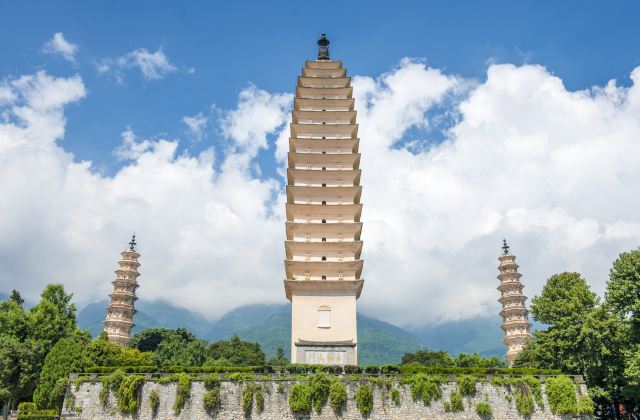
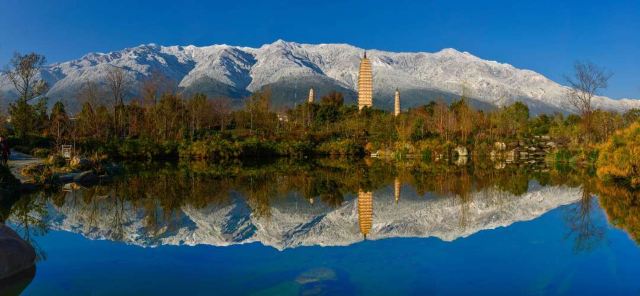
The Three Pagodas are genuinely impressive — the main Qianxun Pagoda at 69.13 meters is one of the tallest and oldest surviving pagoda structures in China, built during the Nanzhao Kingdom period (9th century) and having endured over 30 major earthquakes. The symmetry of the three pagodas against Cangshan Mountain is striking and photographs beautifully, especially at the reflection pond. However, expectations need calibrating: the pagodas themselves can only be viewed from outside (interiors closed decades ago for preservation), and the large temple complex behind them is a 2005 reconstruction — impressive in scale but clearly modern. Some visitors feel the ¥75 ticket is steep for what amounts to walking around three structures you can't enter plus touring a reconstructed temple. The uphill walk through the temple complex is long (the shuttle bus at ¥35 is worthwhile), but rewards you with excellent views of the pagodas and surrounding mountains. The Jin Yong martial arts novel connection (this is the 'Tianlong Temple' from Demi-Gods and Semi-Devils) adds cultural interest for those familiar with Chinese pop culture. Best visited in the late afternoon when the light on the pagodas is warmest and the reflection pond works its magic.
Top Questions from Travelers
Why This Place Matters
The Three Pagodas represent the zenith of Nanzhao and Dali Kingdom civilization — two powerful kingdoms that ruled Yunnan and parts of Southeast Asia from the 8th to 13th centuries, independent from the Chinese central government. The pagodas' architectural style reflects the unique Dali Buddhist tradition that blended Chinese, Indian, and Southeast Asian influences. Chongsheng Temple was the royal temple where nine Dali kings abdicated to become monks — a tradition unmatched anywhere else in Chinese history. In modern pop culture, the temple is immortalized as 'Tianlong Temple' in Jin Yong's beloved martial arts novel Demi-Gods and Semi-Devils (天龙八部), making it a pilgrimage site for fans of Chinese wuxia fiction.
Need help planning?
ChinaPal handles everything
- Book English-speaking guides
- Arrange transport & tickets
- Real-time help during your visit
- Restaurant reservations nearby
Highlights
3 iconic experiences that define a visit
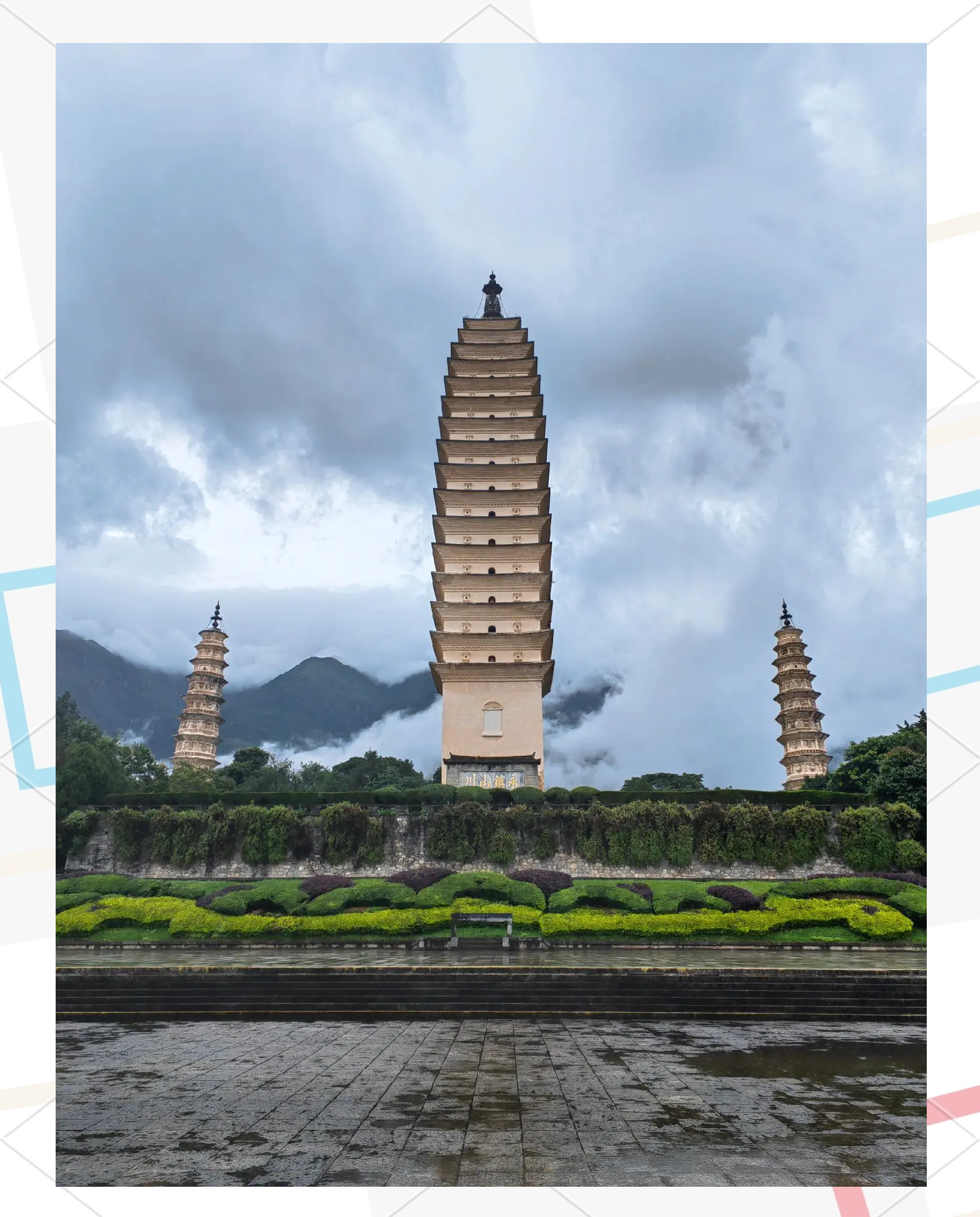
Qianxun Pagoda (千寻塔)
The main pagoda standing 69.13 meters tall with 16 tiers — built during the Nanzhao Kingdom period (9th century) in Tang Dynasty architectural style. It is a square, hollow brick pagoda that has survived over 30 major earthquakes, including a devastating one in 1925 that destroyed 99% of Dali's buildings.
The pagoda was built 35 years before Xi'an's Giant Wild Goose Pagoda and has no foundation — its earthquake resistance comes from an ingenious design of internal wooden frame and external brick shell. The four bronze Garuda birds on the pagoda's finial are a hallmark of Nanzhao-Dali Buddhist art.
 Universal Appeal
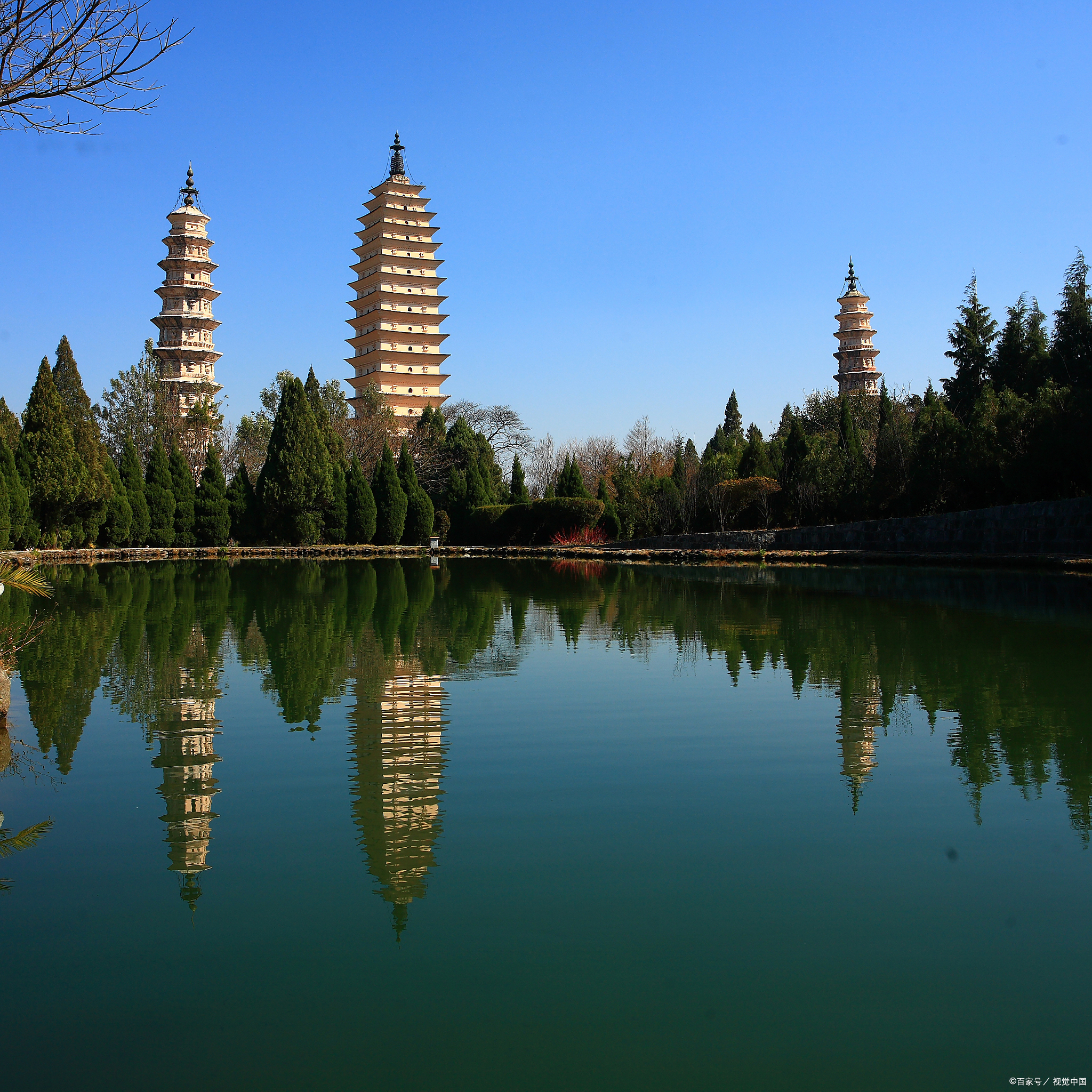
Reflection Pond (三塔倒影公园)
A carefully positioned pond that creates a perfect mirror reflection of all three pagodas — Dali's most iconic photograph. On calm days, the inverted ...
 Culturally Interesting
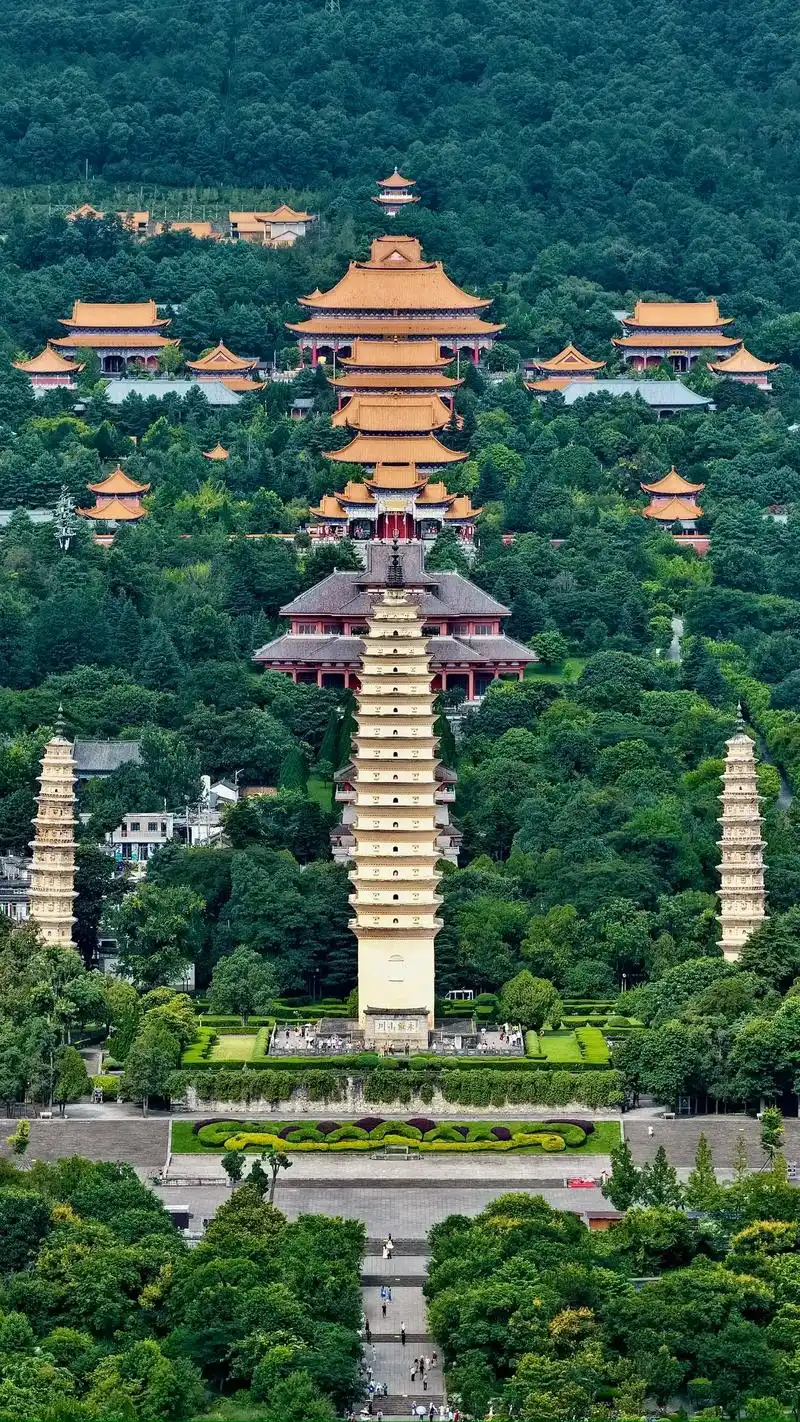
Temple Complex and Mountain View
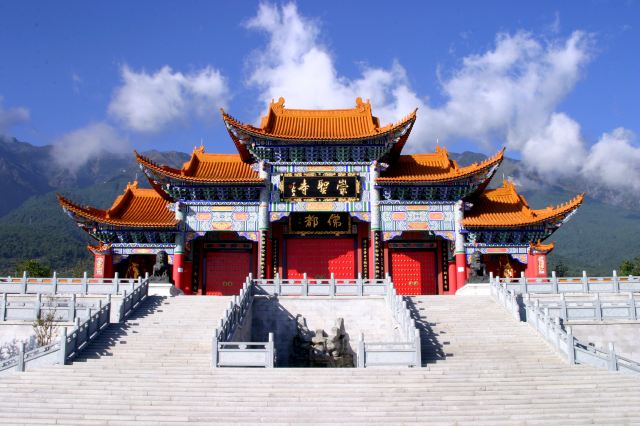
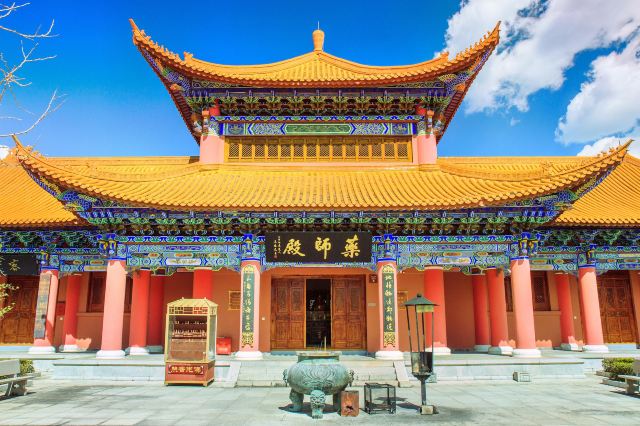
The reconstructed Chongsheng Temple extends up the mountainside along a central axis — from the gate through multiple halls (Heavenly King Hall, Mahav...
What Most Visitors Miss
The Dali Kingdom royal connection
Nine of the twenty-two kings of the Dali Kingdom (937-1253 AD) abdicated their thrones to become monks at this very temple — an extraordinary historical footnote that makes Chongsheng Temple unique in Chinese history. The 'High Monk Hall' in the temple complex commemorates this tradition.
The Jin Yong martial arts novel connection
Chongsheng Temple is the real-world inspiration for 'Tianlong Temple' (天龙寺) in Jin Yong's beloved novel Demi-Gods and Semi-Devils (天龙八部). For Chinese visitors, this adds a layer of literary romance to the site. The 'Six Meridians Divine Sword' and other fictional martial arts were set here.
The Golden Garuda Bird (大鹏金翅鸟) sculpture
A 6.9-meter bronze gilded sculpture in the entrance plaza, based on an actual Dali Kingdom artifact excavated from the pagodas. The Garuda is a key symbol of Dali Buddhist culture, different from mainland Chinese Buddhist iconography.
Plan Your Visit
How Long to Visit
1-1.5 hours (Three Pagodas viewing, reflection pond photos, skip the temple complex
pagodas, reflection pond, shuttle to upper temple, walk down through the halls
complete temple complex exploration, museum, all photo spots, peaceful meditation time
Smart Route
Enter the main gate
walk to the Three Pagodas for up-close viewing
visit the Reflection Pond for photos
take the shuttle bus (¥35) to the top of the temple complex
walk down through all the halls (Wanghai Tower
Guanyin Hall
Mahavira Hall
Heavenly King Hall)
end back at the pagodas for final golden-hour photos
exit.
Best Time to Visit
Late afternoon (4:00-6:00 PM) when the sun lights the pagodas from the west, creating a warm golden glow
Midday when harsh light washes out the pagodas and the reflection pond may have wind ripples
By Season
Spring
(March-April) brings wildflowers around the complex. Autumn has the clearest mountain views.
Summer
Autumn
has the clearest mountain views. Rainy season (June-September) means occasional afternoon showers but also dramatic cloud formations behind the pagodas.
Winter
Visit in late afternoon and time your reflection pond visit for the golden hour before closing. Some reviewers suggest buying a ticket for two days (the ticket allows split visits) — see the pagodas at sunset and return for the temple complex the next morning.
What to Skip
The exit route forces you through a long commercial corridor of souvenir shops — walk briskly through. The fish feeding stations throughout the complex are an unnecessary expense.
Pro Tips
The ticket can reportedly be used over two days (verify at purchase). If true, see the pagodas at sunset on day one and tour the temple complex the next morning. The free guided tour (with shuttle ticket) is in Chinese but provides historical context — have a translation app recording if possible.
Photo Spots
Reflection Pond — classic symmetrical shot
Position yourself at the far end of the pond, shoot low to maximize the reflection. Late afternoon (4-5 PM) gives the warmest light. Calm wind conditions are essential — even a slight breeze destroys the reflection.
Central axis looking up from the pagoda base toward Cangshan
Stand directly on the central axis between the two smaller pagodas, shooting toward the main pagoda with Cangshan Mountain rising behind. Morning light is best for this angle.
Pair With
Dali Ancient City (大理古城)
15-20 minutes on foot, or 5 minutes by electric cart
Just 1.5 km away — the atmospheric walled city with Bai ethnic architecture, cafes, galleries, and the vibrant Foreigner Street. Most visitors combine the two in a single day.
Erhai Lake (洱海)
10-15 minutes to the nearest lakeshore
The stunning alpine lake visible from the Three Pagodas complex. A bike ride or drive around Erhai Lake is one of Dali's top experiences, with villages, temples, and mountain views along the shore.
Tickets & Access
Entrance ticket
Covers the Three Pagodas, reflection pond, and entire temple complex
Shuttle bus (round-trip)
Runs from pagodas to upper temple — highly recommended to save energy for the uphill walk
Parking
500 spaces available at the main entrance
Opening Hours
7:30 AM - 6:30 PM daily, year-round. Last entry at 5:00 PM.
How to Buy
Ticket office on-site, Trip.com, Meituan, or Klook.
Passport: Yes — foreigners can purchase tickets with passport.
Queue Situation
Minimal queues most of the time. Busy during Chinese holiday weeks but manageable. The shuttle bus rarely has long waits.
Tips & Warnings
You cannot enter the pagodas
The pagodas are viewed from outside only. If your primary interest is seeing interiors of ancient structures, this may disappoint. The experience is about the exterior grandeur, the landscape setting, and the temple complex.
The temple complex is a modern reconstruction
Only the Three Pagodas themselves are original (1,000+ years old). The entire temple behind them was rebuilt in 2005. It's well-done and architecturally faithful, but don't expect ancient patina.
The forced exit through souvenir shops
After completing the visit, the exit route channels you through a long commercial corridor. Several reviewers mention this as annoying. Just walk through quickly — there's nothing unique for sale.
What to Bring
Wear
Comfortable walking shoes (significant walking and stairs in the temple complex). Light layers — Dali's weather is mild but can shift. Sun hat and sunscreen.
Bring
Camera with polarizing filter for the reflection pond. Water. Sun protection. Cash for the shuttle bus.
Don't Bring
Heavy luggage (leave at hotel). Drones (likely prohibited within the complex).
Physical Reality
moderate
The Three Pagodas and reflection pond area are flat and easy. The temple complex involves a long uphill walk with many stairs — the shuttle bus eliminates most of this. Walking down from the top is manageable for most visitors. Total walking distance is 2-3 km.
Foreigners Watch Out
- The guided tour included with the shuttle ticket is in Chinese only — no English audio guides available.
- The site is about 1.5 km from Dali Ancient City — an easy walk, or take a three-wheeled scooter (¥10-15) or city bus. If you'd rather not navigate local transport, message our team and we can arrange a driver for a half-day to cover the Three Pagodas, Erhai Lake viewpoints, and Dali Ancient City.
- Cloud cover on Cangshan Mountain can affect the dramatic backdrop in photos — clear days are ideal for photography.
- The uphill walk through the temple complex is steeper and longer than expected — the shuttle bus is worth the ¥35, especially in summer heat. If you're visiting Dali and want to combine the Three Pagodas with Erhai Lake and other sights, our team can arrange a car and driver for the day — much easier than cobbling together separate rides.
If Things Go Wrong
Rainy day ruins the reflection pond photos
→ Rain actually creates a moody atmosphere for pagoda photography, with clouds swirling around Cangshan. If you want the reflection shot, come back another day within your ticket validity.
Feeling the ticket price isn't worth it for structures you can't enter
→ Make sure to visit the full temple complex — the scale is impressive and the mountain views from the top add significant value. The reflection pond at golden hour redeems the visit for most visitors.
Useful Chinese
Tap to reveal the English meaning