
About Dali Ancient Town
“Bohemian and unhurried — a 600-year-old walled town with a serious cafe scene, live music bars, and a backpacker streak, all sitting between snow-capped mountains and a huge alpine lake.”
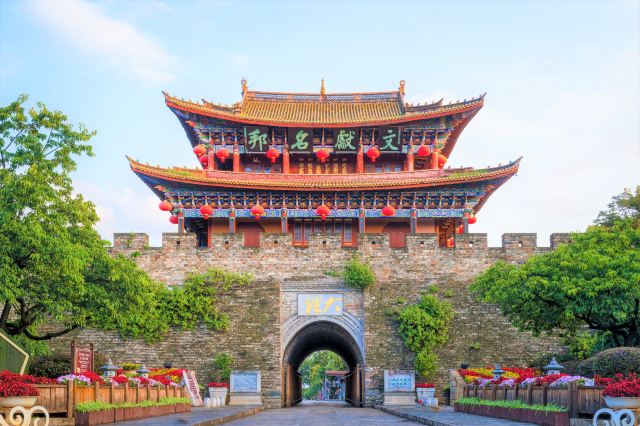
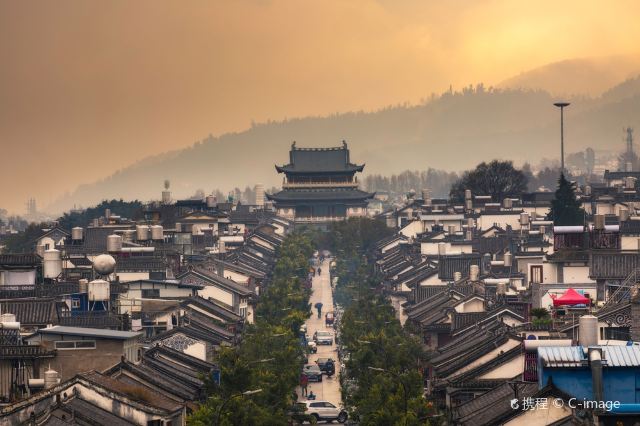
Dali Ancient Town is one of Yunnan's most beloved destinations and offers a genuinely atmospheric experience — the setting between Cangshan Mountain and Erhai Lake is spectacular, the Bai ethnic architecture is distinctive with its white walls and ornate carvings, and the town has a laid-back, artistic vibe that's rare in China. The main streets (Fuxing Road, Renmin Road) are heavily commercialized with repetitive souvenir shops, but duck into the side alleys and you'll find hidden cafes, artists' studios, tie-dye workshops, and quiet residential courtyards that still feel authentic. The nightlife is surprisingly vibrant with live music bars, bonfire dancing in the squares, and a lively night market scene. Compared to Lijiang, Dali feels more authentic because many local families still live here, the streets are wider, and it's less of a tourist zoo. That said, it IS commercialized, prices are inflated, and some reviewers find the shops repetitive. Best for travelers seeking a relaxed, artistic atmosphere; skip it if you want pristine untouched heritage.
Top Questions from Travelers
Why This Place Matters
Dali was the capital of two powerful kingdoms — Nanzhao (738-902) and Dali (937-1253) — that ruled much of Yunnan for over 500 years before the Mongol conquest. The Bai people, one of China's 55 officially recognized ethnic minorities, have maintained their distinct culture here for millennia. Their architectural style ('three houses and one screen wall'), tie-dye textile tradition (a national intangible cultural heritage), and the 'Three-Course Tea' ceremony (bitter tea, sweet tea, reflective tea — symbolizing life's journey) offer genuine cultural depth beneath the tourist surface. The phrase '风花雪月' (wind, flowers, snow, moon) describes Dali's four natural wonders: the wind of Xiaguan, the flowers of Shangguan, the snow of Cangshan, and the moon of Erhai.
Need help planning?
ChinaPal handles everything
- Book English-speaking guides
- Arrange transport & tickets
- Real-time help during your visit
- Restaurant reservations nearby
Highlights
4 iconic experiences that define a visit
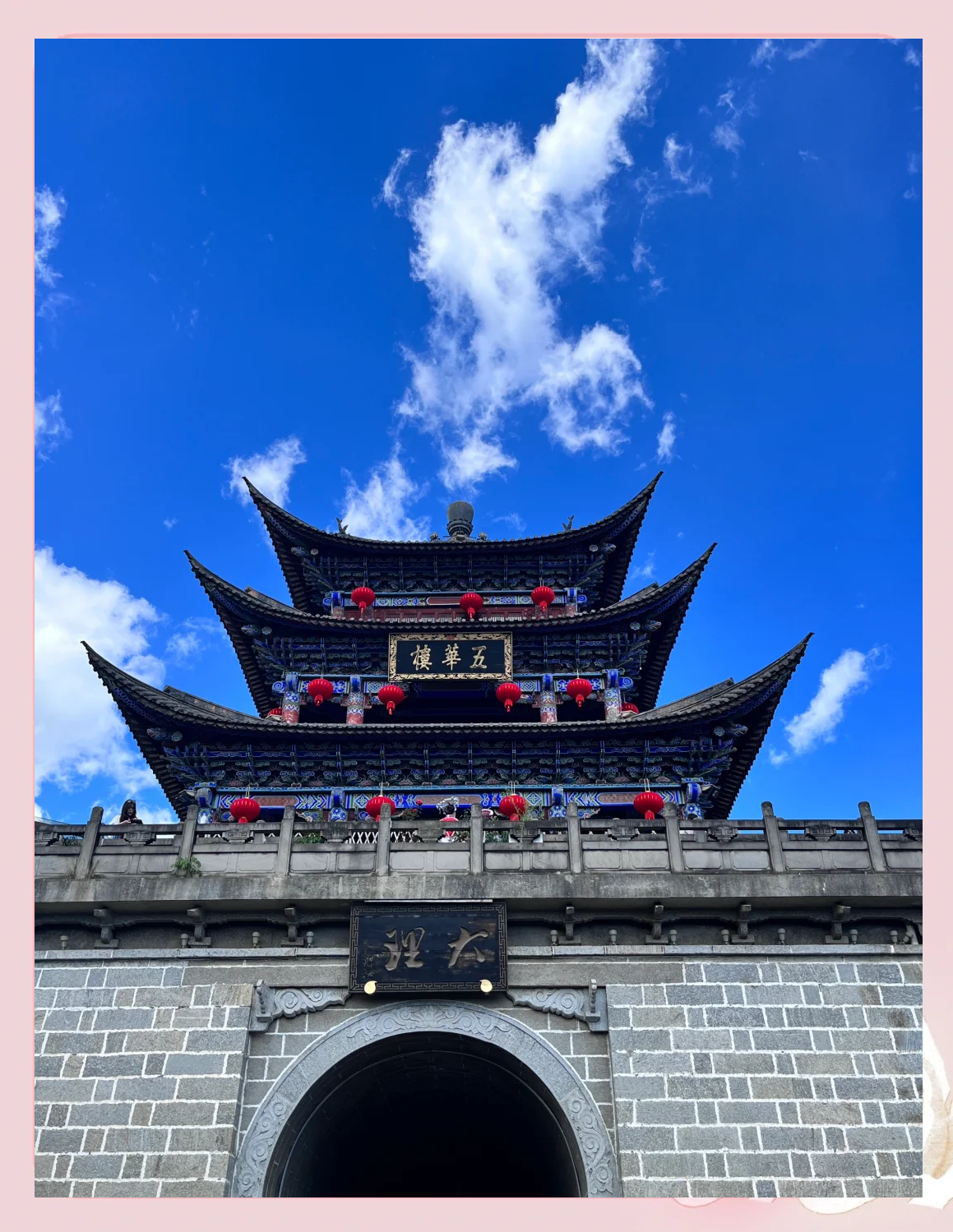
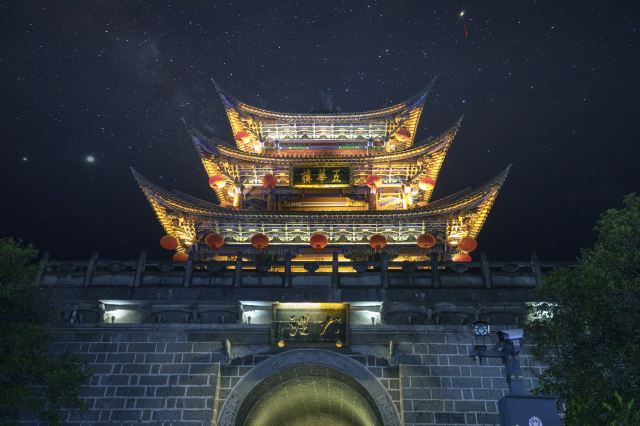
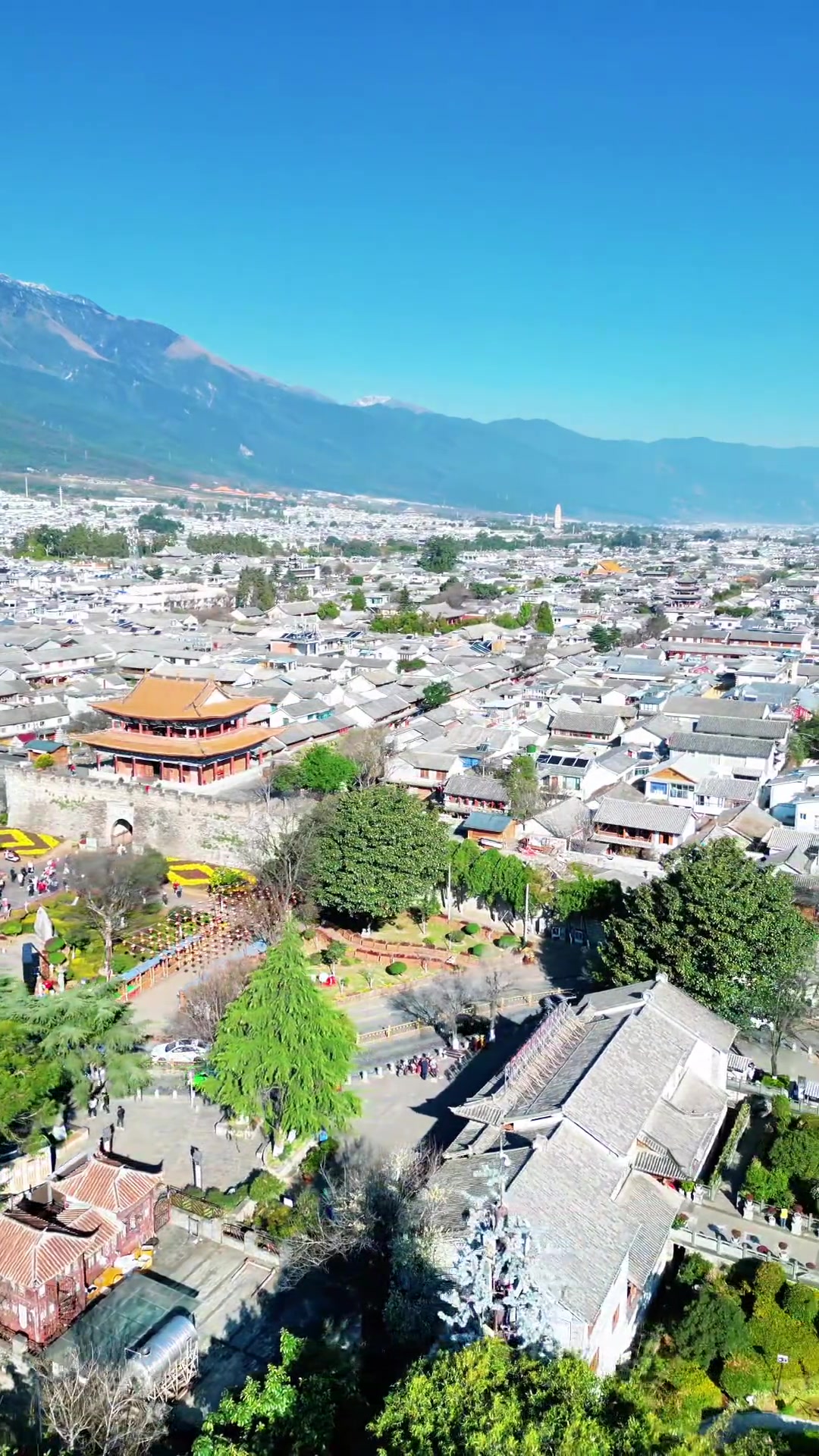
Wuhua Tower (五华楼)
A rebuilt tower in the center of the ancient town that serves as the best panoramic viewpoint. Climb to the top for a sweeping view of the entire grid-pattern town with Cangshan Mountain snow peaks behind and hints of Erhai Lake in the distance.
Free to climb. The view at sunset is particularly stunning with warm light on the white buildings and clouds wrapping around Cangshan's peaks.
 Universal Appeal
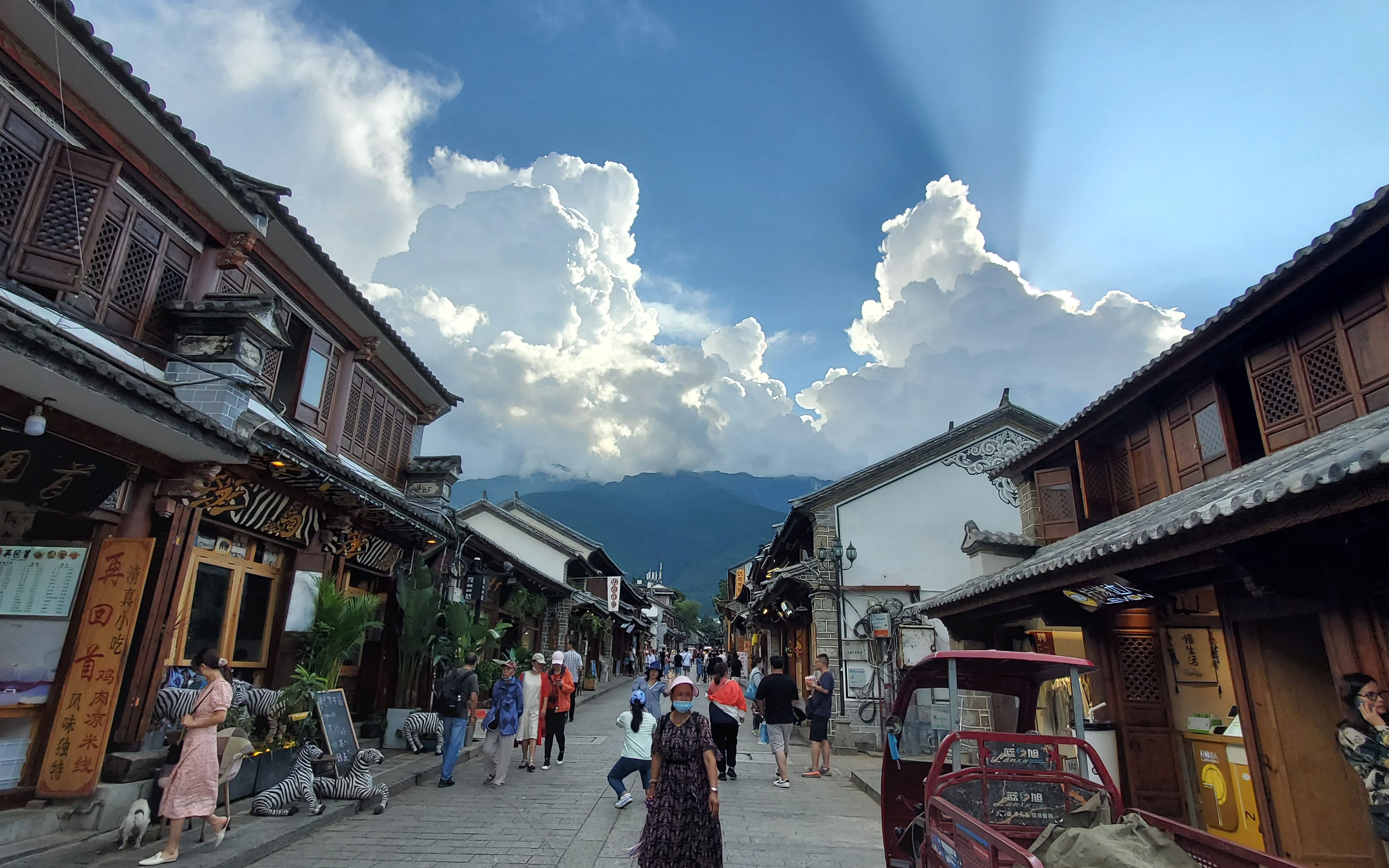
Renmin Road (人民路) — The Soul of Dali
The longest and most vibrant street in the ancient town, lined with independent cafes, artisan workshops, bookshops, live music bars, and creative mar...
 Universal Appeal
South Gate & City Walls (南城门)
The oldest and grandest of the four city gates, with climbable walls offering views of Erhai Lake to the east. The imposing gate tower is the most pho...
 Universal Appeal
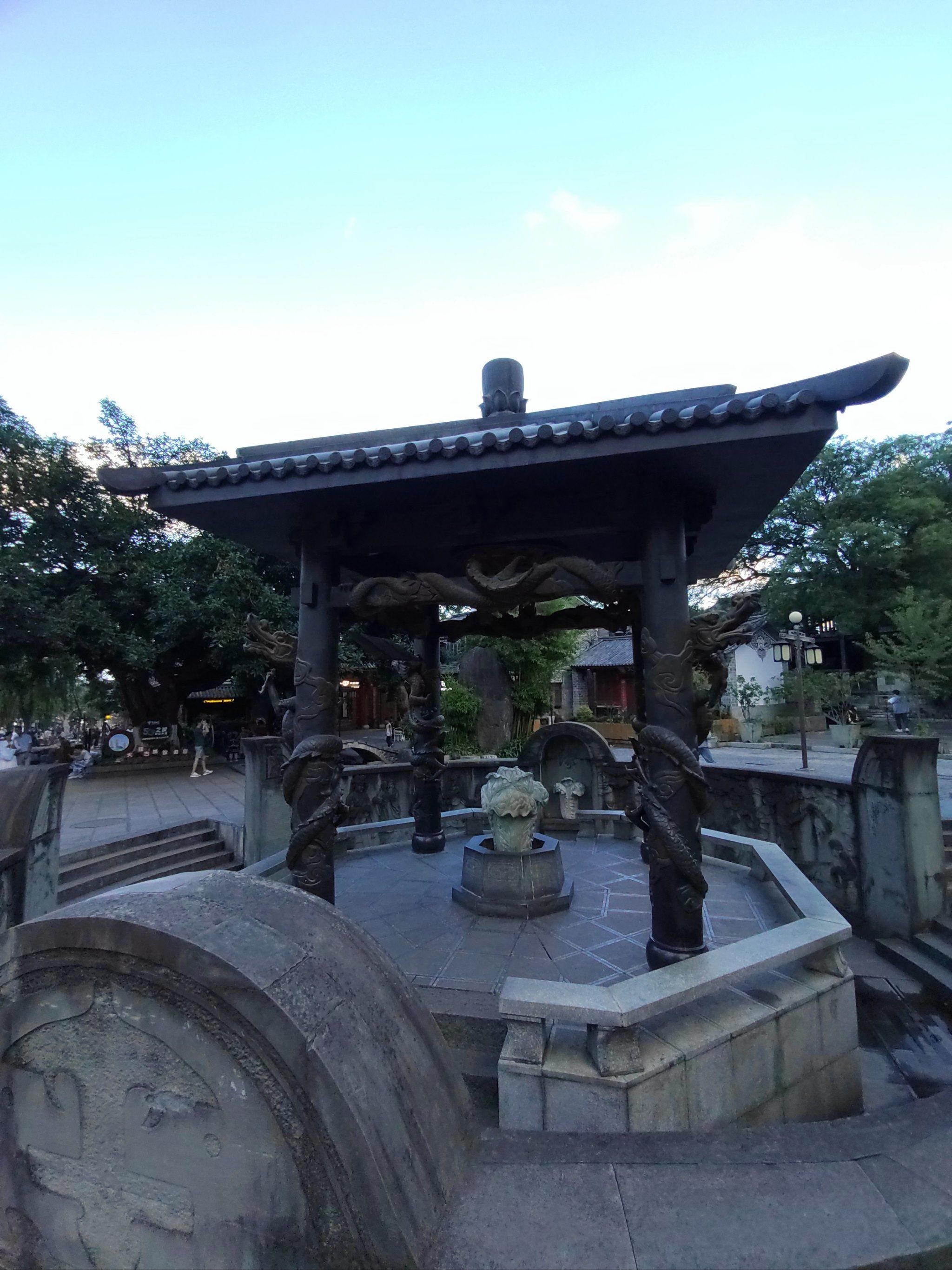
Red Dragon Well (红龙井) Night Scene
A atmospheric street built along a flowing stream, decorated with red lanterns and lined with bars, restaurants, and live music venues. The stream is ...
What Most Visitors Miss
The hidden alleys and residential side streets
Most visitors stick to the main commercial streets (Fuxing Road, Renmin Road). Turn into any small alley and you'll find quiet courtyards, local Bai families tending flower gardens, traditional tie-dye workshops, and independent artist studios — the 'real' Dali that hasn't been commercialized.
The Bai ethnic Catholic Church
The only Bai ethnic-style church in China — a fascinating architectural fusion of Christian worship with traditional Bai minority building design. Near the North Gate area, rarely visited by tourists.
The morning markets near North and South Gates
Local vegetable and goods markets operate early morning (6-9 AM) where Bai women in traditional dress sell produce, wild mushrooms, and local snacks. A window into authentic daily life that most tourists sleep through.
Plan Your Visit
How Long to Visit
walk the main streets, climb Wuhua Tower, sample street food
or overnight stay (explore main streets and hidden alleys, enjoy evening bar scene and bonfire dancing, climb city walls at sunset
s (combine with Erhai Lake cycling, Cangshan Mountain hike, nearby Xizhou and Shuanglang villages
Smart Route
Enter through South Gate (most photogenic entrance)
climb the gate tower for Erhai Lake views
walk north along Fuxing Road (main street, Ming-Qing architecture)
stop at Wuhua Tower for panoramic photos
detour east to Foreigner's Street for cafe break
continue north exploring side alleys
reach the North Gate area for the Catholic Church and morning market
loop back via Renmin Road for the bohemian vibe, creative shops, and evening live music
end at Red Dragon Well for nighttime bar scene and bonfire dancing.
Best Time to Visit
Early morning (before 9 AM) for peaceful streets with locals doing their routines
Chinese public holidays (National Day, May Day, Spring Festival) when the town becomes extremely crowded
By Season
Spring
(March-May) is the best season — comfortable temperatures (20-25°C), blooming flowers, and the famous Three Moon Fair (Sanyuejie) festival in March. Autumn (September-November) is equally pleasant.
Summer
(June-August) is rainy season but still popular. Winter (December-February) is cool but sunny with fewer tourists — Cangshan may have visible snow, adding to the scenery.
Autumn
(September-November) is equally pleasant. Summer (June-August) is rainy season but still popular.
Winter
Stay overnight inside the ancient town — the morning calm before tour groups arrive and the evening atmosphere after they leave are when Dali is at its most magical. Choose accommodation near the West Gate for Cangshan Mountain views and quiet, or near the South Gate for convenience.
What to Skip
The tourist shuttle (¥35) is unnecessary unless you have mobility issues — the town is compact and best explored on foot. The repetitive silver jewelry shops and identical souvenir stores on the main streets can be skipped. The Bund Sightseeing Tunnel equivalent here is the overpriced 'traditional costume photo' studios — fun but very touristy.
Pro Tips
The best food is NOT on the main tourist streets — ask your guesthouse host for local restaurant recommendations. Rushan (grilled cheese fans) from street vendors costs ¥5-10 and is delicious. The fruit wine and rose cake shops are worth sampling. For a rooftop view, some cafes on upper floors along Fuxing Road offer Cangshan views with your coffee. Rent an electric scooter outside the ancient town to explore the surrounding countryside and Erhai Lake.
Photo Spots
Wuhua Tower rooftop
Late afternoon for warm light on white buildings with Cangshan's snow peaks in the background. Free access.
South Gate (南城门) exterior
Early morning or golden hour. Stand across the road for the full gate framing shot with 'DALI' in large characters.
Side alleys with flower-covered walls
Wander any alley off the main streets — the white Bai walls covered in climbing bougainvillea and flowering vines create beautiful, intimate shots unavailable on the crowded main roads.
Red Dragon Well (红龙井) at night
After 9 PM when the blue-lit stream, red lanterns, and bar lights create a dreamy atmosphere. Use night mode for the reflections.
Pair With
Erhai Lake (洱海) cycling
5-10 minutes from East Gate to the lake shore
The defining natural landscape of Dali — a vast alpine lake surrounded by mountains and dotted with fishing villages. The ecological cycling corridor offers stunning views. Best combined with stops at Shuanglang and Xizhou villages.
Three Pagodas of Chongsheng Temple (崇圣寺三塔)
15-minute walk or 5-minute drive north from the ancient town
Yunnan's most iconic landmark — three Tang Dynasty pagodas standing before Cangshan Mountain. Just north of the ancient town and visible from within it.
Xizhou Ancient Town (喜洲古镇)
30-40 minutes by bus or taxi north along Erhai Lake
A less touristy Bai ethnic village famous for its exceptionally well-preserved traditional homes and the famous Xizhou baba (flatbread). More authentic than Dali Ancient Town.
Tickets & Access
Ancient town entry
No tickets needed — open access
Tourist shuttle around ancient town
Electric cart that circles the town — available from South Gate Visitor Center
Wuhua Tower climb
Panoramic view of the entire ancient town — the best vantage point
Dali Museum
Show passport for free entry — covers Dali history and Bai culture
Opening Hours
Open 24/7 year-round. Free entry. Individual attractions within the town (museums, temples) have their own hours, typically 8:30 AM - 5:30 PM.
How to Buy
No booking needed. Hotels/guesthouses inside the ancient town can be booked via Trip.com, Booking.com, or Airbnb.
Passport: Yes — show passport for free entry to museums and temples within the ancient town.
Queue Situation
No queues for the town itself. Popular restaurants may have waits during peak meal times. The bonfire dancing area fills up quickly in the evening — arrive early for a good spot.
Tips & Warnings
Extreme UV radiation on the plateau
Dali sits at 1,900+ meters altitude. UV rays are significantly stronger than at sea level — you can get seriously sunburned in 30 minutes even on cloudy days. Apply SPF 50+ sunscreen, wear a hat and sunglasses, and reapply frequently. Many visitors underestimate this. If you forgot sunscreen or a hat, message us and we can have high-SPF sunscreen delivered to your guesthouse or a nearby pickup point.
The town is heavily commercialized on main streets
Manage expectations: Fuxing Road and parts of Renmin Road feel like a shopping mall in ancient Chinese packaging. The same souvenir shops repeat endlessly. The magic is in the side alleys, hidden courtyards, and the overall mountain-lake setting — not in the main drag.
Large temperature swings between day and night
Daytime can reach 25°C+ but evenings drop to 10-15°C, especially in spring and autumn. Bring layers. Winter nights can approach 0°C.
Electric scooters and small vehicles in pedestrian areas
Despite being nominally pedestrian, the ancient town has electric bikes and delivery vehicles weaving through the streets. Watch your step, especially in narrow alleys and at night.
What to Bring
Wear
Layers are essential — warm during the day, cool at night. Sun protection (hat, sunglasses, long sleeves) is critical at this altitude. Comfortable walking shoes for cobblestone streets. Bring a light rain jacket during summer months.
Bring
High-SPF sunscreen (SPF 50+ recommended). Sunglasses. Hat. Light jacket for evenings. Portable charger. Cash for small vendors. Translation app if you don't speak Chinese.
Don't Bring
Heavy luggage (cobblestone streets make rolling suitcases miserable — use a backpack if possible). Heels or dress shoes (impractical on stone streets).
Physical Reality
easy
Mostly flat walking on cobblestone and flagstone streets within the ancient town. The town is about 1.5 km north-south, manageable for most walkers. Climbing the city gates and Wuhua Tower involves stairs. Some alleys are uneven.
Foreigners Watch Out
- The altitude (1,900m) can cause mild symptoms like headaches and shortness of breath, especially if you arrived directly from sea level. Drink plenty of water and take it easy on the first day.
- Tuk-tuk and unofficial taxi drivers near the town gates often overcharge tourists — negotiate the price before getting in, or use DiDi for rides outside the ancient town. If you need a taxi and want to avoid the hassle, message our team — we can book a driver at a fair price.
- Google Maps does not work in China without a VPN. Download Amap (高德地图) or use Apple Maps before arriving.
- Dali has a long backpacker tradition (since the 1980s) and is more foreigner-friendly than most Chinese towns, but English is still limited. Having basic Chinese phrases or a translation app helps significantly.
- Some vendors are pushy, particularly silver jewelry sellers. A polite '不要' (bù yào — don't want) is sufficient to decline.
If Things Go Wrong
Weather turns rainy (common in summer monsoon season)
→ The ancient town is actually atmospheric in light rain — the wet cobblestones reflect the buildings beautifully. Duck into one of the many cafes with mountain views and wait it out. Rain is usually short-lived.
Overwhelmed by crowds on main streets
→ Walk away from Fuxing Road and Renmin Road into any side alley — within 2-3 minutes you'll find quiet streets. The areas near the West Gate and North Gate are consistently less crowded.
Altitude sickness symptoms
→ Rest, drink water, avoid alcohol. Mild headache and fatigue are normal for the first day at 1,900m. If symptoms worsen (severe headache, vomiting, confusion), seek medical attention — the ancient town has pharmacies and a hospital nearby.
Useful Chinese
Tap to reveal the English meaning