About Jiefangbei Pedestrian Street / Liberation Monument
“Frenetic, neon-lit, and unapologetically commercial — Chongqing's answer to Times Square, with better food and steeper hills.”
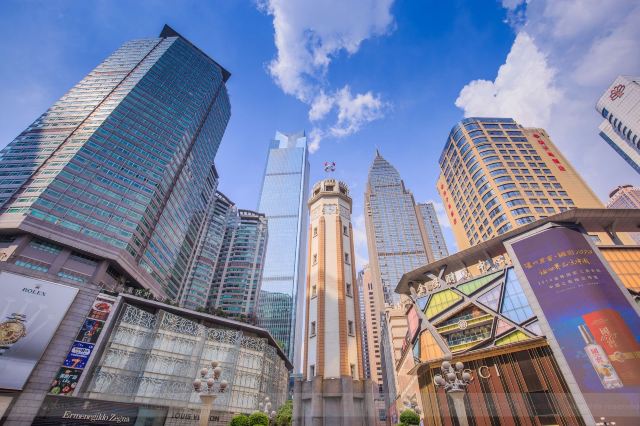
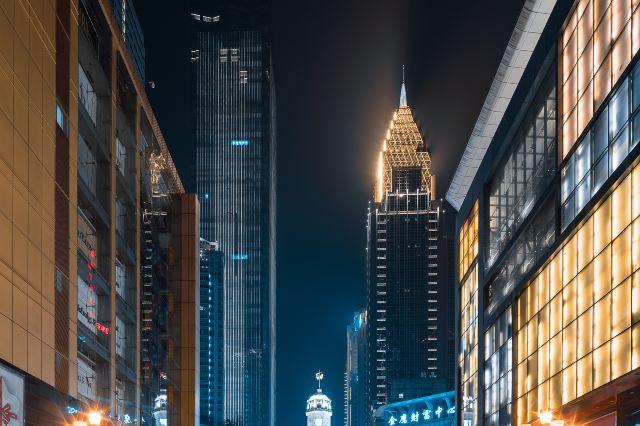
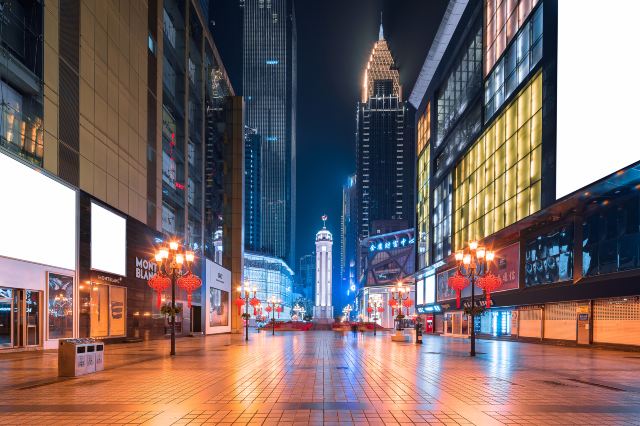
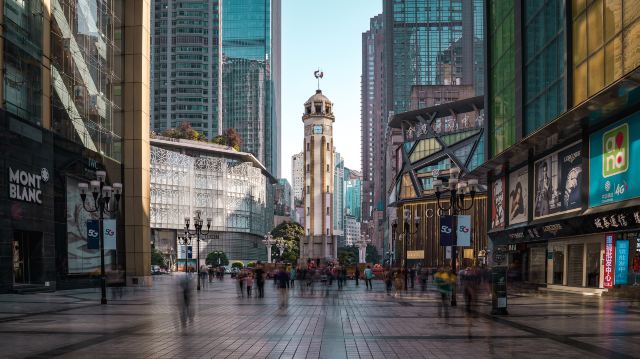
Jiefangbei is Chongqing's commercial and spiritual center — a massive pedestrian zone radiating from the People's Liberation Monument, surrounded by luxury malls, street food alleys, and towering glass facades. By day it's a shopping district; by night it transforms into a cyberpunk-esque light show with LED billboards, neon signs, and crowds that peak well past midnight. The monument itself is modest (27.5 meters tall, easily missed among the skyscrapers), but it carries deep historical significance as China's only monument commemorating victory in the War of Resistance Against Japan. The real draw is the atmosphere — Bayi Good Eat Street for cheap street food, high-end malls for luxury shopping, and the sheer energy of Chongqing's busiest district. It's essentially a transit hub for nearby attractions like Hongyadong, the Yangtze River Cableway, and Shibaiti. Best for people who love urban energy and street food; skip it if you dislike crowds and commercial districts.
Top Questions from Travelers
Why This Place Matters
The Liberation Monument carries more weight than its modest size suggests. During WWII, Chongqing served as China's wartime capital, enduring years of devastating Japanese air raids. The original structure was built in 1941 as the 'Spirit Fortress' — a symbol of defiance during the bombing campaigns. After victory in 1945, it was rebuilt as the 'War Victory Memorial,' and after 1949 renamed the 'People's Liberation Monument' with calligraphy by Marshal Liu Bocheng. For decades it was the tallest structure in Chongqing; now it stands as a modest pillar among glass towers, but its symbolic role as the city's spiritual center remains unchanged. New Year's Eve at Jiefangbei is Chongqing's biggest gathering — hundreds of thousands count down around the monument.
Need help planning?
ChinaPal handles everything
- Book English-speaking guides
- Arrange transport & tickets
- Real-time help during your visit
- Restaurant reservations nearby
Highlights
4 iconic experiences that define a visit
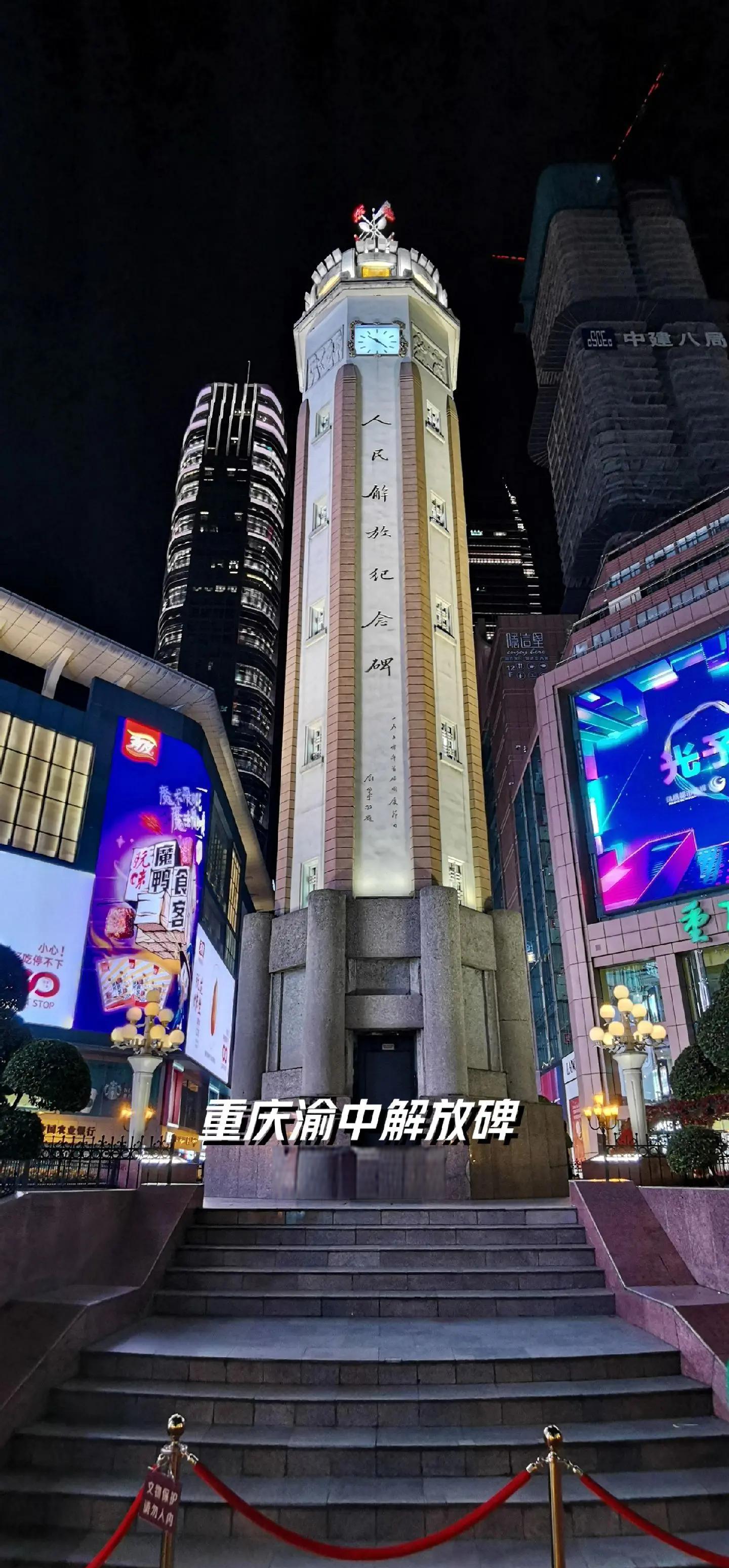
People's Liberation Monument (人民解放纪念碑)
A 27.5-meter octagonal concrete tower built in 1947, originally named the 'Victory in War of Resistance Memorial.' It's China's only national monument commemorating victory over Japan in WWII. Clock faces on four sides chime on the hour. The monument is now dwarfed by surrounding skyscrapers but remains Chongqing's spiritual center.
The monument's historical significance is much greater than its modest appearance suggests. It was originally built in 1941 as 'Spirit Fortress' to rally resistance during Japanese air raids on wartime capital Chongqing.
 Universal Appeal
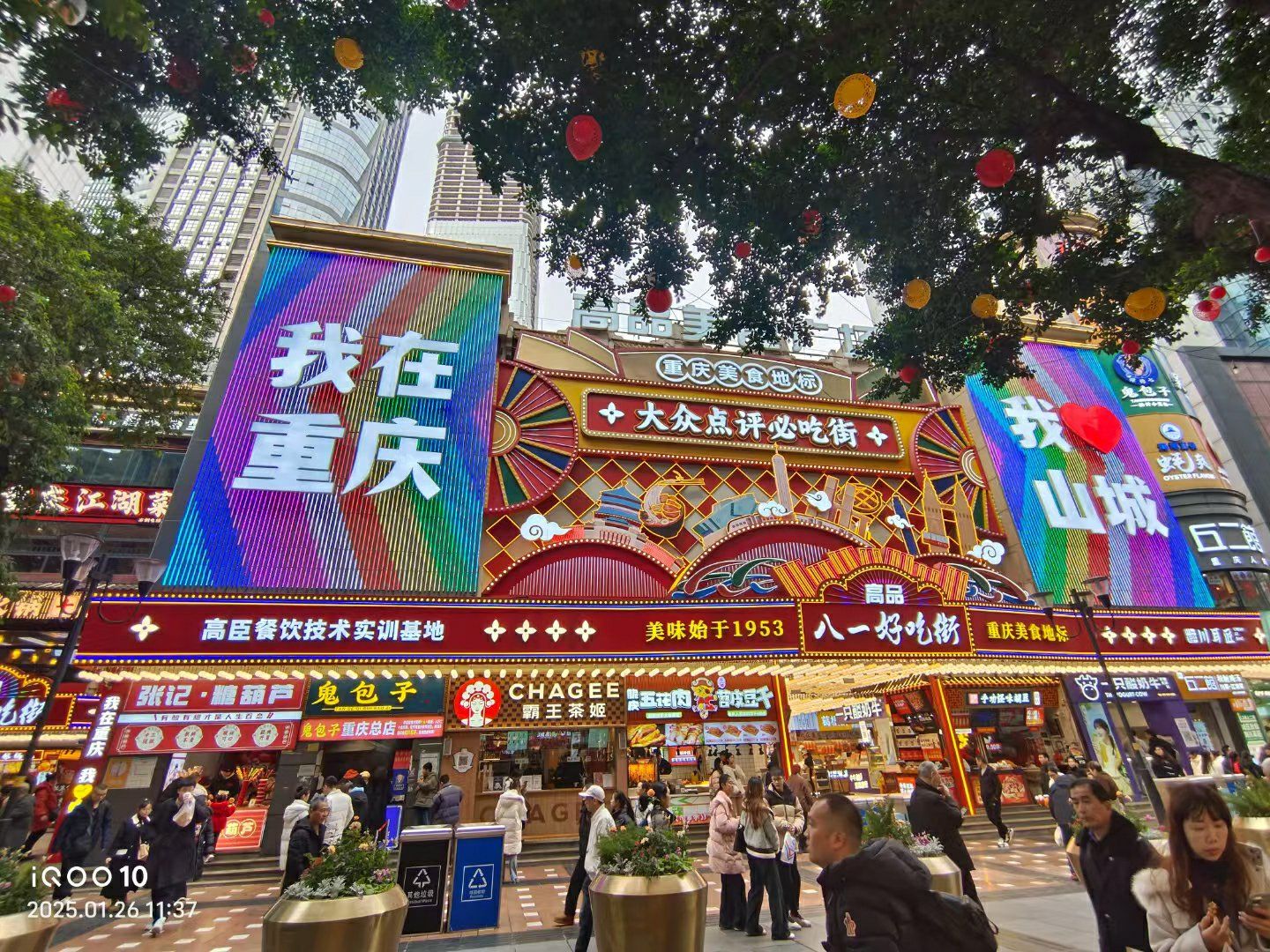
Bayi Good Eat Street (八一好吃街)
Chongqing's most famous food street, running adjacent to the main pedestrian zone. Packed with stalls selling acidic-spicy noodles (酸辣粉), grilled skew...
 Universal Appeal
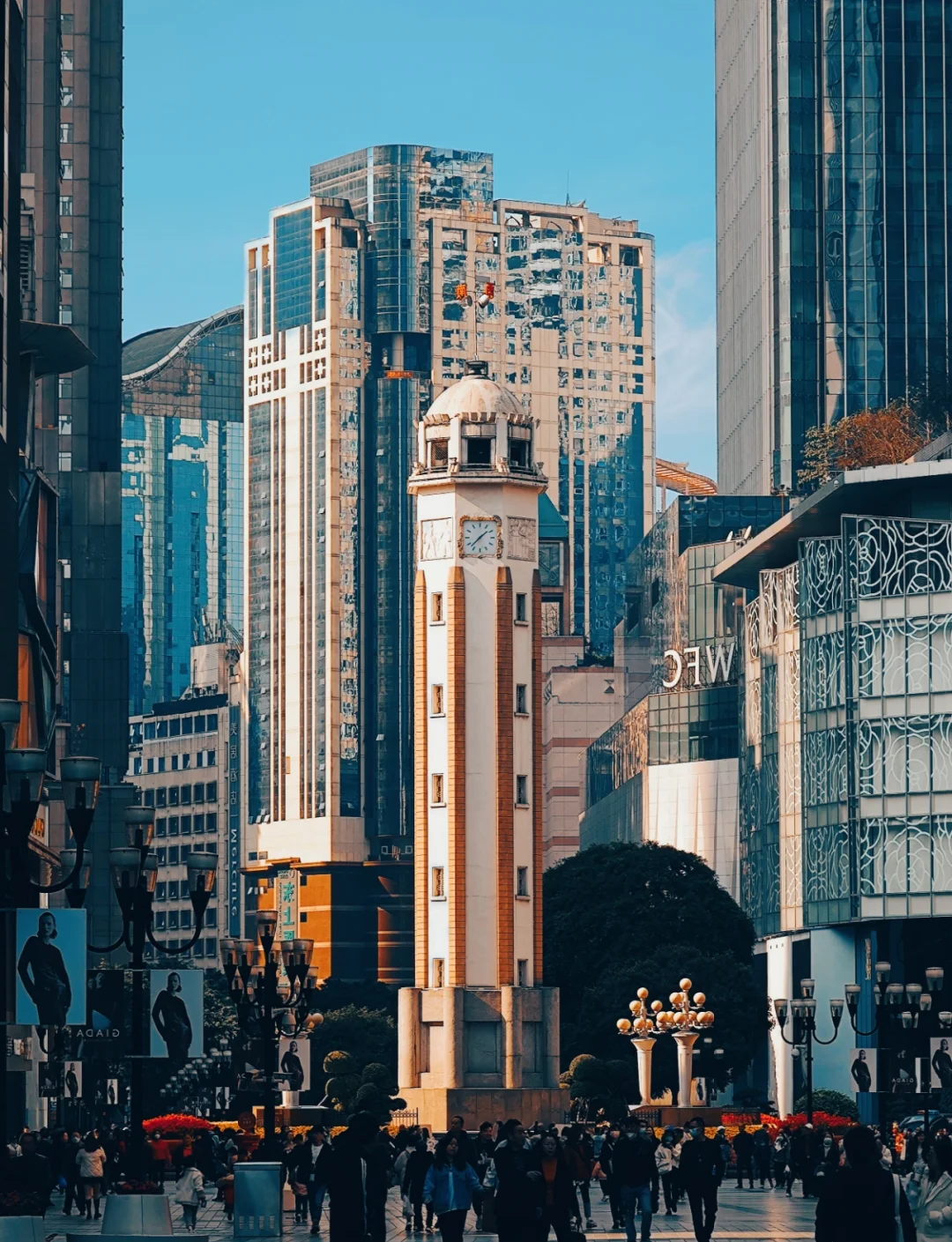
Night Skyline and Neon Atmosphere
After dark, the entire Jiefangbei district transforms into a light show — LED billboards cover building facades, neon signs glow from every direction,...
 Culturally Interesting
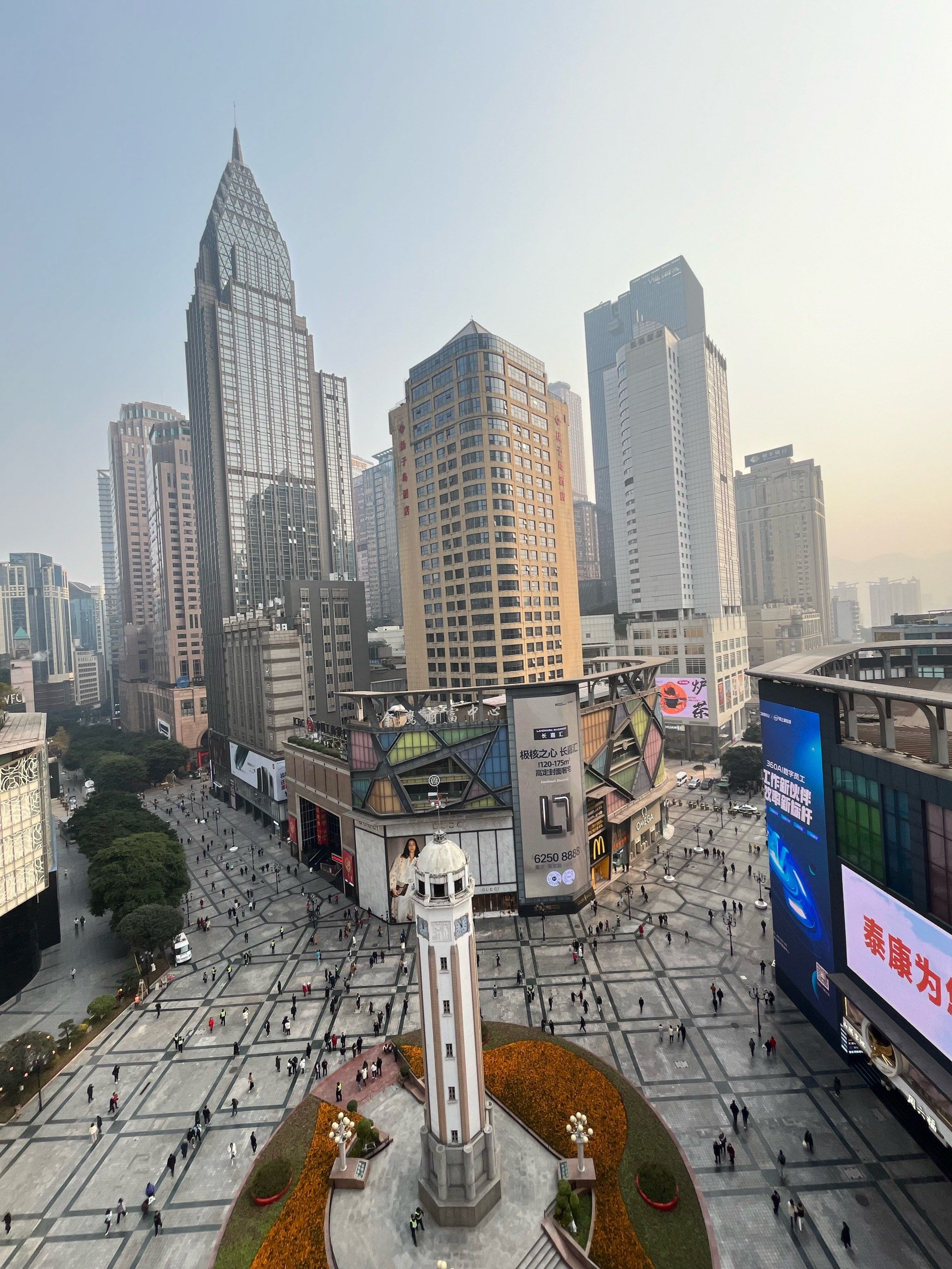
Guotai Arts Center (国泰艺术中心 / 'Chopsticks Building')
A striking red-and-black modern building nicknamed the 'Chopsticks Building' for its criss-crossing steel beams. It hosts performances and exhibitions...
What Most Visitors Miss
Daijia Lane Cliff Walkway (戴家巷崖壁步道)
A cliffside walkway with coffee shops tucked into the rock face, just a short walk from Jiefangbei. Most tourists go straight to Hongyadong and miss this quieter, equally atmospheric spot.
Luzu Temple area (鲁祖庙) old restaurants
The 30+ year old dumpling and rice ball shops in this alley serve more authentic and cheaper food than the main Bayi food street. Locals eat here; tourists don't know about it.
The monument's hourly chimes
The Liberation Monument has clock faces on all four sides that chime on the hour. Most people snap a quick photo and move on without waiting to hear the bells — they're a small but meaningful detail.
Plan Your Visit
How Long to Visit
30-60 minutes (see the monument, snap photos, grab a snack
explore the food streets, browse shops, soak up the nighttime atmosphere
Half a day (combine with Hongyadong, Yangtze Cableway, and Shibaiti — all walkable from here
Smart Route
Arrive by Metro Line 2 (Linjiangmen Station, Exit D)
Walk to Liberation Monument for photos
Head to Bayi Good Eat Street for dinner
Walk 10 minutes to Hongyadong for the iconic night view
Cross Qiansi Gate Bridge for the panoramic skyline photo
Return to Jiefangbei area for late-night snacks and people-watching.
Best Time to Visit
Evening after 6:00 PM when the neon lights turn on, the LED billboards glow, and the street food vendors are in full swing
National holidays (especially October 1-7 Golden Week and May Day) — the crowds become physically difficult to navigate
By Season
Spring
and autumn (March-May, September-November) have the best weather. Winter is mild but foggy.
Summer
(June-August) — evening visits are more comfortable. Spring and autumn (March-May, September-November) have the best weather.
Autumn
(March-May, September-November) have the best weather. Winter is mild but foggy.
Winter
Visit on a weekday evening for the best balance of atmosphere and manageable crowds. After seeing Jiefangbei, walk to Hongyadong (10 minutes) for the iconic illuminated stilted building view, then cross Qiansi Gate Bridge for the panoramic night skyline shot.
What to Skip
The luxury malls are standard international brands — no different from any other Chinese city. The main food stalls on Bayi Street are decent but slightly overpriced; duck into side alleys for better value. Avoid buying from mobile street vendors (police loudspeakers actively warn against this).
Pro Tips
Stay in the Jiefangbei area — it's the best base for Chongqing sightseeing, with metro access, endless food options, and walkable proximity to Hongyadong, the Yangtze Cableway, Shibaiti, and Chaotianmen. Hotel prices range from budget hostels to luxury (Westin has a rooftop pool with skyline views). Weekday evenings give you the neon atmosphere without holiday-level crowds.
Photo Spots
Liberation Monument plaza at night
Shoot from a low angle to capture the monument with illuminated skyscrapers towering behind it. The contrast between the 1947 stone monument and modern glass towers tells the story.
WFC Observatory (73rd floor)
Visit at dusk to capture the transition from daylight to neon city. Costs ~¥100 but gives you the best aerial perspective of the entire Yuzhong Peninsula.
Qiansi Gate Bridge (千厮门大桥) looking back at Hongyadong and Jiefangbei
Walk to the middle of the bridge after dark for the full panoramic night skyline with Hongyadong's golden lights in the foreground.
Pair With
Hongyadong (洪崖洞)
10-minute walk
The iconic illuminated stilted-building complex that looks like a scene from Spirited Away. Best at night. Walking distance from Jiefangbei — the natural next stop after dinner on the food street.
Yangtze River Cableway (长江索道)
15-minute walk or one metro stop
A retro cable car crossing the Yangtze River with panoramic city views. A quintessential Chongqing experience that pairs perfectly with a Jiefangbei visit.
Shibaiti Traditional District (十八梯传统风貌区)
5-minute walk
A restored historic stairway district showing old Chongqing life — the perfect contrast to Jiefangbei's modern commercial energy. Adjacent to the pedestrian street.
Tickets & Access
Jiefangbei Pedestrian Street
Open public area, no admission required
WFC Observatory (环球金融中心观景台)
73rd floor panoramic view of Yuzhong Peninsula — optional add-on nearby
Opening Hours
Open 24 hours (pedestrian streets). Shops typically 10:00 AM–10:00 PM. Food stalls and restaurants open later.
How to Buy
N/A
Passport: N/A — no entry requirements
Queue Situation
No queues for the street itself. Individual food stalls may have short lines, especially 好又来酸辣粉 (Haoyoulai acidic-spicy noodles) which always has a queue.
Tips & Warnings
Everything is spicy by default
Chongqing cuisine is built on chili and Sichuan peppercorn (numbing spice). If you can't handle spice, say '不辣' (bù là) or '微辣' (wēi là / mild spice) when ordering. Even 'mild' may still be quite spicy by Western standards.
Extremely crowded during holidays
National Day (Oct 1-7), May Day (May 1-5), and Chinese New Year bring suffocating crowds — traffic control measures are implemented and the pedestrian street becomes shoulder-to-shoulder. Avoid these dates if possible.
Chongqing's terrain is exhausting
The city is built on mountains — what looks flat on a map involves stairs, hills, and elevation changes. Wear comfortable flat shoes. Navigation apps struggle with Chongqing's 3D geography. If Chongqing's hills are getting to you, our team can arrange a car to shuttle you between the main attractions so you skip the climbs.
Some food stalls are tourist traps
Stick to stalls with long queues of Chinese locals. Avoid anyone aggressively pulling you into their restaurant. The most famous stalls (好又来酸辣粉, 山城小汤圆) are genuinely good despite being touristy.
What to Bring
Wear
Comfortable flat shoes — essential for Chongqing's hilly terrain and long walking distances. Dress casually; this is a relaxed street food and shopping area. Light layers in spring/autumn; minimal clothing in summer (it's extremely hot and humid).
Bring
Translation app (essential). Portable charger. Small cash bills for street food. Umbrella (Chongqing rain is frequent and unpredictable). Tissues/wet wipes for street food eating.
Don't Bring
Large luggage — the area is crowded and hilly. Leave bags at your hotel. Don't bring high expectations for 'cultural sightseeing' — this is primarily a commercial and food district.
Physical Reality
easy
The main pedestrian plaza is flat and accessible. However, reaching it from the metro involves some stairs, and the surrounding streets have Chongqing's signature steep inclines. If exploring beyond the main plaza toward Hongyadong or the riverfront, expect significant elevation changes.
Foreigners Watch Out
- Very little English anywhere — signs, menus, and staff are almost entirely Chinese-only. Download a translation app and learn to say '不辣' (bù là / not spicy) before you arrive.
- Mobile payment (WeChat Pay / Alipay) is dominant. Some street food stalls may not accept cash easily. Try to set up mobile payment before arriving, or carry small bills (¥5, ¥10, ¥20).
- Chongqing's navigation is notoriously confusing — you may be on the 1st floor of one building and the 22nd floor of the building next to it. Google Maps works poorly here; use Amap (高德地图) or Baidu Maps.
- The area is very safe — police patrols are frequent and visible, even late at night. Multiple reviewers specifically mention feeling safe.
If Things Go Wrong
Can't find anywhere to eat that isn't overwhelmingly spicy
→ Look for restaurants advertising 清汤 (qīng tāng / clear broth) options, or find a hotpot place where you can order a 鸳鸯锅 (yuānyāng guō / split pot with one spicy and one mild side). The malls have international food courts with non-spicy options.
Got lost in Chongqing's 3D terrain
→ Show a taxi driver or passerby '解放碑' on your phone — everyone knows it. Metro Line 2 Linjiangmen Station and Line 1 Jiaochangkou Station both lead back to Jiefangbei.
Phone died and can't pay for food
→ Most convenience stores (Family Mart, 7-Eleven) and some food stalls accept cash. The larger malls have charging stations.
Useful Chinese
Tap to reveal the English meaning