About Summer Palace
“A huge lake with ancient pavilions and misty hills reflected in it, a 728-meter corridor covered in 14,000 hand-painted scenes, and the golden Tower of Buddhist Incense visible from basically everywhere you stand.”
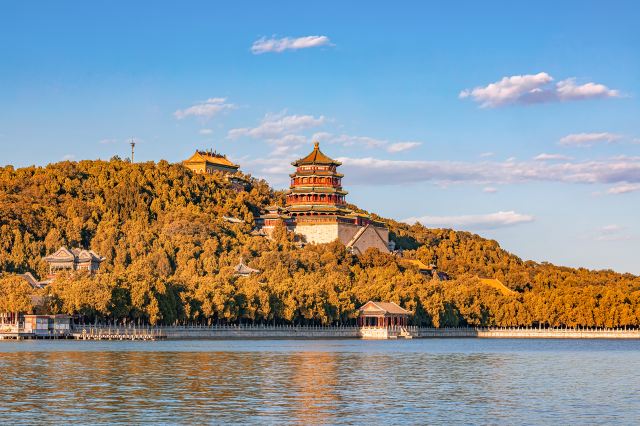
The Summer Palace is China's grandest surviving imperial garden, a UNESCO World Heritage site sprawling across 290 hectares — three-quarters of which is the magnificent Kunming Lake. Built in 1750 by Emperor Qianlong for his mother's birthday, destroyed by Anglo-French forces in 1860, then controversially rebuilt by Empress Dowager Cixi using funds earmarked for the navy, it's a masterpiece of Chinese landscape design that deliberately replicates the best views of West Lake in Hangzhou. The scale is genuinely staggering: a 728-meter Long Corridor with 14,000 painted scenes, a 60-meter hill crowned by the iconic Tower of Buddhist Incense (Foxiangge), a 17-arch bridge stretched across the lake, and the famously absurd Marble Boat that symbolizes Cixi's excesses. The beauty is real and overwhelming — reviewers consistently call it one of the most beautiful places in Beijing. The catch is its size: you cannot see everything in half a day, and most visitors underestimate the walking required (10-15 km if you try to circle the lake). Crowds are intense on weekends and holidays but the sheer scale means you can always find quiet corners. At just 20-30 RMB for entry, it's one of the best value attractions in all of China. Essential for any Beijing visit, but plan your route carefully or you'll exhaust yourself seeing a fraction of what's here.
Top Questions from Travelers
Why This Place Matters
The Summer Palace embodies a turning point in Chinese history. Emperor Qianlong built the original Clear Ripples Garden in 1750 at the peak of Qing dynasty power, modeling it after the best scenery of southern China — a northern emperor's attempt to capture the beauty of Hangzhou's West Lake. When Anglo-French forces burned it in 1860 during the Second Opium War, the destruction became a scar on China's national consciousness that resonates to this day. Empress Dowager Cixi's decision to divert naval modernization funds to rebuild it as the Summer Palace in the 1880s is remembered as one of history's most consequential acts of vanity — China's failure to modernize its navy led directly to the devastating defeat in the 1894-95 Sino-Japanese War. The Marble Boat sitting permanently at the lakeshore has become the perfect symbol of this tragedy: a nation that built a stone boat instead of real ones. Yet the result is undeniably magnificent. The Summer Palace represents both the pinnacle of Chinese garden design and the hubris that contributed to an empire's fall — beauty and cautionary tale inseparably intertwined.
Need help planning?
ChinaPal handles everything
- Book English-speaking guides
- Arrange transport & tickets
- Real-time help during your visit
- Restaurant reservations nearby
Highlights
5 iconic experiences that define a visit
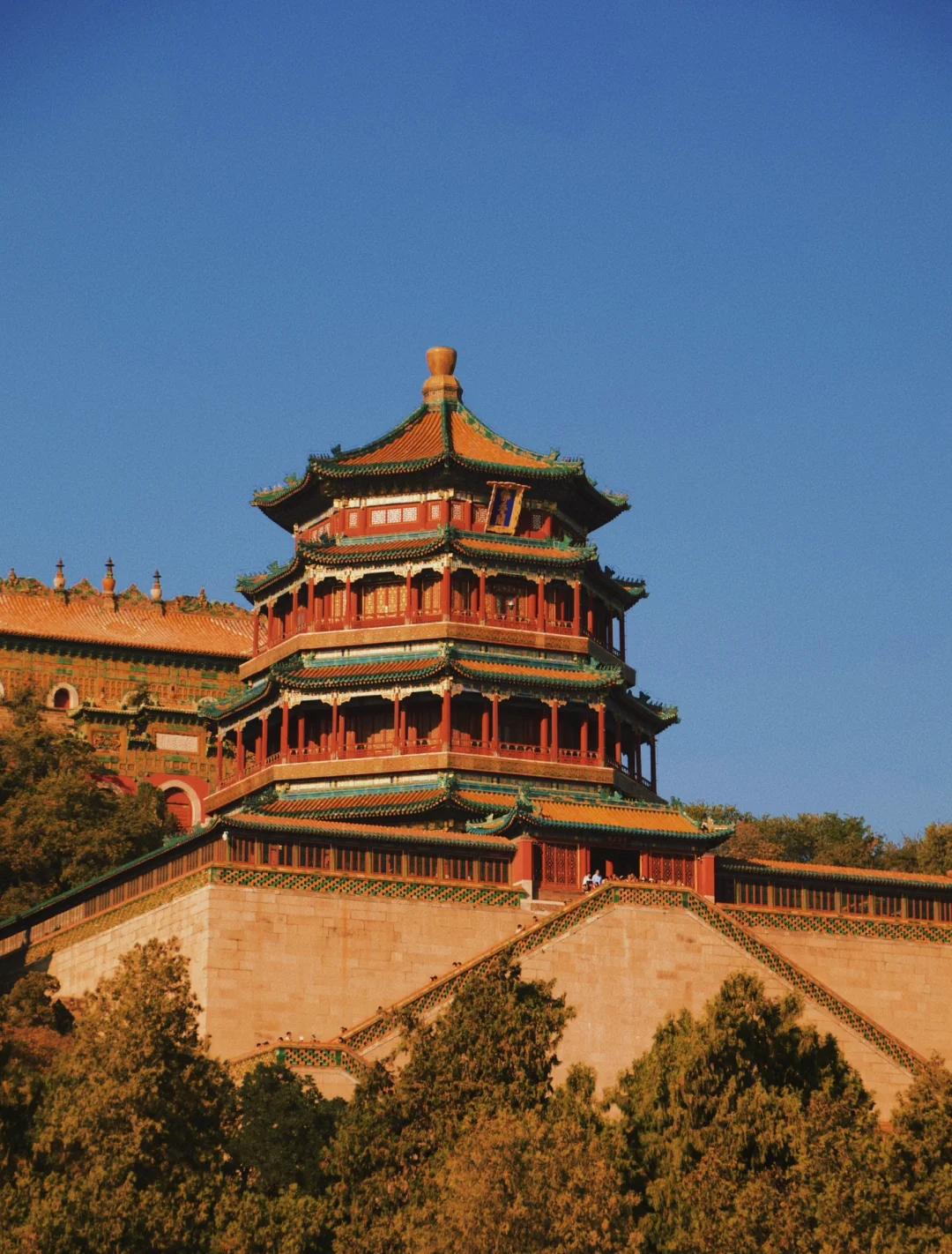
Tower of Buddhist Incense (佛香阁)
The iconic 41-meter octagonal tower perched atop Longevity Hill — the visual centerpiece of the entire Summer Palace. Climbing to the top rewards you with a panoramic view over Kunming Lake, the Western Hills, and on clear days, the distant Beijing skyline. Visible from almost everywhere in the park, it serves as your constant landmark.
This is the must-do highlight. The climb is steep but manageable (about 60 meters elevation). The panoramic view from the top is the single best overview of the Summer Palace and one of the finest vistas in Beijing.
 Universal Appeal
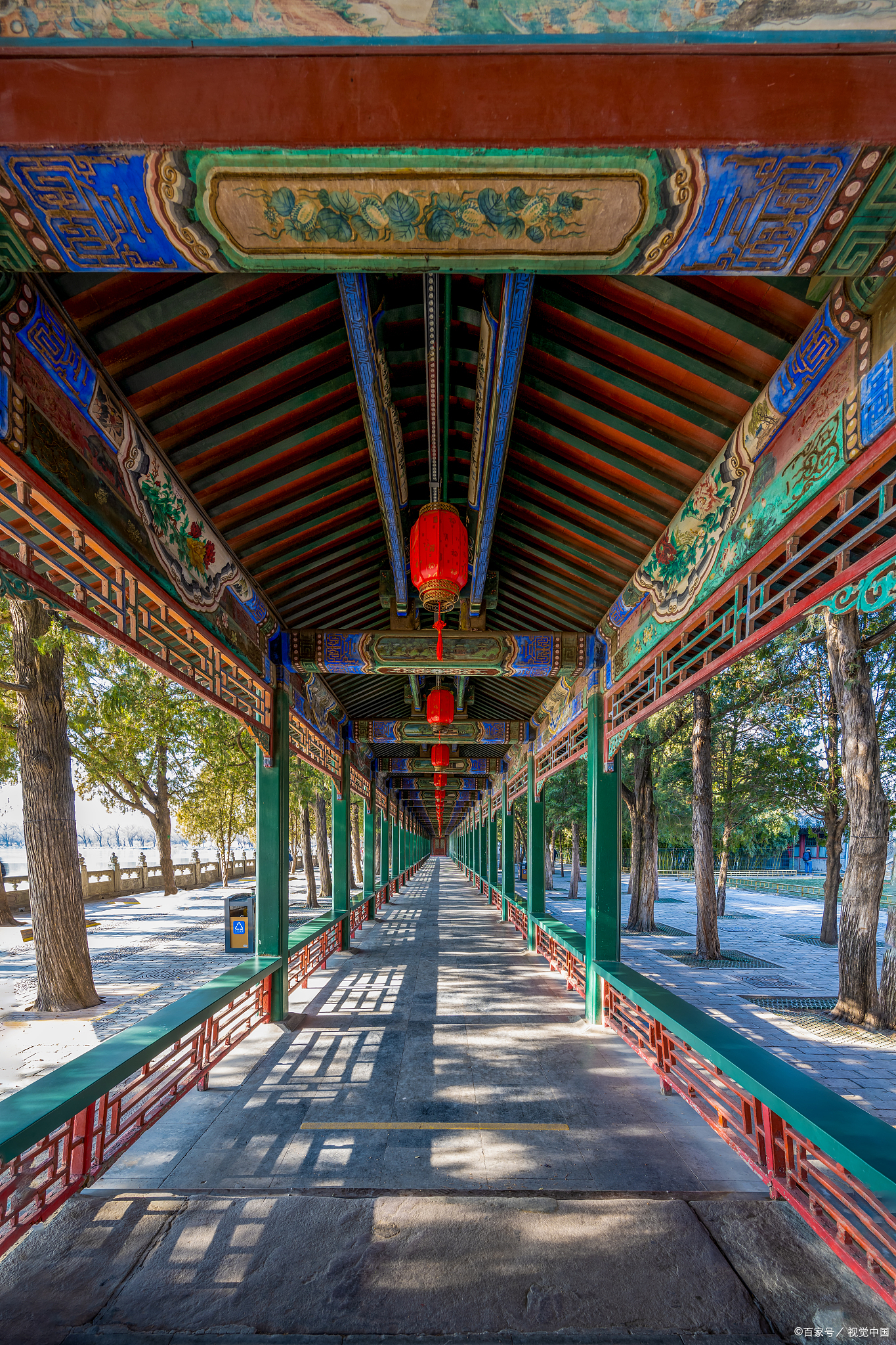
Long Corridor (长廊)
A 728-meter covered walkway connecting key areas of the palace, famous for its 14,000 individual paintings on the crossbeams depicting scenes from Chi...
 Universal Appeal
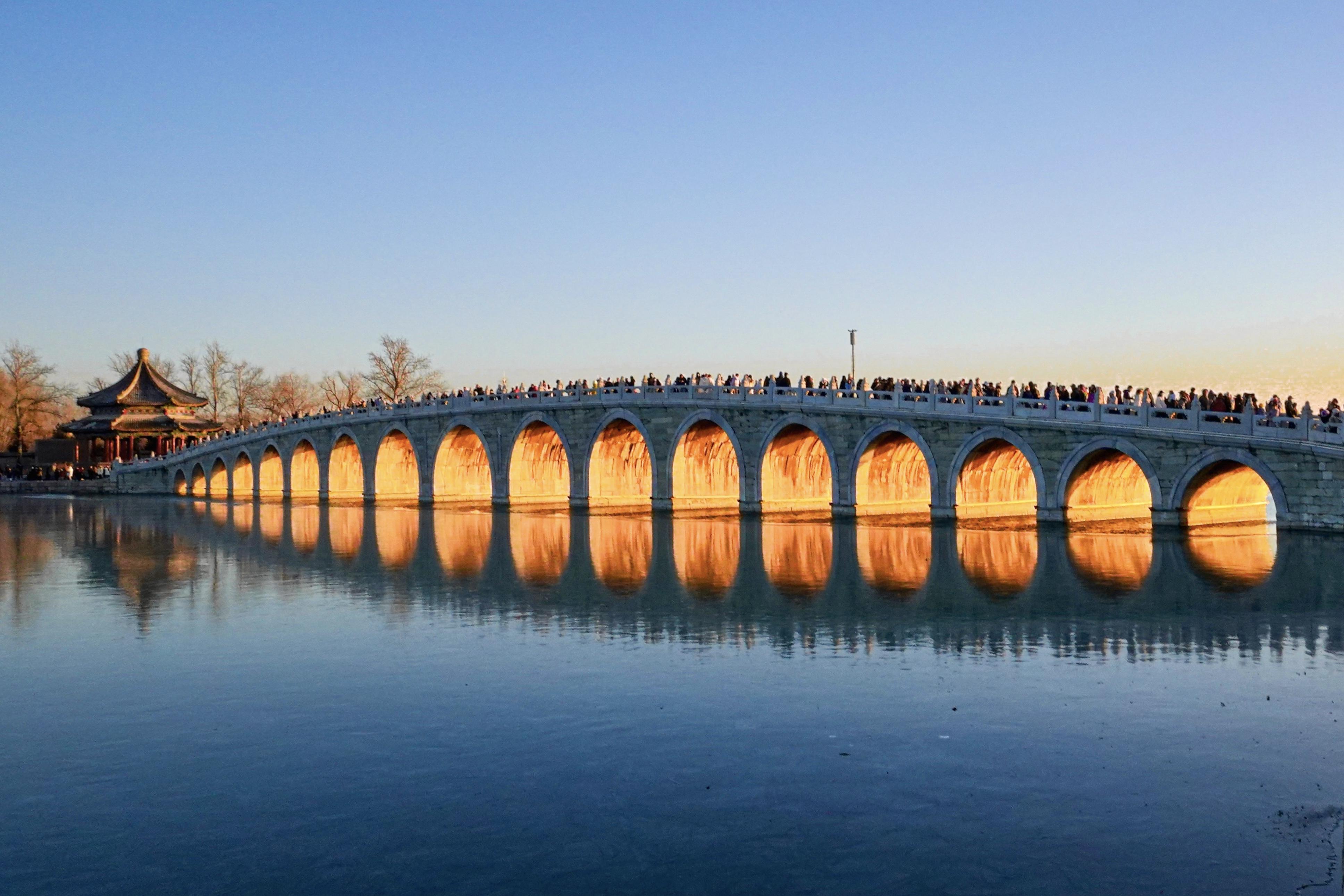
17-Arch Bridge (十七孔桥)
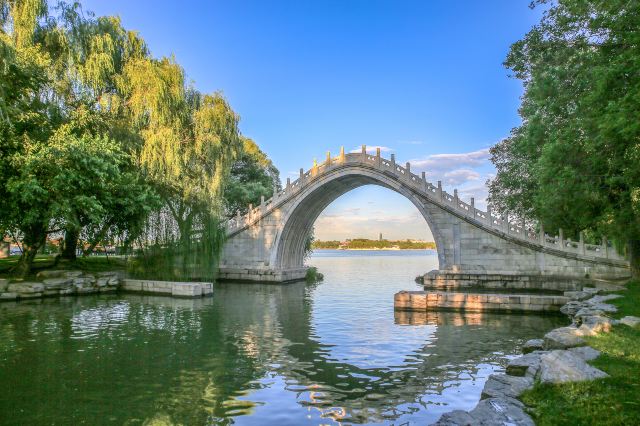
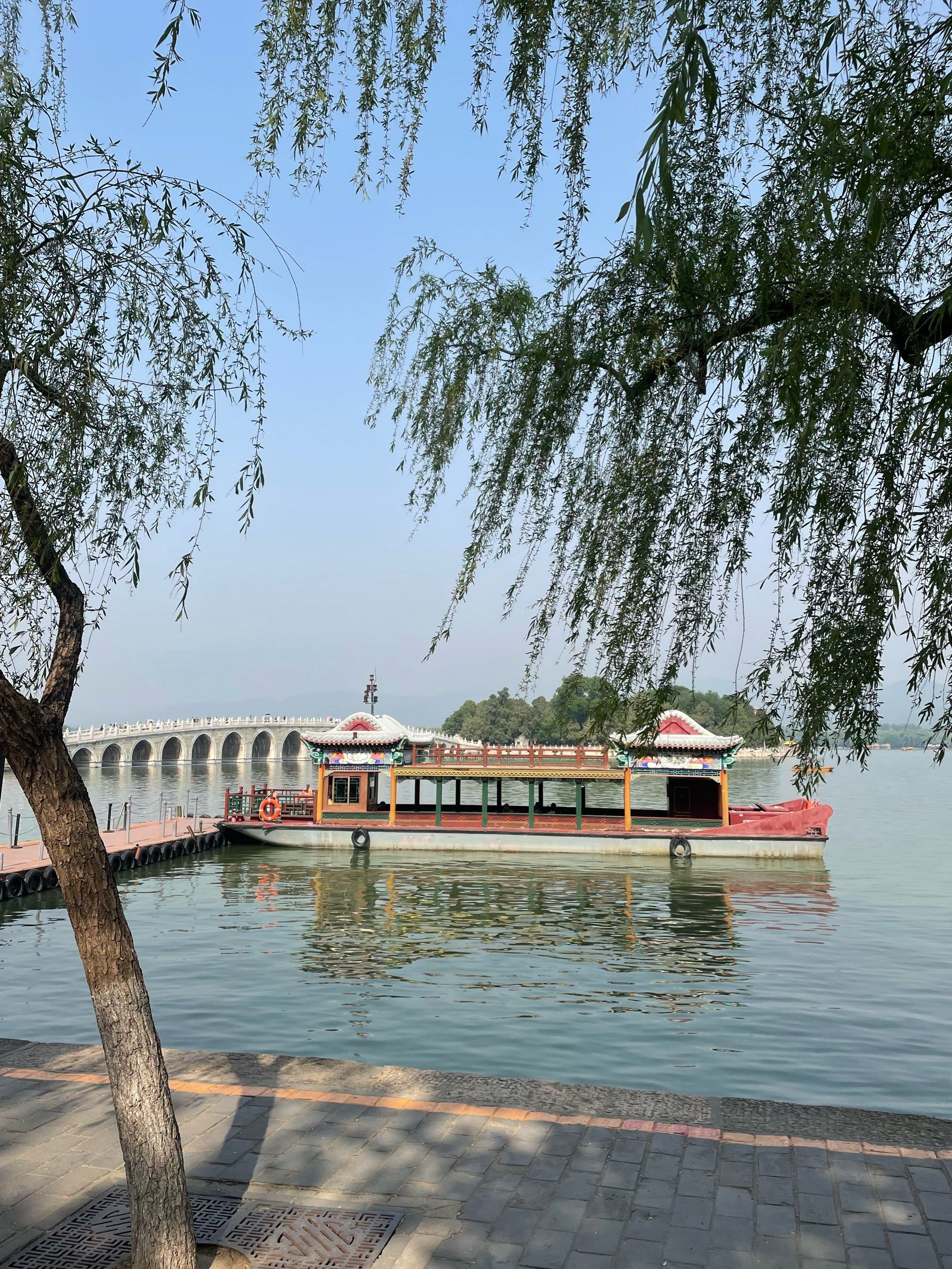
A graceful 150-meter stone bridge with 17 arches connecting the eastern shore to South Lake Island. Adorned with 544 carved stone lions, each one uniq...
 Culturally Interesting
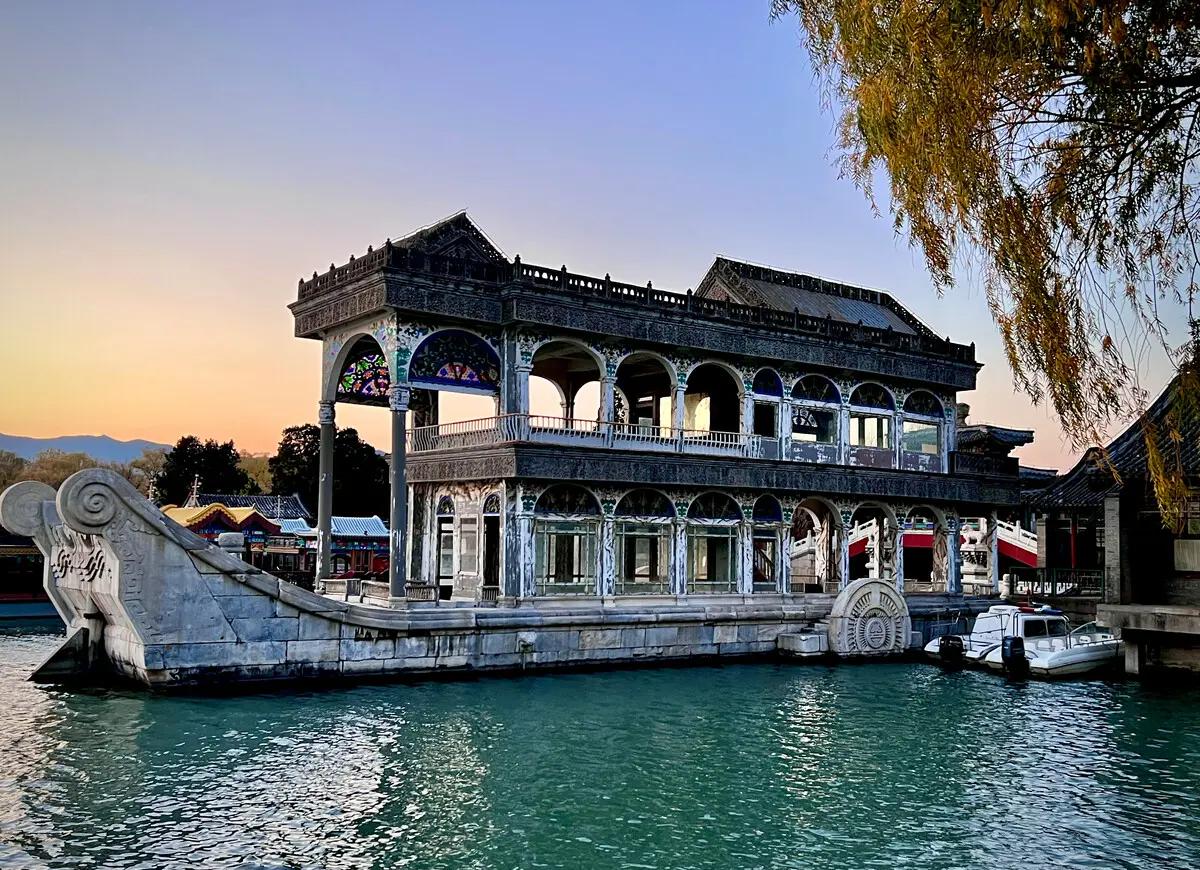
Marble Boat (石舫)
A 36-meter stone and marble boat permanently 'docked' at the lake shore, built by Emperor Qianlong and later enhanced by Empress Dowager Cixi with a W...
 Universal Appeal
Western Causeway (西堤)
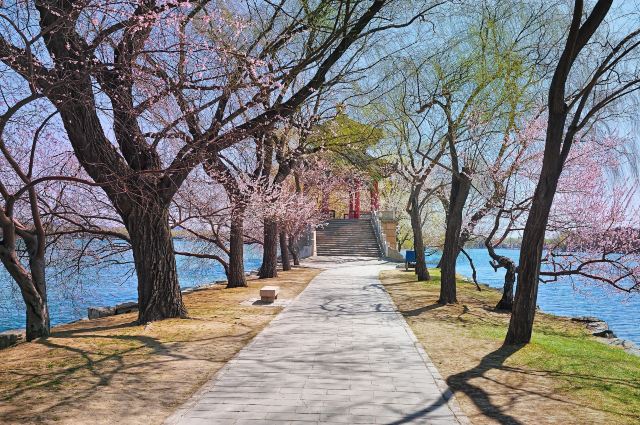
A 2.5-km willow-lined causeway crossing Kunming Lake, modeled after the famous Su Causeway of Hangzhou's West Lake. Features six uniquely designed bri...
What Most Visitors Miss
The Western Causeway (西堤) and its six bridges
Most visitors cluster around the northern section (Long Corridor, Foxiangge, Marble Boat) and never cross to the quieter western side. The causeway offers the best panoramic views and the most peaceful experience in the entire park.
Xiequ Garden (谐趣园) — the garden within the garden
Tucked away in the northeast corner, this miniature Jiangnan-style garden is an exquisite pocket of calm with lotus ponds, rockeries, and the famous 'Know Fish Bridge' (知鱼桥). Most visitors walk right past the entrance.
The back of Longevity Hill (后山)
The north face of the hill features Tibetan Buddhist architecture including the Four Great Continents (四大部洲) complex — dramatically different in style from the Chinese architecture on the south face. Far fewer crowds and a completely different atmosphere.
The winter solstice golden-light phenomenon at 17-Arch Bridge
Around December 21-22 each year, the setting sun aligns perfectly to illuminate all 17 arches simultaneously with golden light. This natural spectacle is famous among Chinese photographers but largely unknown to foreign visitors.
Plan Your Visit
How Long to Visit
enter North Palace Gate, see Four Great Continents, Tower of Buddhist Incense, Long Corridor, Marble Boat, exit North Palace Gate
core route plus 17-Arch Bridge, Kunming Lake boat ride, Suzhou Street, and back mountain
Full day (circumnavigate Kunming Lake via the Western Causeway, explore all halls and gardens, visit Xiequ Garden, take a boat ride, catch sunset at the 17-Arch Bridge
Smart Route
North Palace Gate (closest to metro)
Suzhou Street (if time allows)
Four Great Continents (Tibetan temples, back mountain)
Tower of Buddhist Incense (climb for panoramic views)
Long Corridor (walk south along the painted corridor)
Marble Boat
take a boat across Kunming Lake to South Lake Island
walk across 17-Arch Bridge
Bronze Ox
exit via New Palace Gate. This route covers all major highlights in 4-5 hours with downhill walking and a boat ride to rest your legs.
Best Time to Visit
Arrive right at opening (6:00-6:30 AM in summer, 6:30-7:00 AM in winter) to experience the gardens in morning light with minimal crowds
Weekend midday (10 AM - 3 PM) and Chinese public holidays — the main corridor and hilltop become uncomfortably crowded
By Season
Spring
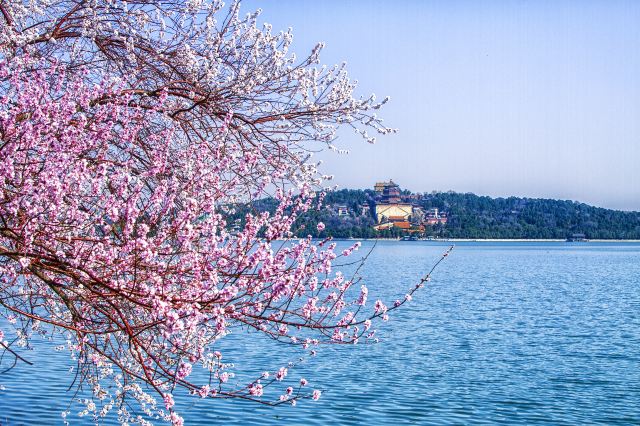
(late March-April) brings peach and apricot blossoms along the Western Causeway — peak beauty. Summer is lush and green with lotus flowers on the lake, but brutally hot and humid.
Summer
is lush and green with lotus flowers on the lake, but brutally hot and humid. Autumn (September-October) has the best weather and golden light.
Autumn
(September-October) has the best weather and golden light. Winter is cold but magical when Kunming Lake freezes — locals skate and sled on the ice, and crowds are minimal.
Winter
is cold but magical when Kunming Lake freezes — locals skate and sled on the ice, and crowds are minimal. Around winter solstice, the famous 'golden light through the 17 arches' phenomenon draws photographers.
Visit on a clear weekday in late October or early November: comfortable temperature, golden autumn light, thin crowds, and the lake still unfrozen. For photographers, the winter solstice golden-light-through-17-arches shot is legendary — arrive by 3 PM and stake out a position on the east bank.
What to Skip
If short on time, skip Suzhou Street (a reconstructed market street that feels artificial compared to the real thing) and the Hall of Virtue and Harmony theater (interesting historically but just an empty theater stage). The far southern and western shores are beautiful but add significant walking distance — save them for a second visit.
Pro Tips
Buy the comprehensive ticket (联票) — the Tower of Buddhist Incense alone justifies the extra cost. Take a boat across the lake instead of walking around it — saves 4-5 km of walking and gives you stunning on-water views. Enter from North Palace Gate to avoid the worst crowds at East Palace Gate. Download the Yiheyuan app for an interactive map. After 4 PM, the park empties significantly as tour groups leave — local Beijingers consider this the sweet spot.
Photo Spots
East bank of Kunming Lake near the Bronze Ox, looking at the 17-Arch Bridge
Late afternoon golden light makes the bridge glow. Around winter solstice (Dec 21-22), sunlight illuminates all 17 arches simultaneously — arrive by 3 PM for this legendary shot.
Top of the Tower of Buddhist Incense (佛香阁)
Go early morning for the clearest views and fewest people. Wide-angle lens captures the full sweep of Kunming Lake and the distant Western Hills.
Long Corridor (长廊) looking through the painted pillars toward the lake
Early morning or late afternoon light streaming through the corridor pillars creates beautiful light-and-shadow patterns. Frame the lake through the corridor for depth.
Western Causeway (西堤) in spring
Visit in late March to early April when peach blossoms and weeping willows frame the water. Morning mist adds atmosphere. Face east toward Longevity Hill for the classic composition.
Pair With
Old Summer Palace / Yuanmingyuan (圆明园)
Adjacent — 10-minute walk east from the Summer Palace
The ruins of the original imperial garden, destroyed by Anglo-French forces in 1860. The haunting Western-style marble ruins are a powerful contrast to the rebuilt beauty of the Summer Palace. Together they tell the complete story of China's imperial garden culture and its destruction.
Fragrant Hills Park (香山公园)
20-minute taxi ride west
The Western Hills that form the Summer Palace's scenic backdrop become the main attraction at Fragrant Hills, especially in autumn when the red maple leaves peak (mid-October to mid-November).
Peking University campus (北京大学)
10-minute walk or one metro stop east
China's most prestigious university sits adjacent to the Summer Palace, with its own beautiful lake (Weiming Lake) and traditional architecture. A quiet, free walk through academic history.
Tickets & Access
Basic ticket (大门票)
Gets you into the park and most outdoor areas
Comprehensive ticket (联票)
Adds Tower of Buddhist Incense, Hall of Virtue & Harmony, Suzhou Street, and Wenchang Gallery
Boat rides across Kunming Lake
11 routes available — saves energy and gives unique lake perspectives
Audio guide rental
Available at main entrances — English available, deposit required
Opening Hours
April 1 - October 31: 6:00 AM - 7:00 PM (last entry 5:00 PM). November 1 - March 31: 6:30 AM - 5:00 PM (last entry 4:00 PM). Internal exhibition halls close 30-60 minutes before park closing.
How to Buy
Buy at the gate — scan QR code with Alipay or WeChat Pay, or use cash at ticket windows. Can also purchase via the Yiheyuan official WeChat mini-program.
Passport: Passport can be used for ticket purchase at the gate. No Chinese ID requirement.
Queue Situation
Weekday mornings: walk straight in. Weekend mornings: 5-15 minute queues at main gates. Holiday peak: 20-40 minute waits at East Palace Gate (the most popular entrance). North Palace Gate and New Palace Gate typically have shorter queues.
Tips & Warnings
The park is far larger than expected — walking fatigue is the #1 complaint
Visitors consistently underestimate the scale. Plan 10,000-15,000+ steps. Use the boat rides to cross the lake (30-40 RMB) instead of walking around it. Wear your most comfortable shoes and bring water. Consider doing a half-circuit rather than trying to see everything. If you are already exhausted and need to get out, message our team and we can arrange a taxi pickup at whichever gate is closest to you.
Getting a guide matters more here than at most attractions
Without historical context, the Summer Palace is 'just' a beautiful park. With a guide, every building becomes a story about Qianlong's love for his mother, Cixi's political machinations, or the burning by foreign armies. Audio guides (¥20-40) are available at entrances, or book a private English-speaking guide in advance. Our concierge can arrange a vetted English-speaking guide matched to your schedule and interests — just message us with your preferred date and group size.
The audio guide experience can be hit-or-miss for foreigners
Some visitors report being told they 'cannot' rent the English audio guide and being charged extra. Be persistent and polite — English guides exist. Alternatively, pre-download a self-guided tour app. If you run into trouble renting the English audio guide, message us and we can call the park service desk to confirm availability and help sort it out.
Food options inside are limited and overpriced
Bring snacks and a full water bottle. The few restaurants inside charge Beijing-tourist-premium prices for mediocre food. The famous Tingli Restaurant (听鹂馆) serves imperial-style cuisine at high prices — worth it for a special experience but not for a casual bite. If you are starving mid-visit, message us and we can arrange food delivery to whichever park exit you plan to use.
Late afternoon arrivals often regret it
The park closes relatively early (5 PM in winter, 7 PM in summer) and staff actively usher people toward exits well before closing. If you arrive after 3 PM in winter, you'll be rushing and stressed. Morning arrival is strongly recommended.
What to Bring
Wear
Comfortable walking shoes are the single most important item — you'll walk 10-15 km on stone paths and steps. Dress in layers as the lakeside is windy. In summer: hat, sunscreen, light breathable clothing. In winter: warm coat, gloves, and scarf — the lake amplifies the cold.
Bring
Full water bottle (1L minimum). Snacks. Sunscreen and hat in summer. Camera with wide-angle lens. Portable charger. A printed map or offline map downloaded. Cash for boat rides. Umbrella for rain or sun.
Don't Bring
Don't bring heavy bags — you'll be walking for hours and there are no lockers. Minimize what you carry. High heels or sandals are a terrible idea on the stone paths and stairs.
Physical Reality
moderate-heavy
Expect 10,000-20,000 steps depending on your route. The climb to the Tower of Buddhist Incense involves steep stone stairways (about 60 meters elevation gain). The Kunming Lake circumference walk is 6-7 km on flat ground. Main pathways are paved stone. Boat rides reduce walking significantly. Wheelchair accessible on main paths but the hilltop is not accessible.
Foreigners Watch Out
- The park is vast and poorly signed in some areas — download an offline map or use Baidu Maps/Amap for navigation within the grounds. Google Maps works for finding the gates but is less detailed inside.
- Ticket types matter: the basic ticket (大门票) only gets you into the park and outdoor areas. The comprehensive ticket (联票) adds four key attractions including the Tower of Buddhist Incense. Buy the comprehensive ticket — it's worth the small premium.
- Boat rides have multiple routes and docks — check which route goes where before paying. Staff at boat docks speak minimal English. Having the destination written in Chinese helps. Send us a message with where you are and where you want to go, and we can tell you exactly which boat route and dock to use.
- The lakeside is significantly windier and colder than the sheltered corridors — bring layers, especially in autumn and winter. Many visitors are caught off guard by the temperature drop near the water.
- Wheelchair and stroller accessibility is generally good on main paths, though the climb to the Tower of Buddhist Incense involves steep stone stairs with no ramp alternative.
If Things Go Wrong
Exhausted and still haven't seen the main highlights
→ Take a boat across the lake to skip the walking. Focus on the three must-sees: Tower of Buddhist Incense (climb for the view), Long Corridor (walk even a portion), and the 17-Arch Bridge (photograph from the east shore). These three capture the essence of the Summer Palace.
Arrived too late in the day and running out of time
→ Rush to the Tower of Buddhist Incense for the panoramic view (this is the single most important experience). Then walk downhill along the Long Corridor. Even 60-90 minutes covers these two highlights.
Crowds are overwhelming in the main areas
→ Head to the Western Causeway or the back mountain — both are significantly less crowded at all times. The quiet beauty of the western shore may end up being your favorite part of the visit.
Useful Chinese
Tap to reveal the English meaning