About Prince Gong's Mansion
“Quieter and more personal than the Forbidden City — you're walking through someone's actual home, scandal and all, with gardens good enough to get lost in.”
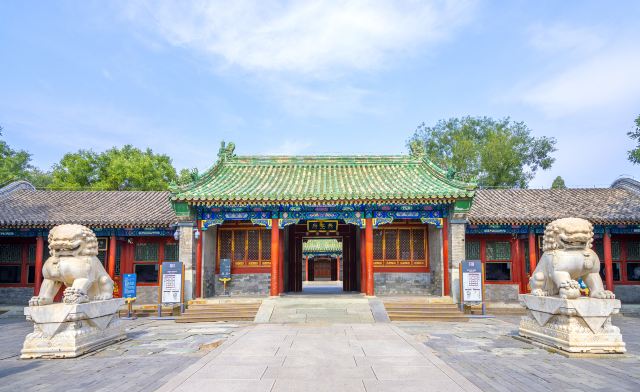
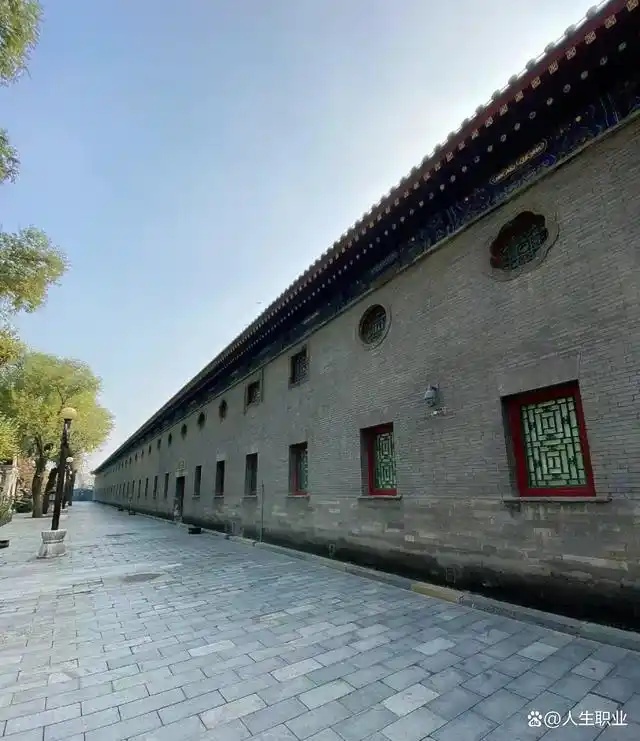
Prince Gong's Mansion is Beijing's largest and best-preserved Qing dynasty princely residence — a 60,000 square meter complex split between grand courtyards and an exquisite classical garden. It's essentially a miniature Forbidden City with better gardens and without the overwhelming scale. The architecture is genuinely impressive: the golden nanmu wood interior of Xijin Zhai alone is valued at billions, the Grand Theater House has remarkable acoustics without a single iron nail, and the 180-meter-long Treasure Building has 44 uniquely patterned windows. The garden is the real star — winding paths, rockeries, bat-shaped pools, and pavilions that feel straight out of a Chinese painting. The famous 'Fu' (fortune) character stele, written by Emperor Kangxi, draws long queues of visitors hoping to touch it for luck. The downsides: it's very crowded (especially afternoons and weekends), most building interiors are closed or converted into gift shops and unrelated exhibitions, and there's almost no English signage or interpretation. Without a guide or audio guide, you're mostly looking at beautiful exteriors without understanding the rich stories behind them. Best for history enthusiasts and anyone who wants to see aristocratic Qing life on a more human scale than the Forbidden City.
Top Questions from Travelers
Why This Place Matters
The mansion's history reads like a palace drama: Heshen was Emperor Qianlong's favorite minister — rumored to be his secret lover — who amassed a fortune equal to 10 years of the entire empire's revenue through corruption. When Qianlong died in 1799, the new emperor immediately had Heshen arrested and executed, confiscating the mansion and its staggering wealth. The property later passed to Prince Gong (Yixin), who played a crucial role in China's interactions with Western powers during the Second Opium War. The saying goes: 'One Prince Gong's Mansion, half the history of the Qing Dynasty.' The obsessive 'fu' (fortune/bat) motifs throughout reflect traditional Chinese beliefs about attracting good luck — the bat is a visual pun (蝠 sounds like 福, fortune). Understanding Heshen's corruption story and the mansion's role in Qing power politics makes the visit far more meaningful.
Need help planning?
ChinaPal handles everything
- Book English-speaking guides
- Arrange transport & tickets
- Real-time help during your visit
- Restaurant reservations nearby
Highlights
5 iconic experiences that define a visit
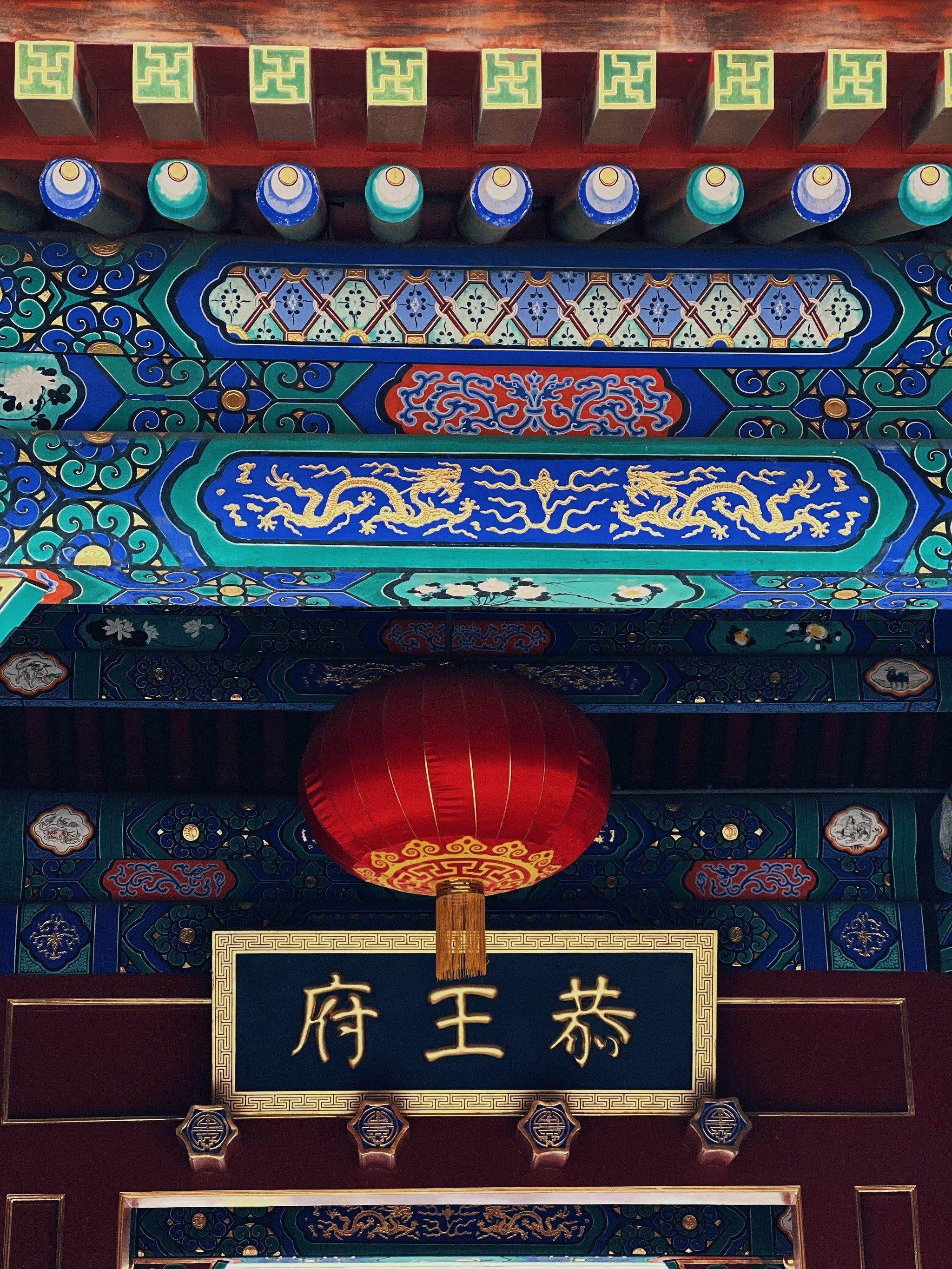
Fu (Fortune) Character Stele (福字碑)
A stone stele inscribed with the character 'fu' (fortune/blessing) by Emperor Kangxi himself — one of only a few surviving examples of his calligraphy. Hidden inside the Secret Cloud Cave (秘云洞) in the garden, the 7.9-meter stele runs through the entire artificial mountain. Visitors queue to touch it for good luck.
The character combines elements of 'many sons,' 'many blessings,' and 'longevity' — it's considered the ultimate lucky charm in Chinese culture. The stele is now behind glass for protection. This is the mansion's most famous treasure and the number one draw for Chinese visitors.
 Universal Appeal
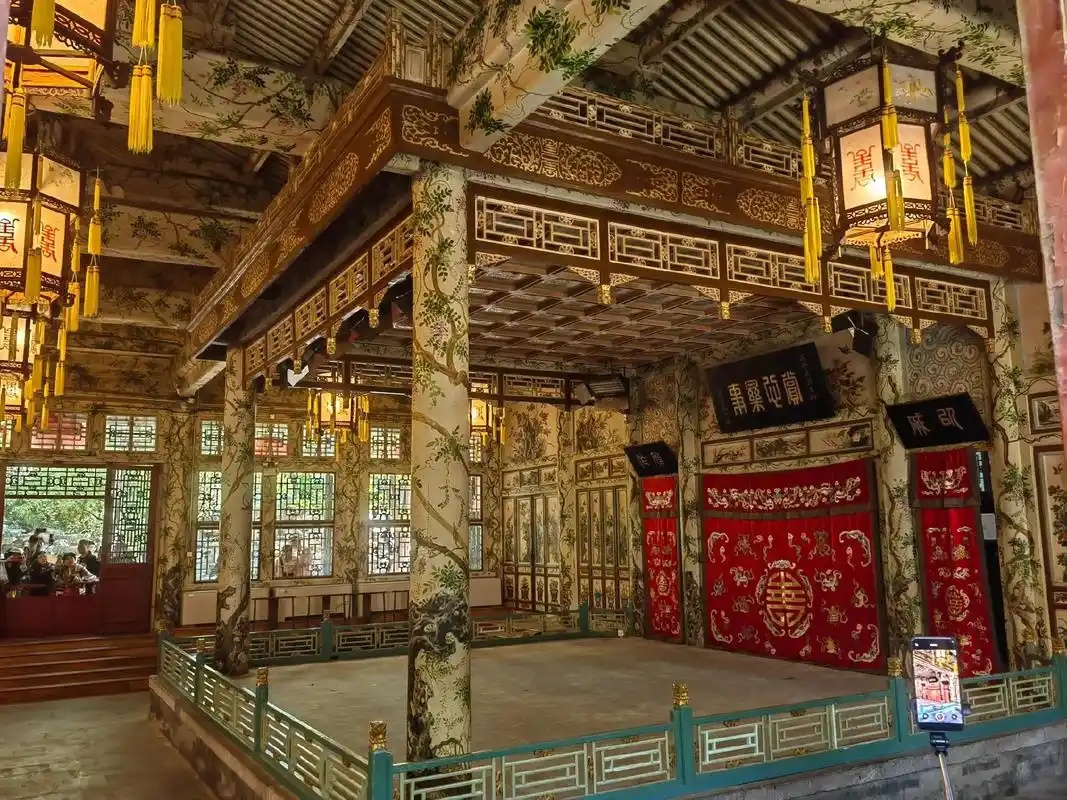
Grand Theater House (大戏楼)
China's only surviving fully enclosed traditional theater from the Qing dynasty. Built entirely of wood without a single iron nail, it features remark...
 Culturally Interesting
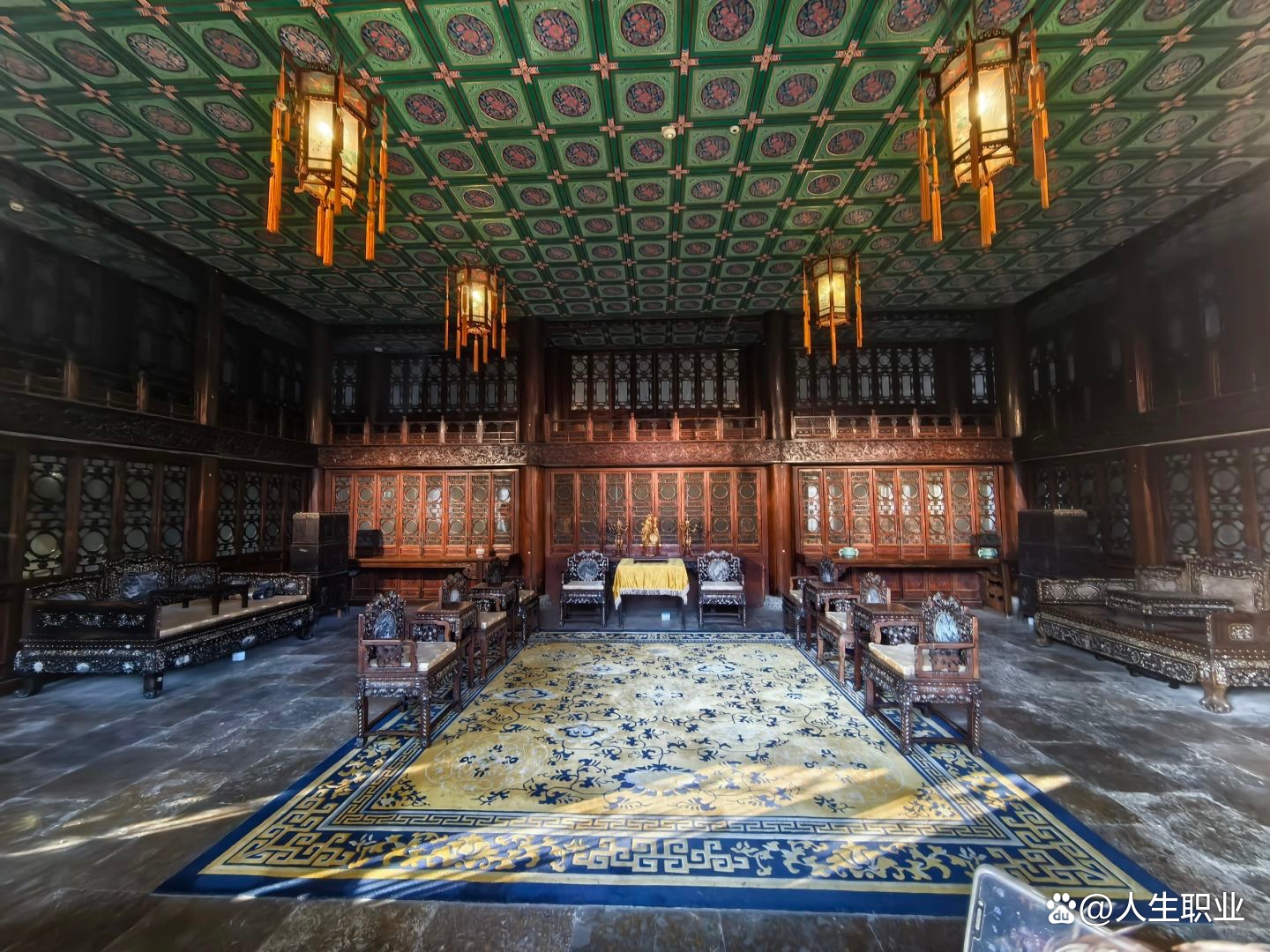
Xijin Zhai / Nanmu Wood Hall (锡晋斋/楠木殿)
The hall with golden nanmu wood pillars and interior — the same precious wood used in the Forbidden City's Ningshou Palace. This extravagance was one ...
 Universal Appeal
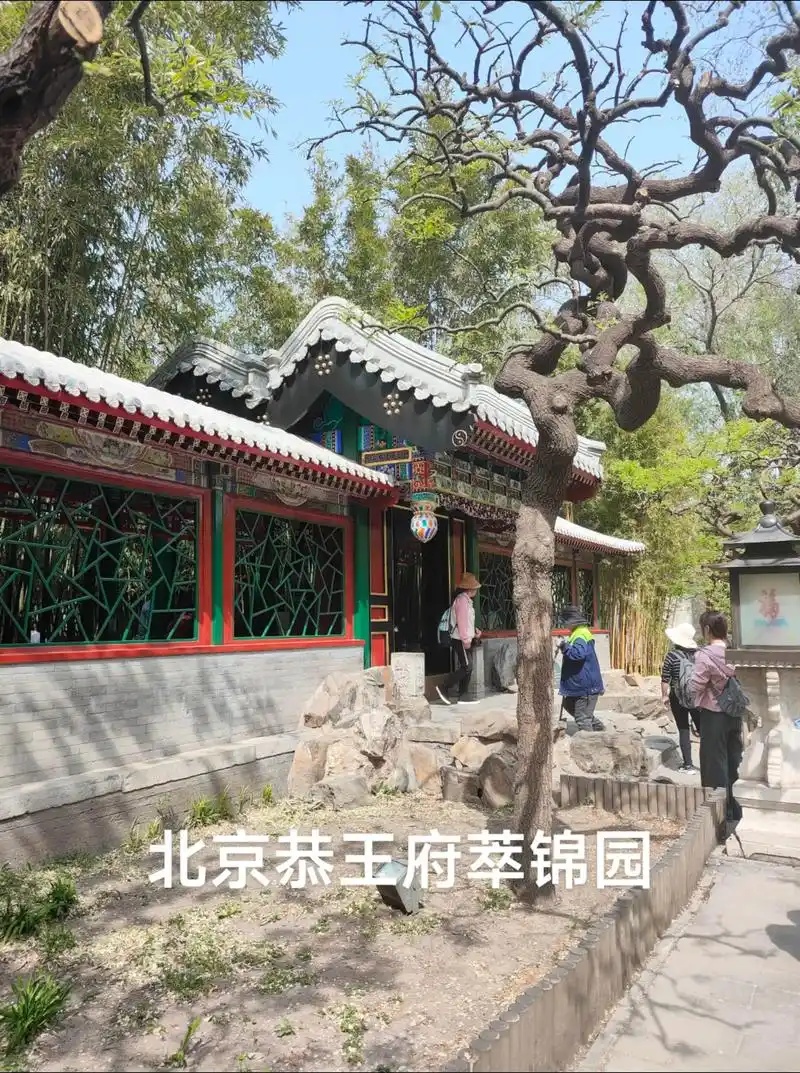
The Garden (萃锦园)
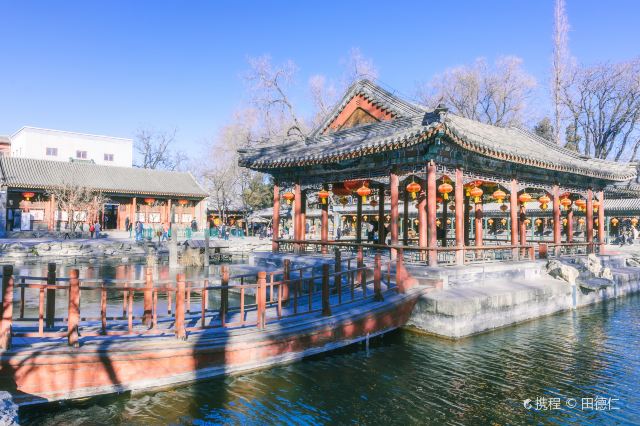
A 28,000 square meter classical Chinese garden considered one of the finest in northern China. Features the bat-shaped pool (蝠池, symbolizing fortune),...
 Culturally Interesting
Rear Cover Building (后罩楼/藏宝楼)
The 180-meter-long building at the back of the residence — the longest building in any Chinese princely mansion. Features 44 uniquely patterned lattic...
What Most Visitors Miss
The bat motifs hidden throughout the entire complex
Bat symbols (蝠 = fortune) are carved into window lattices, painted on ceilings, shaped into pools, and built into building forms. The Bat Hall (蝠厅) at the garden's north end is literally shaped like a bat with spread wings. Spotting these details turns the visit into a treasure hunt.
The Western-Style Gate (西洋门)
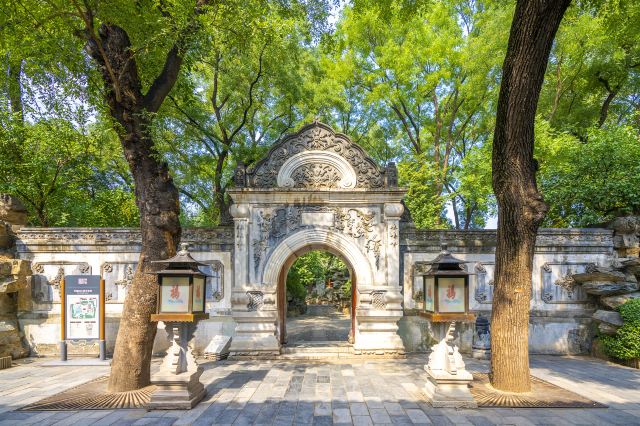
This white marble gate at the garden entrance is modeled after the Old Summer Palace (Yuanmingyuan) and is one of the Three Uniquenesses. It represents the mix of Chinese and Western aesthetics that characterized the late Qing period. Most visitors walk right through without noticing it.
Combining with Shichahai and hutong exploration
The mansion sits right on the south shore of Houhai Lake — after visiting, walk north to the lakeside bars and restaurants, or explore the beautiful hutong alleys surrounding the area. This is one of Beijing's most atmospheric neighborhoods and the perfect context for the mansion visit.
Plan Your Visit
How Long to Visit
1-1.5 hours (main halls and a quick garden walk — you'll miss the best parts
residence halls, garden with audio guide, queue for the Fu stele
detailed exploration of all three axes, every garden pavilion, plus a Beijing Opera performance in the Grand Theater House if scheduled
Smart Route
Arrive at 8:30 AM
rent audio guide at the service hall
enter through the main gate
walk the central axis through Silver Peace Hall and Jiale Hall
visit Xijin Zhai (nanmu wood hall) on the west route
see the Rear Cover Building (44 windows)
enter the garden through the Western-Style Gate
go directly to the Secret Cloud Cave for the Fu stele before the queue builds
explore the garden slowly (Bat Pool, Anfeng Hall, Grand Theater House, Bat Hall)
exit and walk to Houhai Lake.
Best Time to Visit
Arrive at 8:30 AM when gates open — you'll have 1-2 hours of relative peace before tour groups flood in around 10:00 AM
Weekend afternoons and all Chinese public holidays — especially Golden Week (October 1-7), May Day, and Mid-Autumn Festival
By Season
Spring
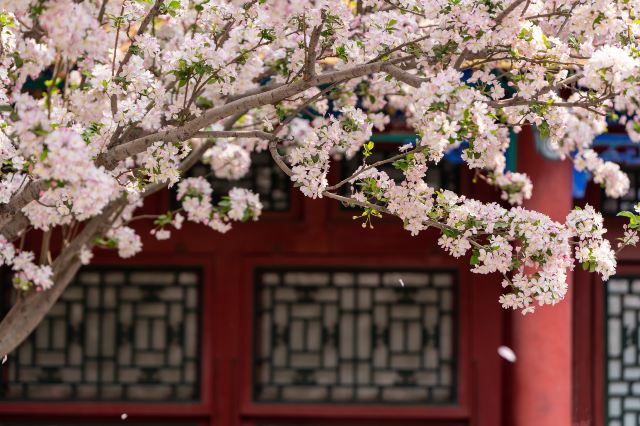
(April-May) brings blooming crabapple and lilac flowers in the garden — stunning against the traditional architecture. Autumn (September-October) has beautiful ginkgo foliage.
Summer
is hot but the shaded garden paths provide relief. Winter is cold but dramatically less crowded.
Autumn
(September-October) has beautiful ginkgo foliage. Summer is hot but the shaded garden paths provide relief.
Winter
Visit on a Tuesday (the day after Monday closure tends to be quieter). Combine with a walk around Shichahai lake and the hutongs afterward — the mansion is perfectly positioned for a half-day exploration of old Beijing.
What to Skip
The gift shops inside converted buildings — they're overpriced and the products are available elsewhere. Some of the rotating exhibitions in side buildings are unrelated to the mansion's history and not worth the time. If the Fu stele queue exceeds 30 minutes and you're not particularly interested in the superstition, you can see it through the glass from the side without waiting.
Pro Tips
The audio guide is the single best investment for this visit — without it, you miss 90% of the stories. Arrive at 8:30 and head to the garden first (counterclockwise route) to see the Fu stele before the queue forms. The two-hundred-year-old wisteria vine in front of Duofu Hall blooms in late April — spectacular.
Photo Spots
Western-Style Gate (西洋门) at the garden entrance
Morning light works best. Frame the white marble gate against the traditional Chinese garden behind it for a striking contrast.
Bat Pool (蝠池) in the garden
The bat shape is best visible from the elevated path above. In spring, the surrounding flowers add color.
Covered walkways and courtyard perspectives in the residence section
Arrive early for empty corridors. The red-and-gold painted details look best in soft morning light.
Pair With
Shichahai / Houhai Lake (什刹海/后海)
2-minute walk from the mansion exit
Immediately adjacent — walk out the back entrance and you're on the lake. Beautiful for a stroll, with waterside bars, restaurants, and rickshaw hutong tours. Perfect after the mansion visit.
Beihai Park (北海公园)
10-minute walk
One of Beijing's most beautiful imperial gardens, just a 10-minute walk south. The White Pagoda on the island and the lake views complement the mansion visit perfectly.
Nanluoguxiang Hutong (南锣鼓巷)
15-minute walk
A famous hutong street with shops, cafes, and street food — a 15-minute walk east. More lively and commercial than the quiet hutongs around the mansion.
Tickets & Access
Standard admission
Self-guided visit of all open areas
Guided tour package
Includes entrance, professional Chinese-speaking guide, and all open exhibition areas
Audio guide rental
Available in Chinese, English, French, Spanish, Japanese — covers ~50 points of interest. No deposit required. Return at exit.
Private guide hire (at entrance)
Chinese-speaking professional guides available at the front plaza service hall
Opening Hours
Tuesday–Sunday 08:30–17:00 (last entry 16:10). Closed every Monday. Open on national holidays that fall on Monday.
How to Buy
Foreigners can buy same-day tickets at the gate — scan the QR code at the entrance and pay. You'll need your passport. The official online booking requires a Chinese phone number. Trip.com and Klook also offer tickets. Visitors with Taiwan Compatriot Permits must collect physical tickets at the counter. If you're visiting on a peak day and want guaranteed entry, our team can pre-book your tickets — just send us your passport details and preferred date.
Passport: Yes — foreigners enter with passport. Scan passport QR code at ticket counter (Counter 5 for regular adults). Passport serves as identification for entry.
Queue Situation
Weekday mornings: minimal wait (under 10 minutes). Weekend mornings: 20-40 minutes for tickets. The longest queue inside is for the Fu (fortune) character stele — can exceed 30 minutes during peak times. Afternoons are always busier than mornings.
Tips & Warnings
Most buildings are closed or repurposed — you cannot enter the grand interiors
Manage expectations: like the Forbidden City, you'll view most rooms through doorways or windows. The exhibitions inside open buildings are sometimes random (contemporary fashion, etc.) and unrelated to the mansion's history. The garden and exterior architecture are the main attractions.
Almost zero English interpretation
Rent the English audio guide (¥30) immediately upon entry — it's essential. Without it, you're walking through beautiful buildings with no context, and the rich stories of Heshen's corruption, the fortune stele, and the Qing dynasty intrigue are completely lost.
Extremely crowded on weekends and holidays
Visit on a weekday morning. If you must visit on a weekend, arrive at opening time (8:30) and head to the garden area first while tour groups are still in the residence section. By 10:30 AM, the mansion is shoulder-to-shoulder on busy days.
What to Bring
Wear
Comfortable walking shoes — the complex is large with stone paths and garden trails. No special clothing required. In summer, the garden provides some shade but the residence courtyards are exposed.
Bring
Passport (mandatory for tickets). Phone with charge for QR code ticket purchase. Cash or mobile payment for audio guide. Water bottle (limited purchase options inside).
Don't Bring
Nothing specific restricted. Keep bags light — you'll be walking for 2-3 hours.
Physical Reality
easy
Mostly flat walking on stone paths and courtyard floors. The garden has gentle inclines around rockeries and a few steps at pavilion entrances. Total walking distance approximately 2-3 km. Wheelchair rentals available at the visitor center. Stroller rentals available.
Foreigners Watch Out
- Bring your passport — required for ticket purchase. Scan the QR code at the entrance to buy tickets (Counter 5 for regular adults).
- The audio guide (¥30) is available in English and is essential — without it, there is no English signage or interpretation anywhere in the mansion. Don't skip it.
- Closed every Monday (except when national holidays fall on Monday). Also closed mid-February for a brief maintenance period. Check the calendar before visiting.
- The surrounding hutong area has many restaurants advertising 'Old Beijing' food at inflated prices with terrible quality — avoid them. Walk to Houhai Lake instead for better options. If you want genuine Beijing food recommendations near the mansion, drop us a message — we know the local spots that the tourist-trap restaurants don't want you to find.
- The Fu character stele queue is a major attraction for Chinese visitors but may feel underwhelming for foreigners — it's a calligraphy stele behind glass. Worth seeing but don't waste 30+ minutes in line unless the cultural significance resonates with you.
If Things Go Wrong
Arrived on a Monday (closed)
→ Walk around the Shichahai lake area — it's beautiful and atmospheric. The hutong streets surrounding the mansion are charming. Visit nearby Beihai Park (open daily, ¥10) instead.
Too crowded to enjoy
→ Head directly to the garden section — it's larger and spreads crowds out more than the narrow residence courtyards. The garden's winding paths naturally thin out the flow. Visit quieter corners like the Bat Hall and the western garden paths.
Can't understand anything without English signage
→ Go to the service hall at the front plaza and rent the English audio guide (¥30, no deposit). It covers approximately 50 points of interest and auto-plays at each location.
Useful Chinese
Tap to reveal the English meaning