
About Mutianyu Great Wall
“Epic and humbling — standing on an ancient military marvel snaking along forested mountain ridges, with the scale of human ambition stretching to the horizon in both directions.”
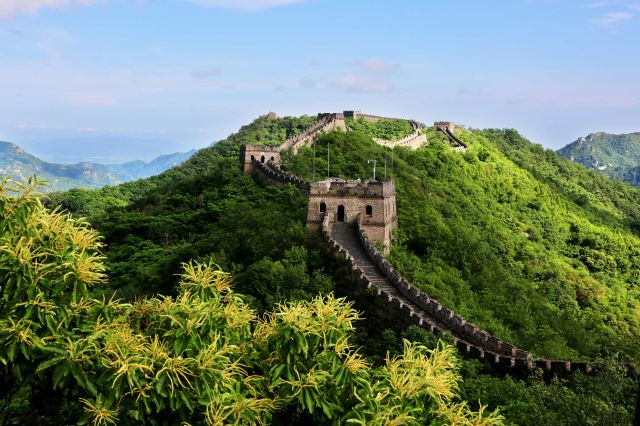
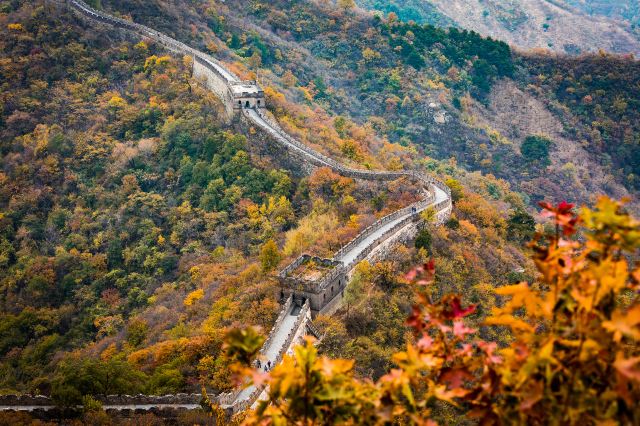
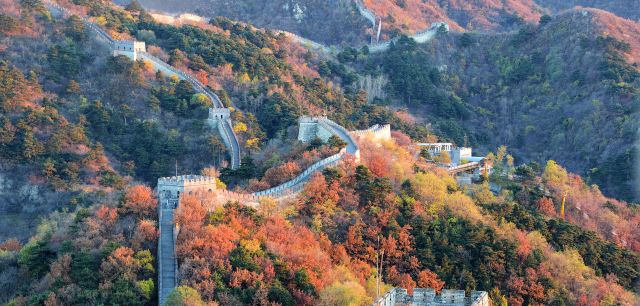
Mutianyu is widely considered the best Great Wall section for international visitors and for good reason. It offers 5.4 km of beautifully restored Ming dynasty wall with 23 watchtowers winding through forested mountains, far less crowded than Badaling but with excellent infrastructure including cable cars, a chairlift, and the famous toboggan slide. The wall itself is genuinely impressive — unique double-sided crenellations (designed for fighting enemies on both sides), granite construction standing 7-8 meters tall, and densely packed watchtowers. The mountain scenery changes dramatically by season: lush green in summer, spectacular foliage in autumn, and hauntingly beautiful under snow in winter. The downsides: it's a 1.5-2 hour drive from central Beijing (a full half-day commitment), the cable car queues can be long during peak season, and the steeper sections near towers 19-20 are genuinely challenging. The toboggan ride down is fun but often has long waits and slow riders ahead. Almost no English is spoken by staff. Best for anyone visiting Beijing who wants an authentic, manageable, and photogenic Great Wall experience.
Top Questions from Travelers
Why This Place Matters
The Great Wall is not one continuous structure but a series of walls and fortifications built over 2,000+ years by successive dynasties. The Mutianyu section was first built during the Northern Qi Dynasty (6th century) and substantially rebuilt in 1569 by the legendary anti-piracy general Qi Jiguang. The name translates to 'admiring the sky valley.' Mutianyu's double-sided crenellations are rare — they indicate this section defended the junction between two military commands (Jizhen and Changzhen), making it vulnerable to attack from both sides. The densely packed watchtowers (25 in just 3,000 meters) further demonstrate its critical strategic importance. Understanding the wall as a living military system rather than a decorative monument makes the visit far more meaningful.
Need help planning?
ChinaPal handles everything
- Book English-speaking guides
- Arrange transport & tickets
- Real-time help during your visit
- Restaurant reservations nearby
Highlights
4 iconic experiences that define a visit
Walking the Wall — Tower 14 to Tower 20 (West Route)
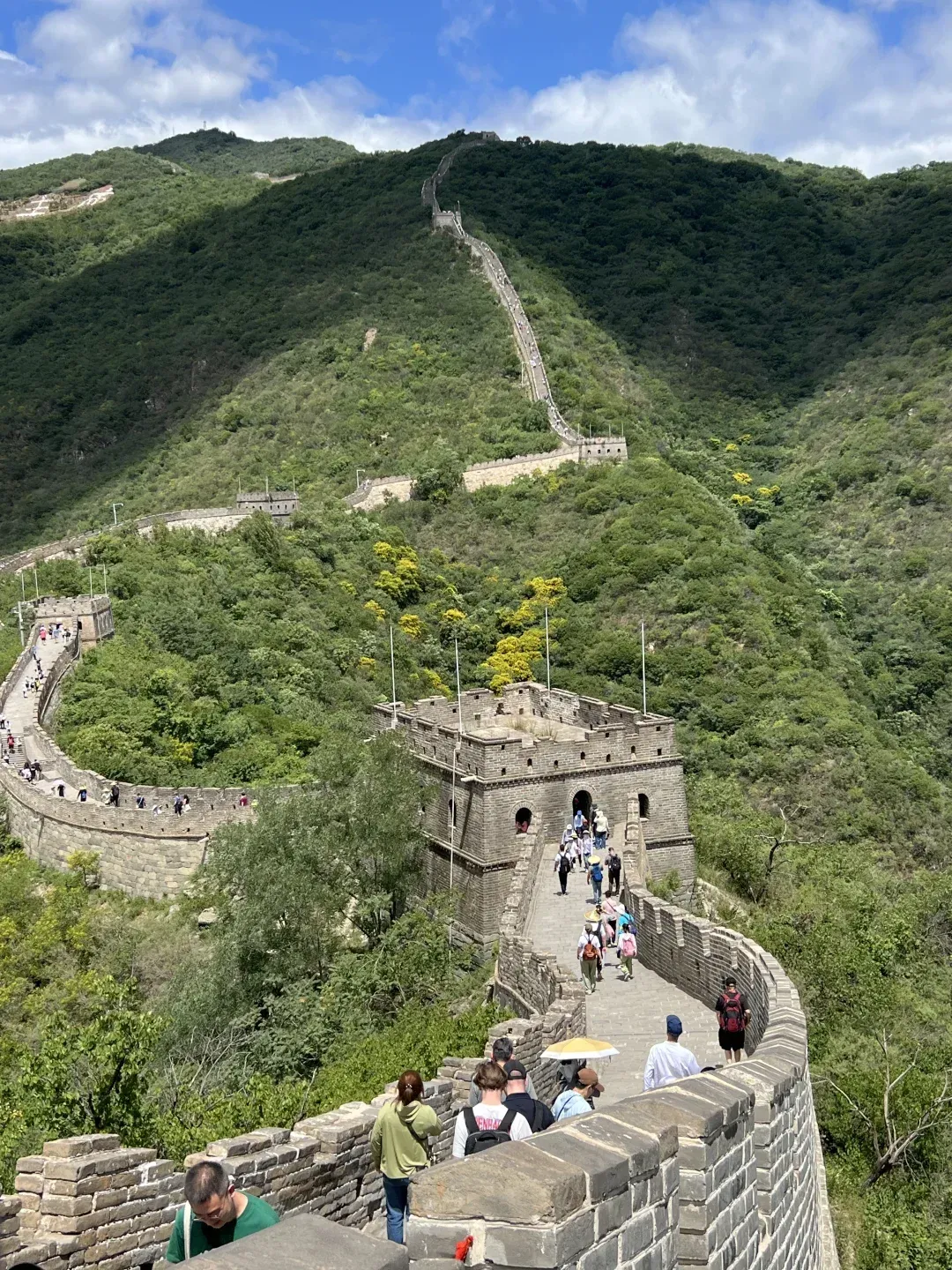
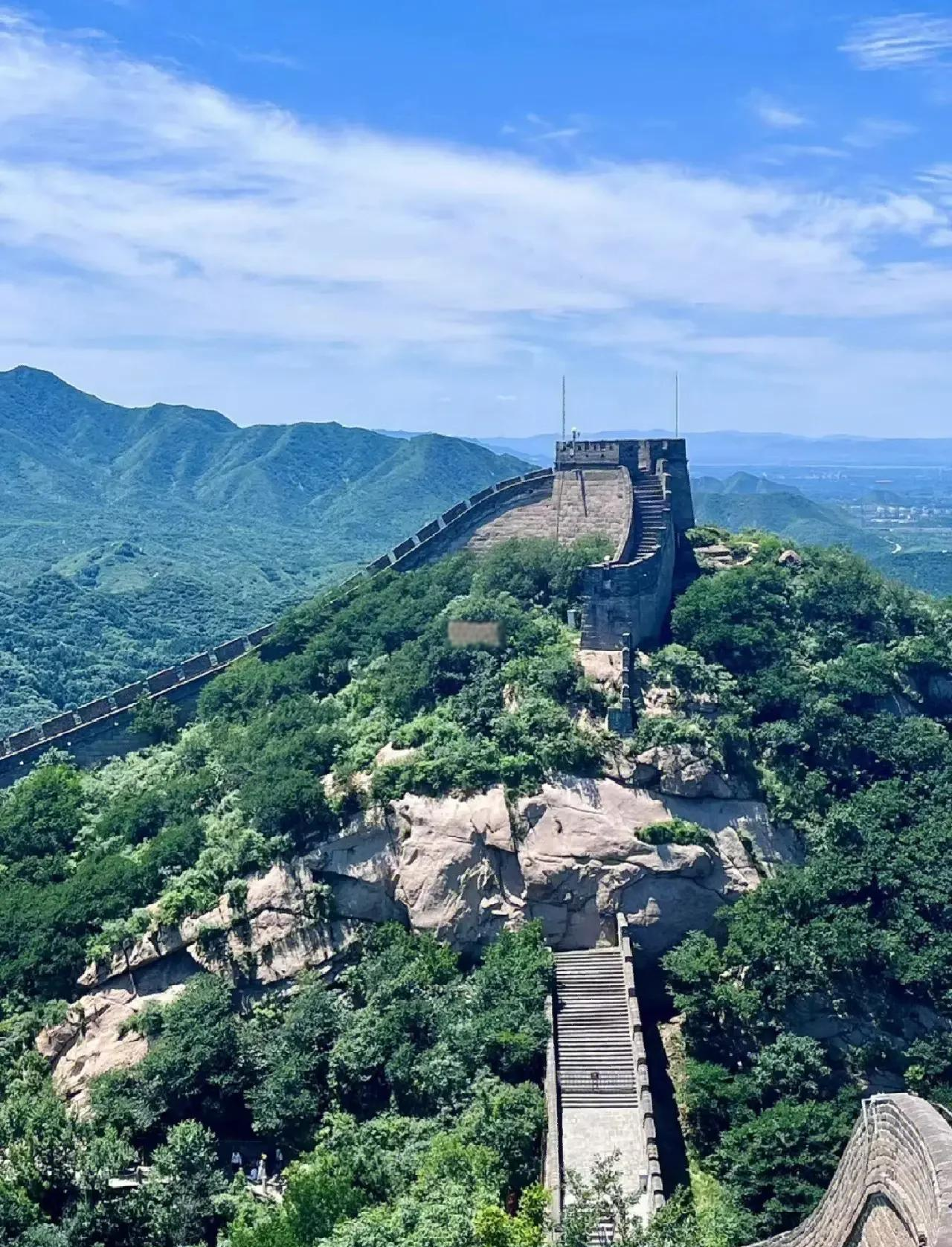
The most scenic and challenging section. The wall climbs steeply through forested mountains with increasingly dramatic views at each watchtower. Towers 19-20 (the 'Hero Slope') feature near-vertical stairs that test your limits but reward with the most expansive panoramic views of the wall snaking into the distance.
Tower 20 is called the 'Hero Slope' because reaching it is genuinely difficult. The view from the top — the wall stretching endlessly across mountain ridges — is the iconic Great Wall image you've seen in every photograph.
 Universal Appeal
Toboggan Slide
A steel track toboggan that winds down the mountain from near Tower 6 — essentially a gravity-powered sled on rails through the forest. It's a fun, un...
 Culturally Interesting
Double-sided Crenellations
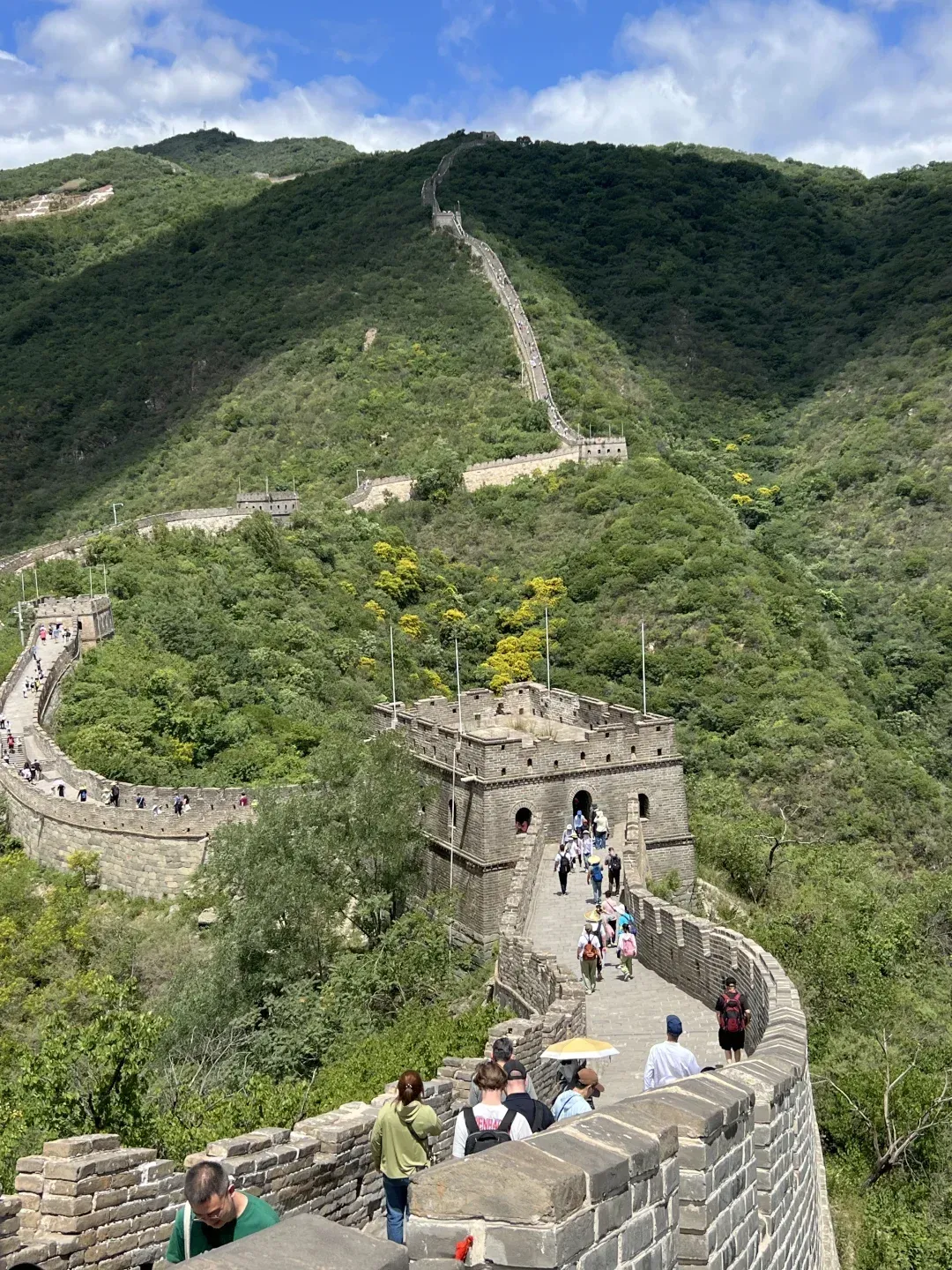
Mutianyu is one of the only Great Wall sections with battlements on both sides of the wall, meaning soldiers could fight enemies attacking from either...
 Universal Appeal
Autumn Foliage Views
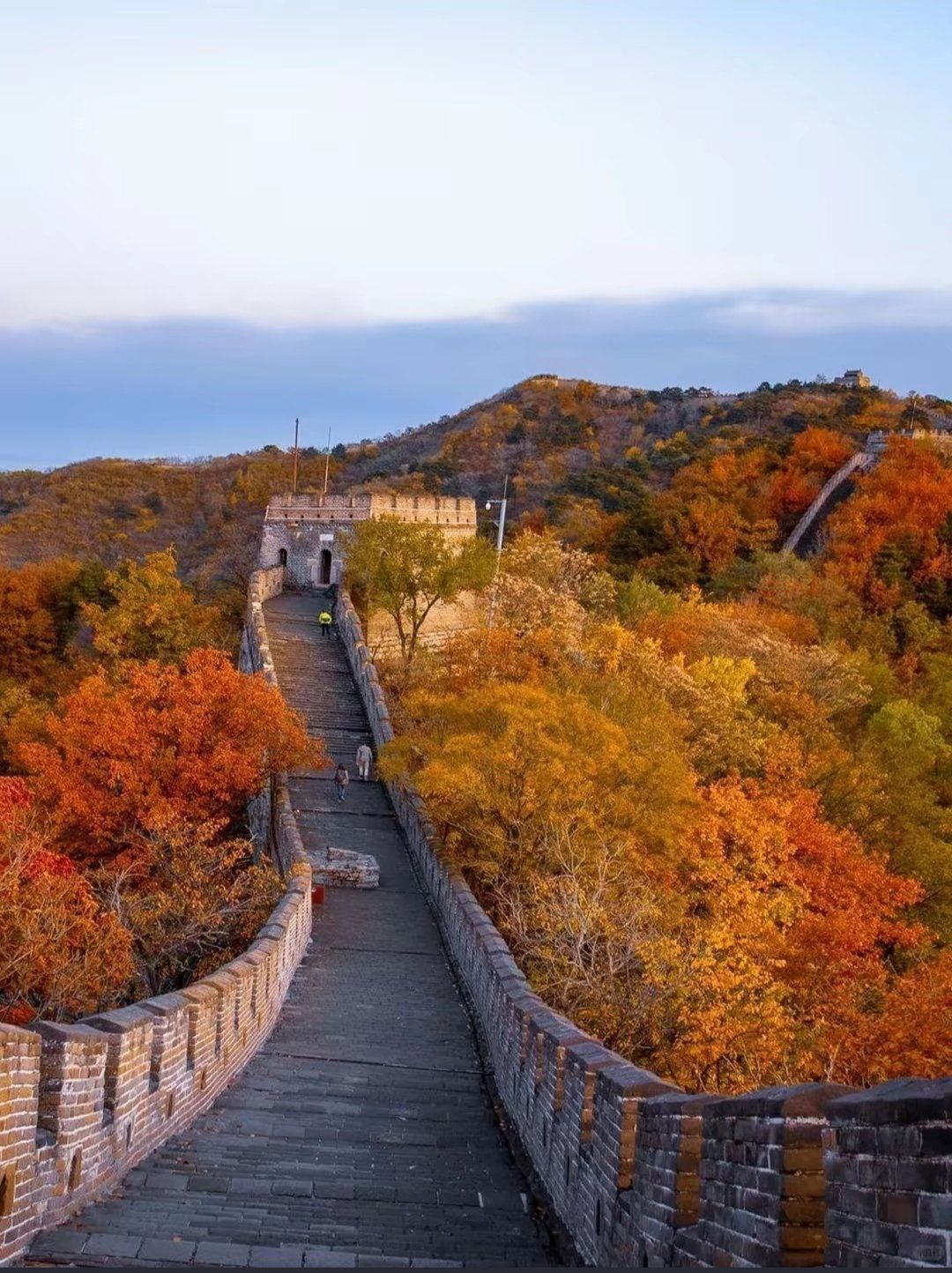
In late October through mid-November, the mountains surrounding Mutianyu erupt in brilliant red, orange, and gold foliage. The contrast of autumn colo...
What Most Visitors Miss
Hiking up instead of taking the cable car
The 1-2 hour hike from the base to the wall passes through forest with far fewer tourists. You arrive at the wall feeling like you earned it, and the gradual reveal of the wall above you is dramatic. Most visitors skip this because they want to save energy for the wall itself — but the hike is the most immersive part.
The quieter eastern sections beyond Tower 1
Most visitors stay between Towers 6 and 20. Walking east past Tower 6 toward Tower 1 leads to less-restored, quieter sections where you can have the wall nearly to yourself. The views are different — more wild and atmospheric.
The village of Mutianyu below the wall
The small village at the base has local restaurants serving better food than the tourist complex, and the approach through chestnut orchards in autumn is lovely. Most visitors rush straight to the cable car without exploring. Ask our team for restaurant recommendations in Mutianyu village — we know which ones serve genuinely good local food versus tourist traps.
Plan Your Visit
How Long to Visit
on the wall (cable car up, walk one direction, cable car or toboggan down
on the wall (walk both east and west from Tower 14, toboggan down) plus 3-4 hours for round-trip transport from Beijing — a full half-day trip
hike from the base without cable car, walk the full length from Tower 1 to Tower 23, explore the steeper western sections
Smart Route
Arrive at 7:30 AM
buy tickets at the gate
take the cable car to Tower 14
walk west to Tower 20 (Hero Slope) first while legs are fresh (45-60 min)
return to Tower 14
walk east to Tower 6 (30-40 min, gentler)
ride the toboggan down from Tower 6
lunch at the base village. Total wall time: 3-4 hours.
Best Time to Visit
Arrive at 7:30 AM when gates open — the wall is nearly empty in the first hour
Chinese National Day (October 1-7), May Day, and summer weekends
By Season
Spring
(April-May) offers cherry blossoms and green mountains. Summer is hot and humid but lush.
Summer
is hot and humid but lush. Winter brings snow (magical but slippery — cable cars and toboggan may close in icy conditions).
Autumn
(late October-November) is spectacular — the surrounding mountains blaze with red and gold foliage against the grey wall, creating the most photographed Great Wall images. Spring (April-May) offers cherry blossoms and green mountains.
Winter
Visit on a weekday in late October or early November for peak autumn colors with manageable crowds. The afternoon light (3-5 PM) creates the best photography conditions with golden light hitting the wall and warm foliage colors.
What to Skip
The gift shops at the base — overpriced tourist souvenirs. Don't buy the 'I Climbed the Great Wall' certificates (you can get them free at some counters). Skip the chairlift up if you're taking the toboggan down — the cable car to Tower 14 gives you a better starting point for the best views.
Pro Tips
Take the cable car UP (to Tower 14, the best views) and the toboggan DOWN (from Tower 6, the fun exit). This lets you walk the full scenic stretch between towers. Bring your own water and snacks — wall vendors charge 3-4x normal prices. If visiting in winter, check whether the toboggan and cable cars are operating before going.
Photo Spots
Tower 20 (Hero Slope) looking back along the wall
The most dramatic panoramic view. Best in morning light (8-10 AM). Bring a wide-angle lens to capture the wall snaking across multiple ridges.
Cable car ascending through autumn foliage (late October)
Sit on the right side for the best mountain views. Have your camera ready — the ride is only 6 minutes.
The serpentine curves between Towers 14-17
Walk slightly ahead of the main crowd and turn around to photograph the wall curving through forested ridges. Afternoon golden hour light is ideal.
Pair With
Gubei Water Town + Simatai Great Wall
2-hour drive from Mutianyu; 2.5 hours from Beijing
A completely different Great Wall experience — Simatai is the only section open for night visits, and Gubei Water Town is a charming (if artificial) canal village at its base. Makes a great overnight trip from Beijing.
Hongluo Temple (红螺寺)
15-minute drive from Mutianyu
A peaceful Buddhist temple just 10 km from Mutianyu, surrounded by ancient ginkgo trees. Perfect for a tranquil contrast after the Great Wall's intensity. Spectacular in autumn.
Tickets & Access
Wall admission
Access to the wall — does not include transport up/down
Cable car (one way)
Enclosed cable car to Tower 14 — 6 minutes, 723 meters
Cable car (round-trip)
Best value if not taking the toboggan
Chairlift up + toboggan down
Open-air chairlift to Tower 6 + fun toboggan slide down
Toboggan only (down)
The highlight for many visitors — 5-minute slide from Tower 6
Opening Hours
Peak season (Mar 16–Nov 15): Weekdays 07:30–18:00, Weekends 07:30–18:30. Off-season (Nov 16–Mar 15): 08:00–17:30. Last ticket sales and entry 30 minutes before closing.
How to Buy
Buy tickets at the gate (passport required) or book online through Trip.com/Klook. The Mubus package (mutianyugreatwall.com) includes transport, entry, and lunch — most convenient for solo foreign travelers. Your hotel can also arrange private car + tickets.
Passport: Yes — bring your physical passport for entry. Required for ticket purchase at the gate.
Queue Situation
Weekday mornings: minimal wait. Weekend mornings: 15-30 minutes for cable car. Peak season weekends/holidays: 30-60+ minutes for cable car. The toboggan always has a queue (15-30 minutes minimum) because slow riders create bottlenecks.
Tips & Warnings
The wall is a 1.5-2 hour drive from central Beijing
Plan this as a half-day trip minimum. Leave Beijing by 6:30-7:00 AM to arrive at opening. Book return transport in advance — DiDi drivers cannot pick up from the wall parking area, and getting a taxi back can be difficult. We can arrange a private car with driver who waits at the parking lot while you explore — message us the day before with your hotel address and preferred pickup time.
Steps on the wall are steep, uneven, and can be slippery
Wear proper hiking shoes with grip — not sandals, dress shoes, or smooth-soled sneakers. The steps vary wildly in height and width. After rain or snow, they become genuinely dangerous. Use the handrails where available. The section near towers 19-20 is near-vertical.
Almost no facilities on the wall itself
Use the restroom at the base before ascending. There are basic restrooms at the cable car top station near Tower 14, but nothing else. Bring water, snacks, and toilet paper. Small vendors on the wall sell water at inflated prices (¥10-15 per bottle).
The toboggan can be frustratingly slow
You're stuck behind whoever is in front of you — slow riders (especially those stopping to take photos) create long chains of waiting. There's no way to pass. Go early morning for the fastest ride. Don't ride the toboggan in rainy or icy conditions.
What to Bring
Wear
Hiking shoes with good grip (non-negotiable — the stone steps are uneven and often slippery). Dress in layers — the mountain ridge is windy and cooler than Beijing by 5-10°C. In summer, breathable clothing plus sun protection. In winter, serious warm layers including windproof jacket, gloves, and hat.
Bring
Physical passport. Water (1-2 liters). Snacks. Sunscreen and hat. Layers for wind/cold. Power bank. Cash (small bills) for wall vendors. Toilet paper.
Don't Bring
Heavy luggage (no storage, lots of climbing). Umbrellas (too windy on the wall — use a rain jacket instead). Drones (restricted in the scenic area).
Physical Reality
challenging
The wall is on a mountain ridge — reaching it requires either a cable car/chairlift or a 60-90 minute uphill hike. On the wall, expect steep stone steps of varying heights, with the steepest section near towers 19-20 approaching near-vertical. The gentler section (towers 10-14) is manageable for most fitness levels. Total walking on the wall: 3-5 km with significant elevation changes. Cable car eliminates the hardest part of getting up.
Foreigners Watch Out
- Bring your physical passport — required for entry and ticket purchase.
- Getting to Mutianyu independently on public transport is doable but takes 2+ hours with a bus transfer. Most foreigners book a private car or the Mubus service (direct bus from Dongzhimen with English support). Don't take the regular 916 bus — only the 916 Express (916快车) goes to the right station.
- Return transport is the biggest challenge — DiDi drivers are not permitted to enter the parking area, and taxis are scarce. Book round-trip transport or a tour that includes return. Some visitors get stranded at closing time.
- Payment at vendors on the wall may be cash-only. Bring small bills (¥10-20 notes) for water and snacks.
- The wall has no shade — bring sun protection in summer. In winter, the wind chill on the exposed ridge makes it feel 5-10 degrees colder than Beijing city.
If Things Go Wrong
Cable car/toboggan closed (maintenance or weather)
→ Hike up from the base — the walk takes about 60-90 minutes via stone steps. It's a genuine workout but perfectly doable for reasonably fit visitors. This is actually how most visitors reached the wall before modern facilities were built.
Can't get transport back to Beijing
→ Ask at the visitor center — they can help call a taxi. Walk to the main road (Mutianyu roundabout, 1 km from parking area) where DiDi drivers can reach you. The last public bus H23/H35 to Huairou runs around 5-6 PM.
Too physically challenging — can't handle the steep steps
→ Stay in the gentler section between Towers 10-14 near the cable car station — the views are excellent without the extreme stairs. Take your time and rest in the watchtowers.
Useful Chinese
Tap to reveal the English meaning