About Lama Temple (Yonghe Temple)
“Golden roofs, thick sandalwood incense, monks chanting in one courtyard while millennials take selfies in the next — it's a functioning Qing Dynasty monastery that somehow also doubles as Beijing's most popular prayer spot for twenty-somethings asking for career luck.”
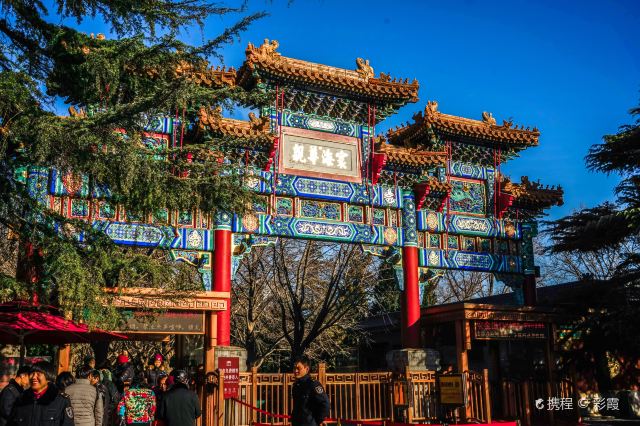
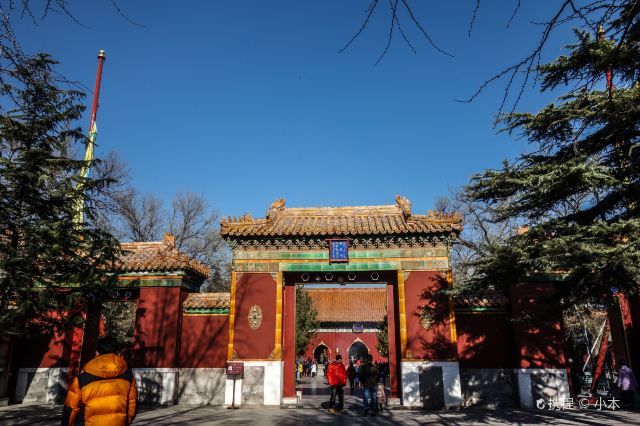
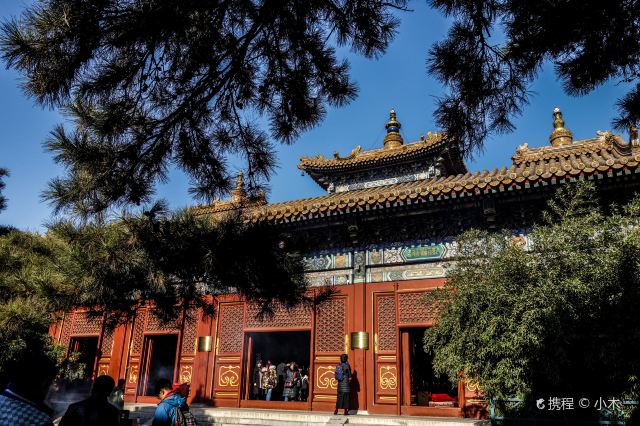
The Lama Temple is Beijing's largest and most important Tibetan Buddhist monastery, and it's genuinely special. Originally built in 1694 as the residence of Prince Yong (later Emperor Yongzheng), it was converted into a lamasery in 1744 by Emperor Qianlong -- who himself was born here. This 'dragon's lair' heritage means the temple has imperial-grade yellow roof tiles matching the Forbidden City. The complex blends Han Chinese, Tibetan, Mongolian, and Manchu architectural styles across five progressively grander halls connected by peaceful courtyards. The finale is breathtaking: a 26-meter Maitreya Buddha carved from a single white sandalwood trunk, a gift from the 7th Dalai Lama that holds a Guinness World Record. Unlike many historical sites in Beijing, this is a living, functioning monastery -- you'll see monks in robes going about their day, hear chanting, and smell incense everywhere. The temple is enormously popular with young Chinese visitors who come to pray for career success, relationships, and health, making it vibrant but crowded. The atmosphere is a fascinating blend of genuine spirituality and Instagram-era tourism. For foreign visitors, it's one of Beijing's most accessible and rewarding sites: easy to reach by subway, reasonably priced, well-signed in English, and requiring only 1-2 hours. The main downside is weekend and holiday crowds, which can diminish the spiritual atmosphere considerably.
Top Questions from Travelers
Why This Place Matters
Yonghe Temple's transformation from prince's mansion to imperial palace to Buddhist monastery mirrors the complex religious politics of the Qing Dynasty. The Manchu emperors, who were ethnically distinct from the Han Chinese majority, strategically used Tibetan Buddhism to build alliances with Mongolian and Tibetan peoples on their empire's frontiers. By making Yonghe Temple a center of lama administration, Emperor Qianlong gained influence over the selection of reincarnated lamas -- a political tool as much as a religious institution. The temple survived the Cultural Revolution reportedly because Premier Zhou Enlai personally intervened to protect it. Today, it serves a fascinating dual purpose: it's both a genuine functioning monastery with resident monks of the Gelug (Yellow Hat) school, and one of Beijing's most popular tourist attractions. The temple's extraordinary popularity with young Chinese visitors -- who flock here to pray for exam success, career advancement, and romantic partners -- reflects a broader revival of interest in traditional spirituality among China's urban millennials, even as the country remains officially secular.
Need help planning?
ChinaPal handles everything
- Book English-speaking guides
- Arrange transport & tickets
- Real-time help during your visit
- Restaurant reservations nearby
Highlights
5 iconic experiences that define a visit
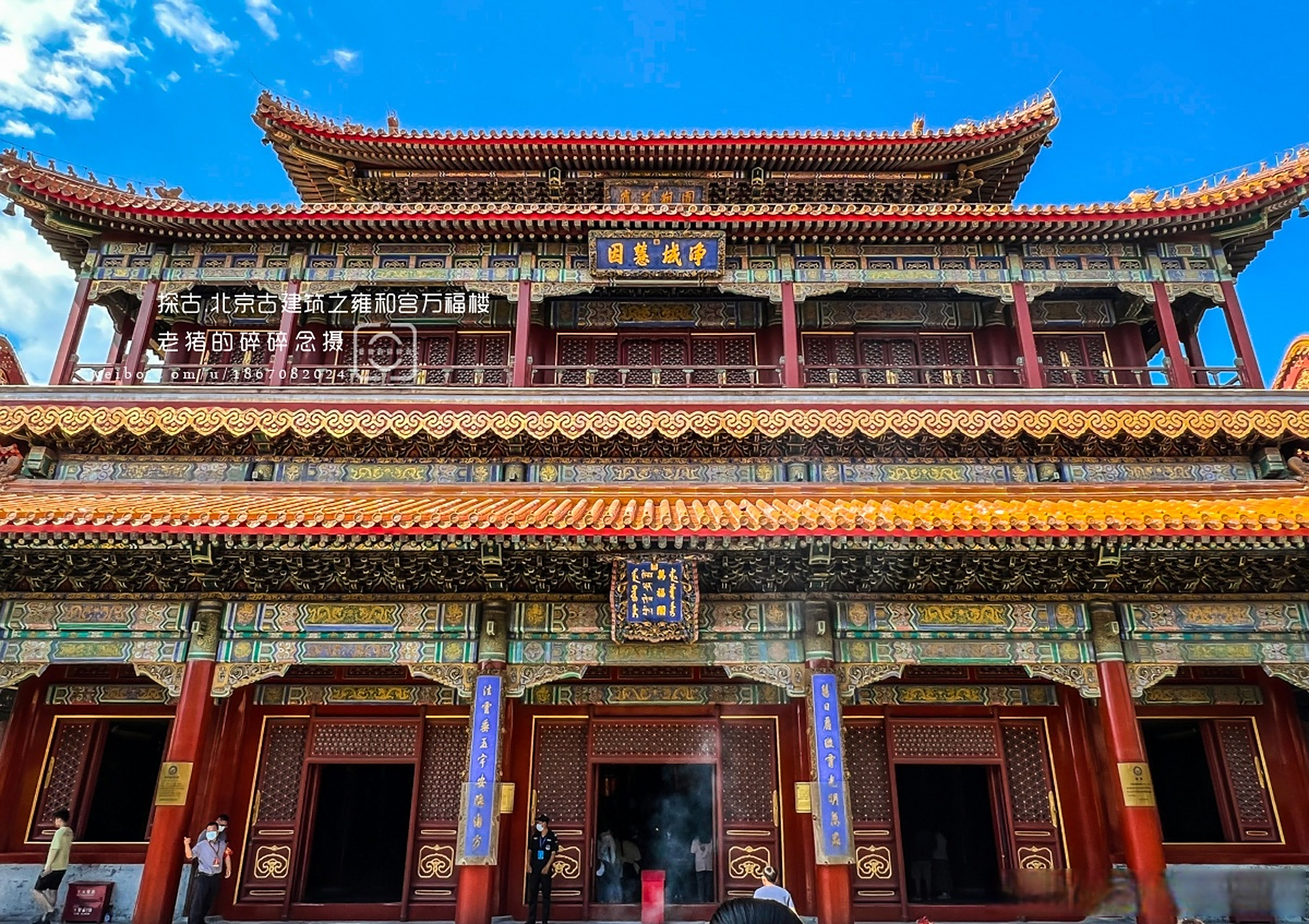
Pavilion of Ten Thousand Happinesses (万福阁) - Giant Maitreya Buddha
The climactic final hall houses a jaw-dropping 26-meter-tall Maitreya Buddha statue carved from a single trunk of white sandalwood. The visible portion rises 18 meters above ground, with 8 meters buried underground for support. It was a gift from the 7th Dalai Lama to Emperor Qianlong and holds a Guinness World Record.
This is one of the most impressive single statues you'll see anywhere in China. The sheer scale -- carved from ONE piece of wood transported thousands of kilometers from Tibet -- is mind-boggling. No photography allowed inside, so just stand and absorb it.
 Culturally Interesting
Hall of the Wheel of Dharma (法轮殿)
A cross-shaped hall featuring a 6.1-meter copper statue of Tsongkhapa, founder of the Gelug (Yellow Hat) school of Tibetan Buddhism. The hall has five...
 Universal Appeal
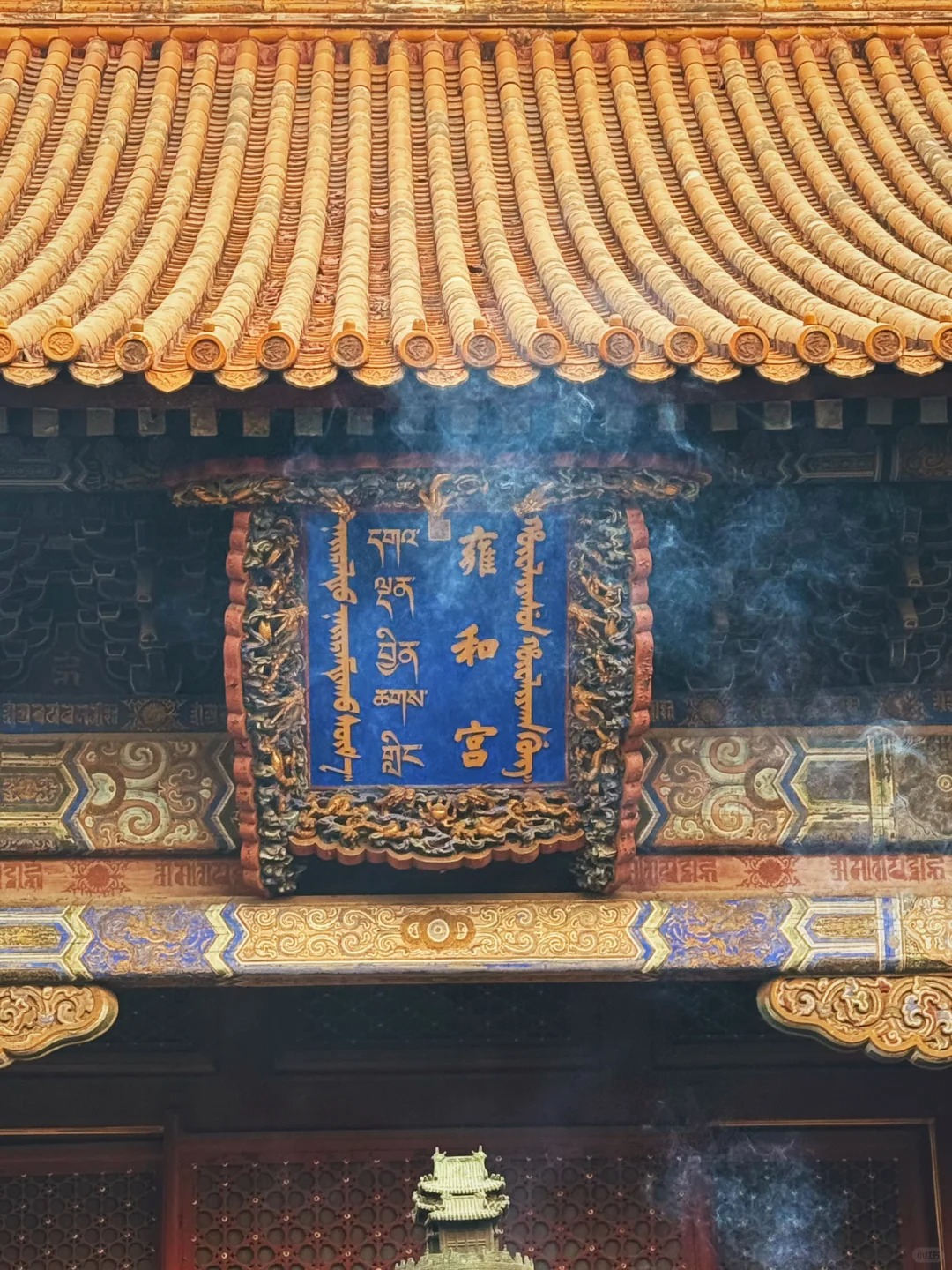
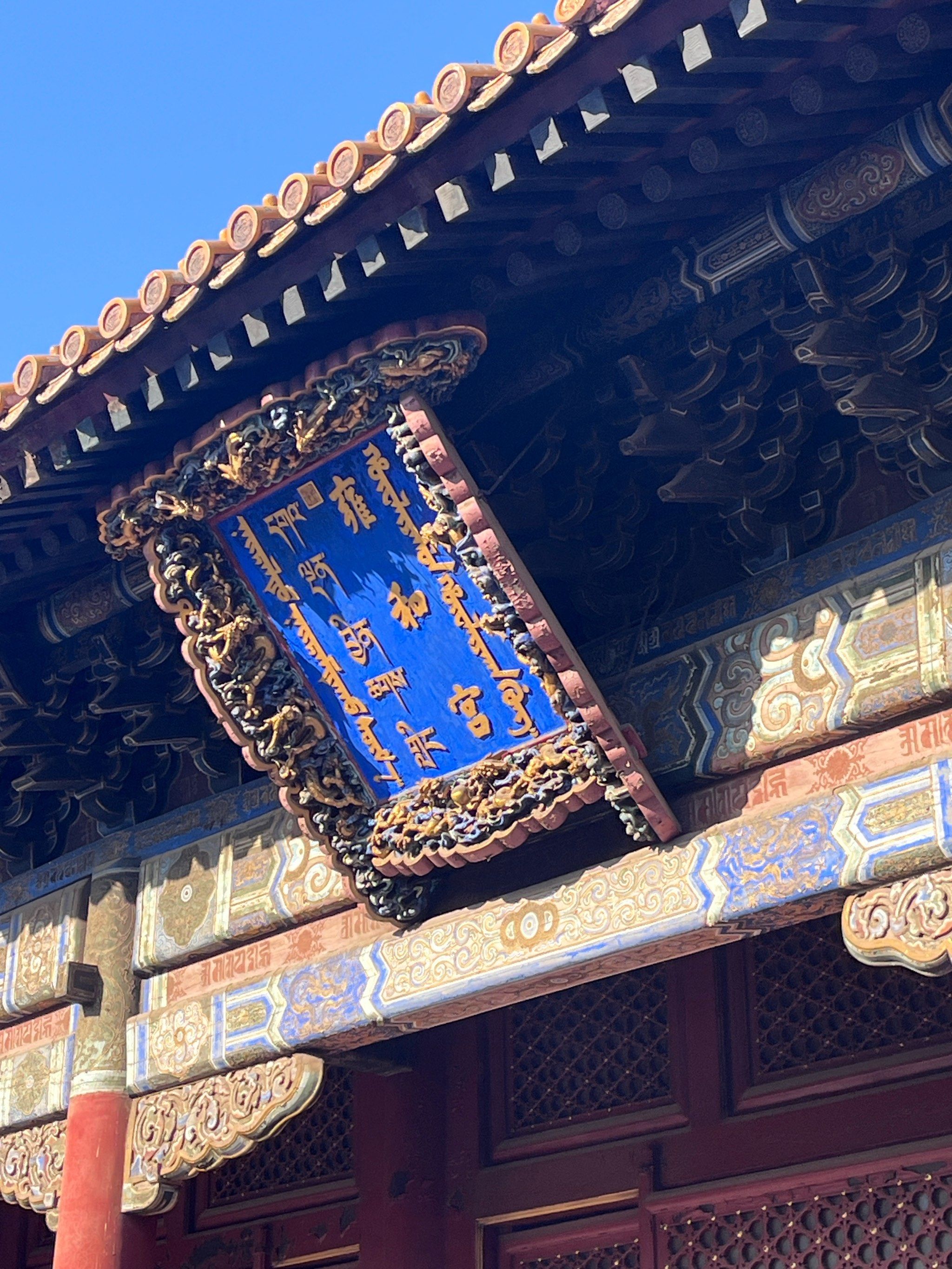
Yonghe Palace Hall (雍和宫殿)
The main prayer hall, originally the prince's reception room, now housing three large bronze Buddha statues representing past, present, and future. Th...
 Universal Appeal
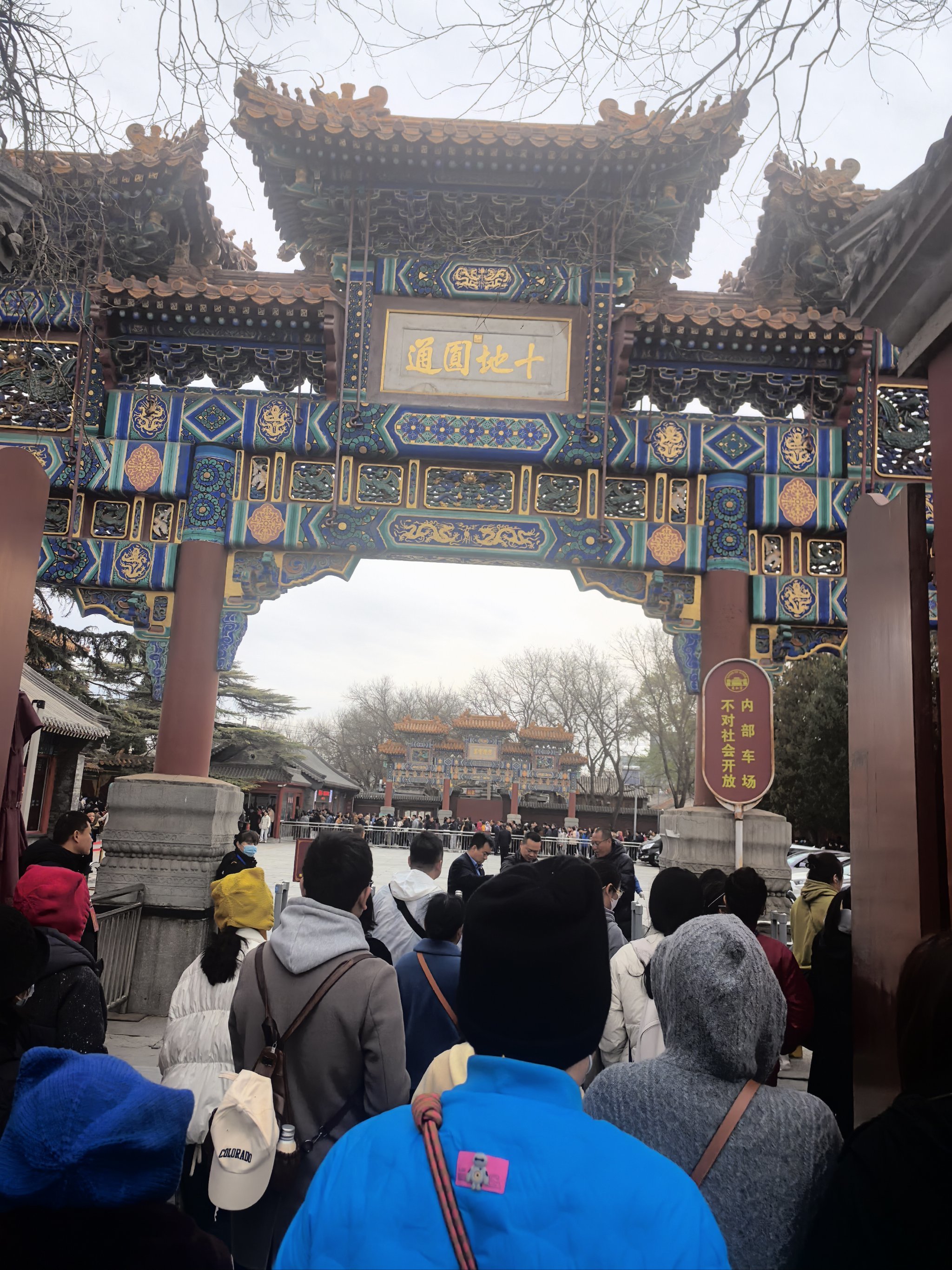
The approach path and courtyards
The 400-meter red-walled lane from the subway to the entrance, lined with ancient trees, Buddhist supply shops, and fortune-tellers, creates a memorab...
 Universal Appeal
Incense-burning ritual
Every visitor receives a free bundle of eco-friendly incense sticks upon entry. You light three sticks at each incense burner, hold them above your he...
What Most Visitors Miss
The small museum exhibitions inside side halls
Most visitors rush through the central axis halls and miss the side rooms that contain fascinating exhibits on Tibetan Buddhist art, thangka paintings, historical photographs, and the temple's role in Qing Dynasty politics. These rooms are usually empty and peaceful.
Confucius Temple and Imperial Academy (国子监) next door
Just a 5-minute walk west, this UNESCO-adjacent site was China's highest educational institution for 700 years. It's far less crowded than the Lama Temple and offers a beautiful, scholarly atmosphere. Most tourists visit Yonghe Temple and never realize this gem is right next door.
Wudaoying Hutong (五道营胡同)
A charming hutong (alley) running east from the temple area, lined with independent cafes, boutique shops, and creative restaurants. It's a much more authentic and relaxed version of Nanluoguxiang. Perfect for coffee or lunch after your temple visit.
Plan Your Visit
How Long to Visit
45 minutes - 1 hour (walk through all five halls, light incense, basic photos
1.5-2 hours (explore all halls and side buildings, read English signage, browse the small museum exhibits, soak in the atmosphere
attend morning chanting at 9 AM, explore every side hall and exhibit, browse the souvenir and blessing shops, visit nearby Confucius Temple and Guozijian
Smart Route
Subway to Yonghe Gong station (Line 2 or 5) -> Exit C, walk south along the red wall -> Buy tickets at entrance -> Collect free incense after entering -> Walk north through all five halls in order (you can't go back) -> Take time in the courtyards between halls -> End at the giant Maitreya Buddha in Wanfu Pavilion -> Exit and walk west to Confucius Temple/Guozijian -> Finish with coffee in Wudaoying Hutong.
Best Time to Visit
Arrive at opening (9:00 AM) for the thinnest crowds and the chance to witness monks' morning chanting (typically 9:00-10:30 AM)
Chinese New Year (especially the first day, when locals queue for hours to burn the 'first incense' of the year)
By Season
Spring
(April-May) is ideal -- ginkgo and cherry trees are beautiful, weather is pleasant. Autumn (September-October) brings stunning golden ginkgo foliage along the approach path.
Summer
is hot and crowded. Winter is cold but atmospheric, with fewer tourists and the incense smoke particularly evocative against grey skies.
Autumn
(September-October) brings stunning golden ginkgo foliage along the approach path. Summer is hot and crowded.
Winter
Visit on a weekday morning in spring or autumn. Walk the approach path from the subway along the red-walled lane -- it's lined with beautiful trees and Buddhist shops and sets the mood perfectly. After the temple, walk 5 minutes to the Confucius Temple and Imperial Academy (Guozijian) next door for a much quieter cultural experience.
What to Skip
The expensive souvenir/blessing shop can consume an hour in queues -- unless you specifically want a blessed bracelet or item, skip it. The fortune-telling stalls outside the entrance are tourist traps. Don't spend too long at the first incense burner -- the best halls are further in.
Pro Tips
Don't use your incense all at the first burner -- save sticks for each hall along the way. The blessed bracelets (手串) sold inside are extremely popular with young Chinese visitors and make unique souvenirs, but expect long queues and prices ranging from modest to 320,000 RMB for rare amber pieces. The free incense is eco-friendly and provided by the temple -- you do NOT need to buy incense from the vendors outside.
Photo Spots
Red wall approach path with ginkgo trees (autumn)
In October-November, the golden ginkgo leaves against the red wall create Beijing's most iconic autumn scene. Come in morning light for warm tones.
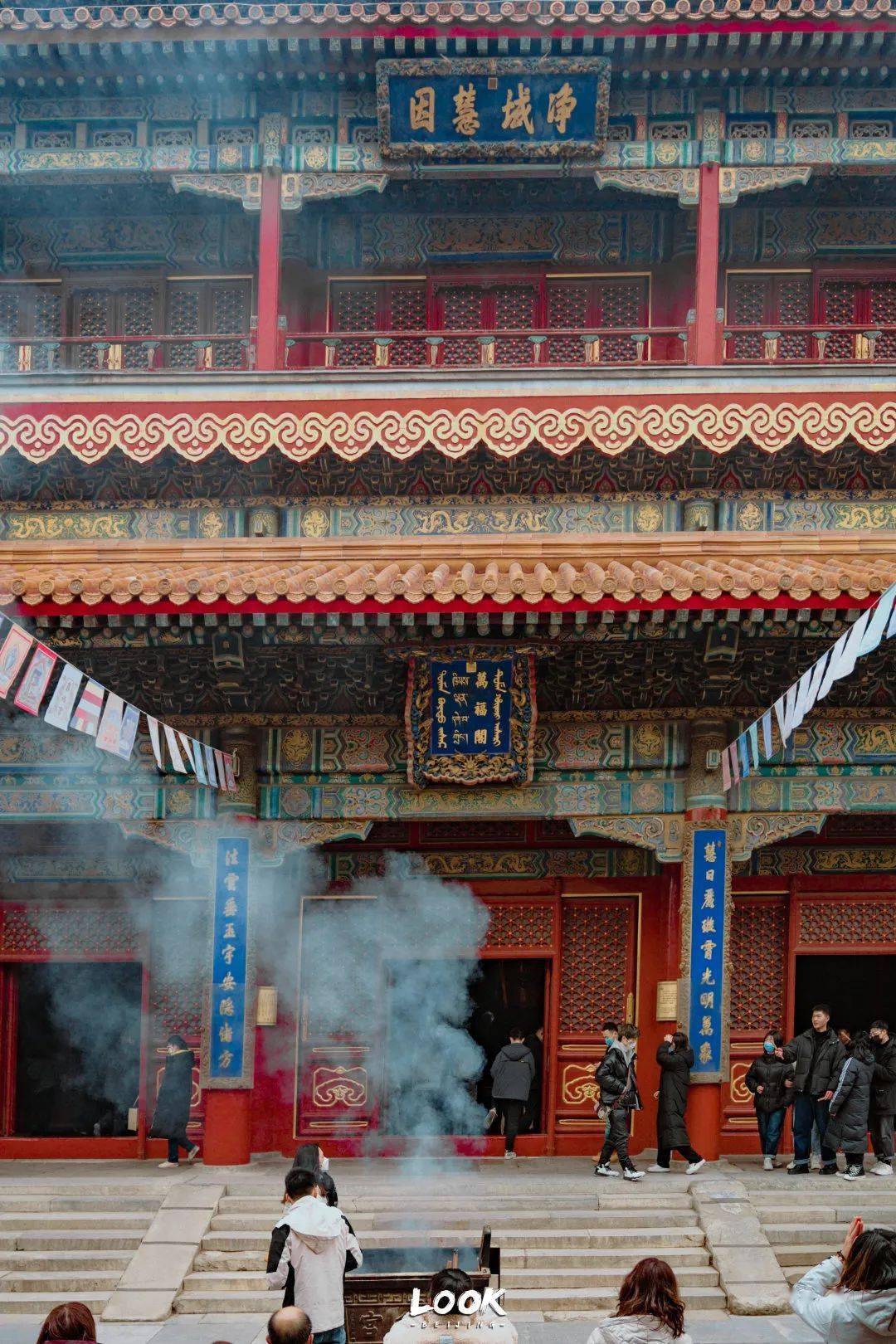
Incense smoke rising between the hall columns
Position yourself to capture incense smoke backlit by morning sun. The smoke creates beautiful ethereal effects against the painted wooden columns.
Courtyards between halls with ornate roofline details
Use a wide-angle lens to capture the progression of rooflines receding into the distance. The yellow tiles and ornate ridge decorations are spectacular against blue sky.
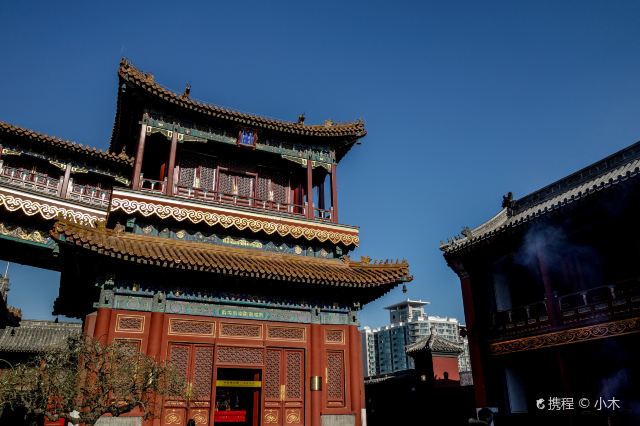
Wanfu Pavilion exterior (the three-story building housing the giant Buddha)
Stand back in the courtyard to capture the full three-story facade. The ornate wooden balconies and connecting covered walkways create excellent architectural compositions.
Pair With
Confucius Temple and Imperial Academy (孔庙和国子监)
5-minute walk west
Right next door -- China's second-largest Confucius temple and the ancient imperial university. Much quieter than Yonghe Temple, with beautiful cypress trees and scholarly atmosphere. The contrast between Buddhist and Confucian traditions in adjacent compounds is fascinating.
Wudaoying Hutong (五道营胡同)
5-minute walk east
A charming, less-touristy hutong running east from the temple area. Independent cafes, creative shops, and artisan restaurants make it the perfect post-temple rest stop. Much calmer than the famous Nanluoguxiang.
Temple of Heaven (天坛)
30-minute subway ride south (Line 5)
Pair the Tibetan Buddhist experience of Yonghe Temple with the Taoist/imperial ceremonial splendor of the Temple of Heaven for a comprehensive spiritual architecture day in Beijing.
Tickets & Access
Adult admission
Includes free eco-friendly incense bundle
Student / Senior (60+)
Valid student ID or passport showing age required
Audio guide
Available at ticket booth; English available
English-speaking guide
Available at visitor center east of Yonghe Gate; Chinese, English, and German offered
Opening Hours
Daily. April-October: 9:00 AM - 5:00 PM (last entry 4:30 PM). November-March: 9:00 AM - 4:30 PM (last entry 4:00 PM). Open every day including holidays (even busier on holidays).
How to Buy
Buy tickets at the entrance ticket window. Bring your passport. Scan your ID to enter. Some visitors report being able to use digital ISIC student cards for discounts.
Passport: Yes -- passport is accepted for ticket purchase. You'll need to scan your passport at the security checkpoint when entering.
Queue Situation
Ticket purchase queues are usually short (5-10 minutes). The long queues you may see are for the souvenir/blessing shop or the monk-blessing service, not for entry. On Chinese New Year's Day, the queue to enter can stretch for hundreds of meters and take hours.
Tips & Warnings
No photography of Buddha statues inside the halls
This is strictly enforced. Security guards will stop you. You can photograph the exterior architecture, courtyards, incense burners, and decorative details freely, but put your camera away when entering the halls.
Crowded on weekends, lunar calendar dates, and holidays
Chinese New Year's Day is the absolute worst -- locals queue for hours to burn the 'first incense.' The 1st and 15th of each lunar month are also busy. Weekday visits are dramatically more peaceful.
The souvenir shop queues are deceptively long
The long queues you'll see are for the blessed goods and souvenir shop, not for temple entry. If you want a blessed bracelet, budget 30-60 minutes of queuing. The items are genuine monastery goods, not tourist junk, but they're pricey.
One-way flow through the temple
You walk south to north and cannot easily backtrack. Don't rush through the early halls thinking you'll come back -- take your time at each one.
What to Bring
Wear
Modest clothing covering shoulders and knees out of respect. Comfortable walking shoes. In winter, dress warmly -- the courtyards are open-air and Beijing winters are cold (-5 to -10C). In summer, lightweight but modest clothing.
Bring
Passport (required). Water and snacks (no food facilities inside). Camera for outdoor photos. Cash or mobile payment for tickets and souvenirs.
Don't Bring
Your own incense (not allowed; free incense provided inside). Large bags or umbrellas that may need to be checked.
Physical Reality
light
Mostly flat walking along a paved central axis, approximately 500 meters from entrance to the final hall. Some steps at hall entrances. The entire complex is manageable in 1-2 hours. A few inclines but nothing strenuous. Wheelchair access is limited due to historic thresholds at hall entrances.
Foreigners Watch Out
- Bring your passport -- required for security scanning at the entrance. No passport means no entry.
- Dress modestly out of respect: cover shoulders and knees. This isn't strictly enforced but is appreciated. Remove hats and sunglasses when entering halls.
- Google Maps does not work in China. Use Apple Maps, Baidu Maps, or Amap (Gaode) for navigation. The subway station is called 'Yonghegong Lama Temple' in English. If you get lost navigating to the temple, send us your location and we can guide you there step by step via chat.
- The free incense sticks are provided by the temple after you enter -- do NOT buy incense from vendors outside the gate. Some vendors aggressively try to sell incense to tourists who don't know it's free inside. If a vendor outside is being pushy or you are unsure what is legitimate, message us and we can clarify what to expect before you enter.
- Be mindful that this is an active place of worship. Monks and devout visitors are genuinely praying. Keep your voice down, step aside for worshippers, and don't treat the prayer halls as photo ops.
If Things Go Wrong
Temple is extremely crowded (holiday or weekend)
→ Skip ahead to the later halls which tend to thin out (most people spend the longest at the first hall and gift shop). The side buildings and small museum rooms are usually empty even on busy days. Message our concierge and we can check the real-time crowd situation and suggest whether to come back later or head to the Confucius Temple next door first.
Arrived too late (after 4:00/4:30 PM last entry)
→ The exterior red wall approach and the area around the temple are beautiful for photos even after closing. Walk through Wudaoying Hutong for cafes and dinner.
Feel overwhelmed by incense smoke (allergies, asthma)
→ Bring a mask. The outdoor courtyards have much less concentrated smoke than the enclosed incense burner areas. You can skip the incense ritual entirely and just observe.
Useful Chinese
Tap to reveal the English meaning