About Jingshan Park (Prospect Hill)
“A peaceful hilltop garden that still feels like old Beijing — morning tai chi practitioners, afternoon tourists hunting for the perfect Forbidden City photo, and sunset painters all sharing the same ancient hill.”
Jingshan Park is Beijing's best-kept secret hiding in plain sight — for ¥2 (about $0.30), you get a panoramic view of the Forbidden City that no photograph or drone shot can replicate. The climb takes 10-15 minutes up well-maintained stone stairs to Wanchun Pavilion, and then the entire imperial palace spreads out below you in a way that finally makes you grasp its staggering scale. Beyond the view, the park is a living window into Beijing local life: elderly residents practicing tai chi, fan dancing, opera singing, and calligraphy every morning. The Shouhuangdian Hall complex at the north end is a hidden gem with Forbidden City-level architecture and almost no tourists. The downside: the viewing platform at the top is small and gets extremely crowded at sunset, with fierce competition for photo spots. On hazy days, the view suffers significantly. Best paired with a Forbidden City visit — exit the north gate, cross the street, and you're at Jingshan's south entrance.
Top Questions from Travelers
Why This Place Matters
Jingshan Hill was purpose-built during the Ming Dynasty (1420) using earth excavated from the Forbidden City's moat — creating the 'mountain behind the palace' that Feng Shui principles require for an auspicious imperial residence. For 500 years, this was an exclusive imperial garden; ordinary citizens were forbidden from entering. Its most dramatic historical moment came in 1644 when Emperor Chongzhen, the last Ming ruler, hanged himself from a tree here as Li Zicheng's rebel army breached Beijing's walls — ending a 276-year dynasty. In 2024, Jingshan Park was inscribed as a UNESCO World Heritage site as part of Beijing's Central Axis, recognizing its role as the highest point on the 7.8-kilometer line that defines the city's layout.
Need help planning?
ChinaPal handles everything
- Book English-speaking guides
- Arrange transport & tickets
- Real-time help during your visit
- Restaurant reservations nearby
Highlights
4 iconic experiences that define a visit
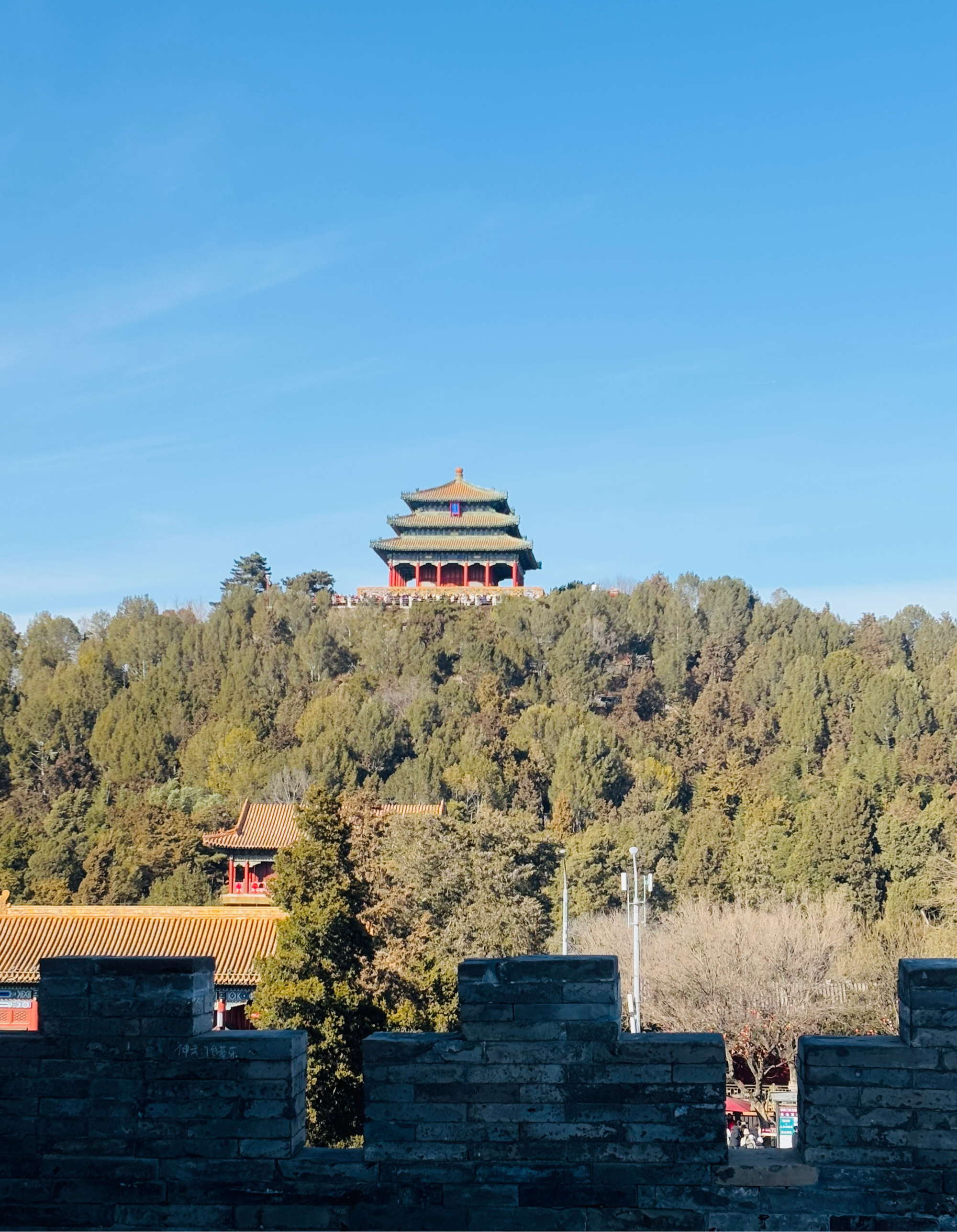
Wanchun Pavilion (万春亭) — Summit Viewpoint
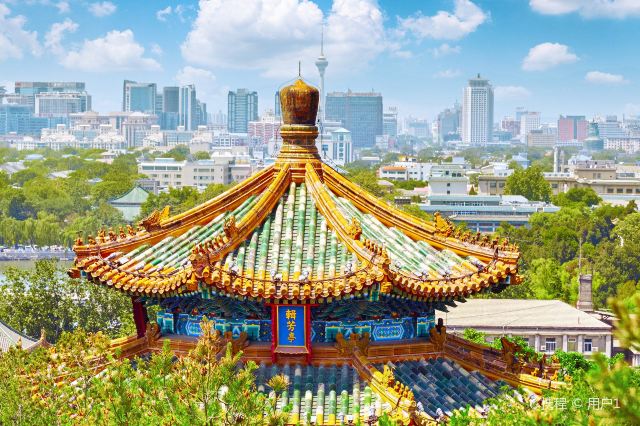
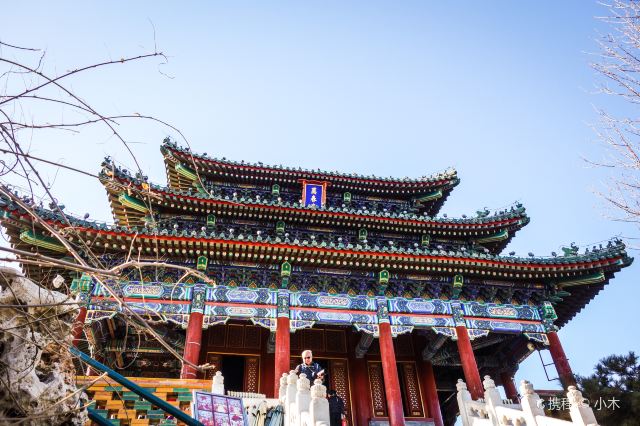
The central and highest of five hilltop pavilions, offering a 360-degree panorama of Beijing. The south-facing view of the entire Forbidden City in perfect symmetry is the park's main draw. You can also see the Bell and Drum Towers to the north, Beihai Park's White Dagoba to the west, and the modern Beijing skyline beyond.
This viewpoint is on the exact center of Beijing's north-south Central Axis — a UNESCO World Heritage site since 2024. You're literally standing at the geographic heart of imperial Beijing.
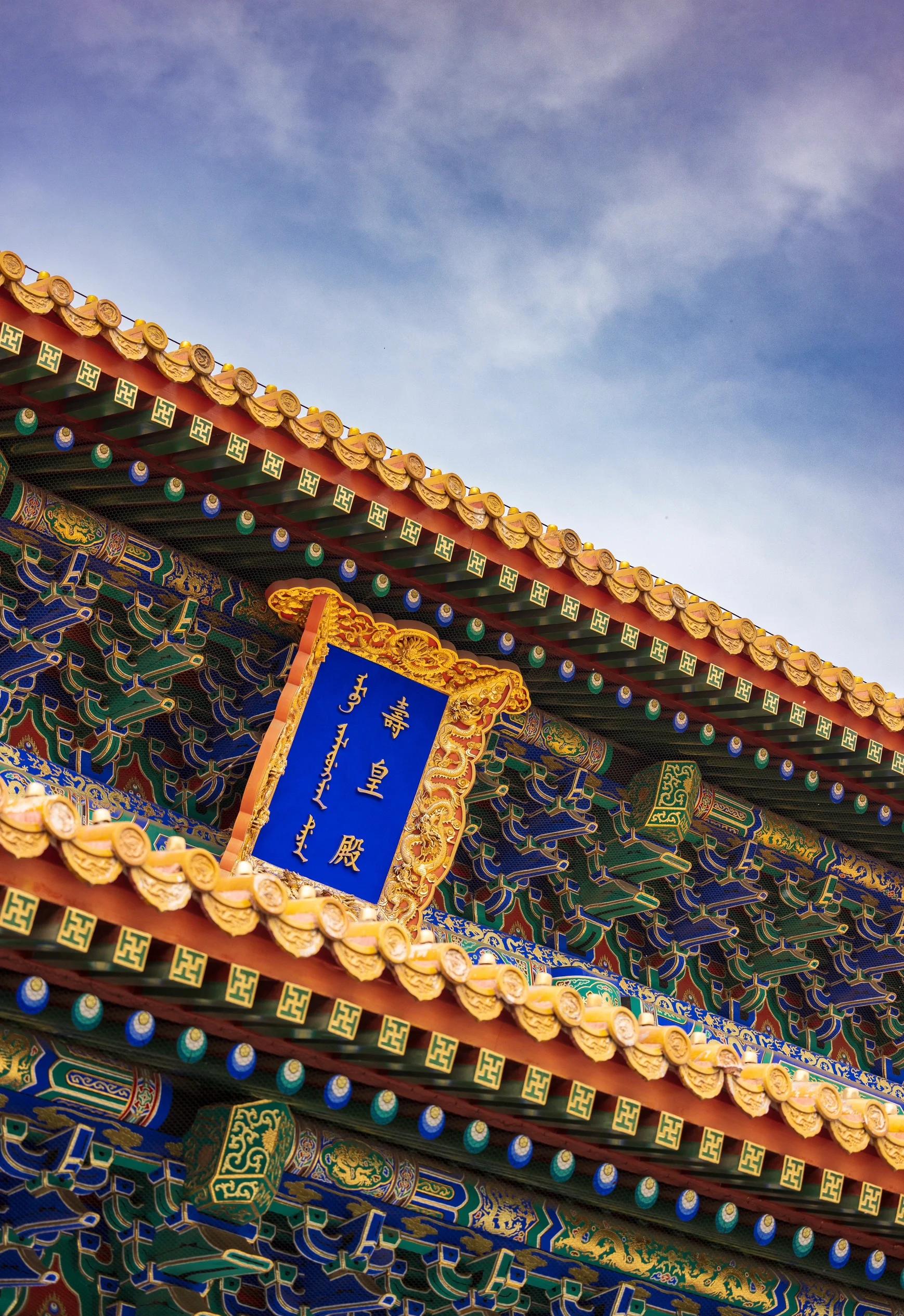 Culturally Interesting
Shouhuangdian Hall (寿皇殿)
A grand imperial hall complex at the park's north end where Qing emperors stored ancestor portraits. Features the same red walls and yellow tiles as t...
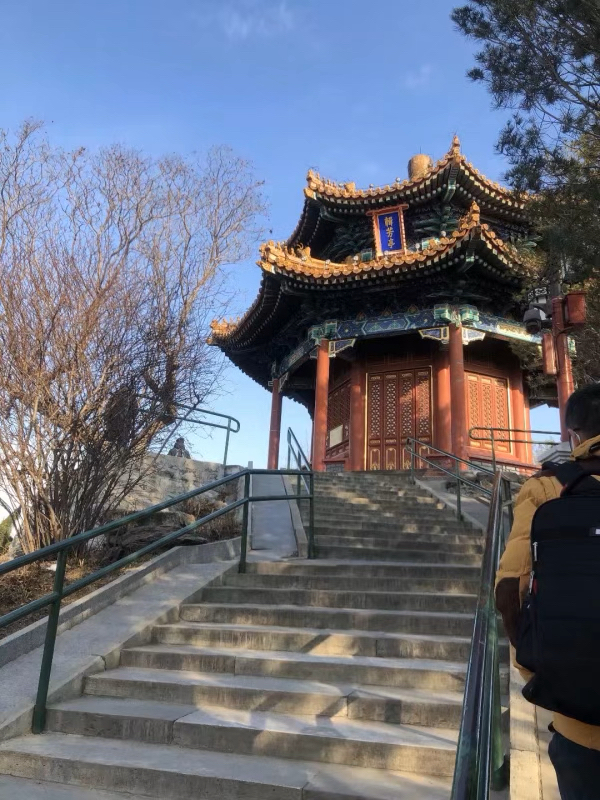 Universal Appeal
Morning Cultural Activities
Every morning from roughly 7:30-9:30 AM, elderly Beijing residents fill the park with tai chi, fan dancing, opera singing, traditional instrument play...
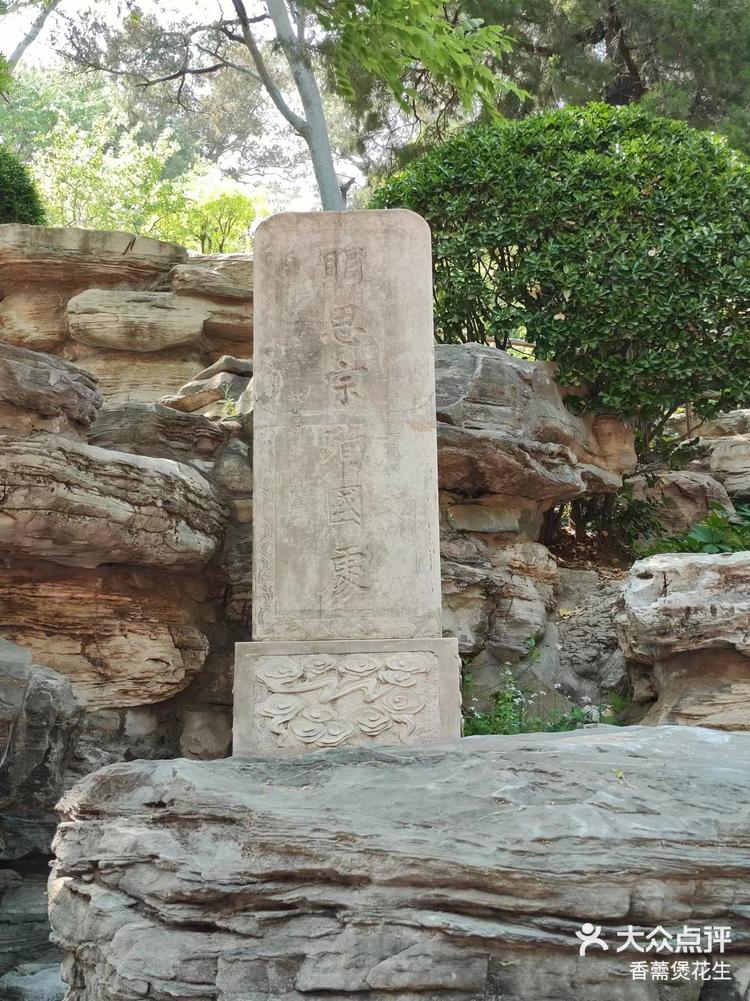 Culturally Interesting
Site of the Last Ming Emperor's Death
A commemorative stone tablet on the eastern slope marks where Emperor Chongzhen, the last Ming Dynasty ruler, allegedly hanged himself from a locust t...
What Most Visitors Miss
The other four hilltop pavilions
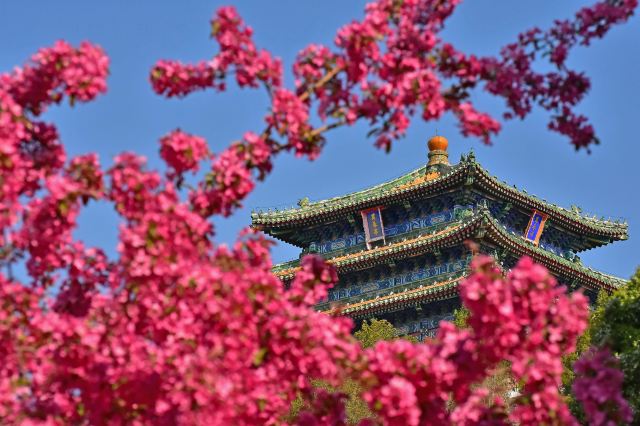
Everyone crowds into Wanchun Pavilion at the center, but the four flanking pavilions (Guanmiao, Zhouchang, Jifang, Fulan) offer excellent views with almost no competition for space. The western pavilions provide a stunning view of Beihai Park's White Dagoba.
The north side view at sunset
While everyone fights for the south-facing Forbidden City view, turning around reveals a gorgeous sunset view over Beihai Park's white dagoba and the Beijing skyline. Often the more photogenic shot.
The peony garden in spring
Over 20,000 peonies from 500+ varieties bloom in April-May — one of Beijing's largest peony collections. Most visitors come for the view and ignore the gardens entirely.
Plan Your Visit
How Long to Visit
30-45 minutes (climb to Wanchun Pavilion, take photos, come down
1.5-2 hours (climb to summit, explore all five pavilions, visit Shouhuangdian Hall, enjoy the park grounds
3+ hours (full park exploration plus lingering for golden hour/sunset photography and morning cultural activities
Smart Route
Exit the Forbidden City's north gate (Shenwumen)
cross the street via the underground passage
enter Jingshan through the south gate
climb directly to Wanchun Pavilion for the view
explore the western pavilions for Beihai Park views
descend the east side past the Ming Emperor's tree
walk north to Shouhuangdian Hall
exit through the north gate toward Shichahai/Houhai if continuing your day.
Best Time to Visit
Late afternoon (4:00-5:30 PM) for golden hour light on the Forbidden City's golden roofs, or early morning (7:30-9:30 AM) to experience locals doing tai chi, singing, and dancing
Chinese public holidays (National Day, May Day) and summer weekends when the small summit platform becomes dangerously overcrowded
By Season
Spring
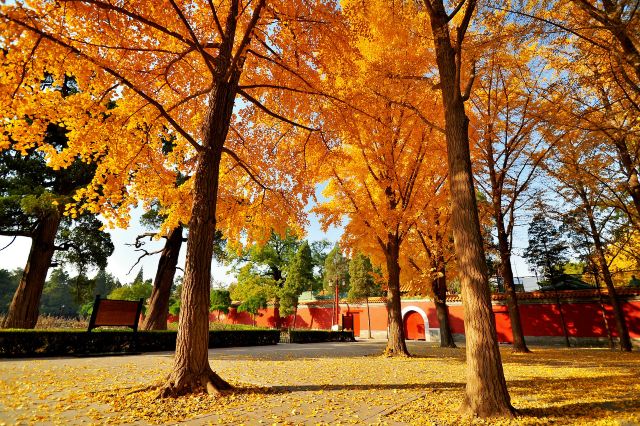
(late March-April): peony festival with 20,000+ peonies and 500 varieties — entrance fee rises to ¥10 during the festival. Autumn (September-October): golden ginkgo trees line the paths — stunning photography.
Summer
Autumn
(September-October): golden ginkgo trees line the paths — stunning photography. Winter (December-February): snow on the Forbidden City viewed from the summit is an iconic Beijing image, and crowds are minimal.
Winter
Visit on a clear winter weekday morning after snowfall — the snow-covered Forbidden City viewed from Wanchun Pavilion is one of Beijing's most iconic photographs, and you might have the summit nearly to yourself.
What to Skip
Don't bother with the small gift shop — standard tourist souvenirs. If air quality is poor (AQI > 150), the view from the summit will be disappointing — check before climbing.
Pro Tips
The underground passage from the Forbidden City's north gate area leads directly to Jingshan's south entrance — you don't need to cross the busy street at ground level. If the summit is too crowded for photos, wait 15-20 minutes — the crowd ebbs and flows as tour groups come and go in waves.
Photo Spots
Wanchun Pavilion — south-facing view
Arrive 30-45 minutes before sunset for golden hour. Use a zoom lens to capture architectural details of the Forbidden City's Hall of Supreme Harmony.
Western pavilions — view of Beihai Park White Dagoba
Sunset light paints the White Dagoba golden. Far fewer people than the central pavilion.
Shouhuangdian Hall — red walls and yellow tiles
Morning light is best. The architectural style mirrors the Forbidden City without the crowds, making it ideal for traditional costume photoshoots.
Pair With
Forbidden City (故宫)
2-minute walk across the street via underground passage
The obvious pairing — exit the Forbidden City's north gate and walk directly into Jingshan's south entrance. See the palace from inside, then from above.
Beihai Park (北海公园)
5-minute walk west from Jingshan's west gate
Beijing's oldest imperial garden with a beautiful lake and the iconic White Dagoba — visible from Jingshan's western pavilions. Together they make a perfect half-day of imperial gardens.
Shichahai / Houhai Area
10-minute walk north from Jingshan's north gate
Historic lakeside hutong neighborhood with bars, restaurants, and boat rides. Walk north from Jingshan for a completely different Beijing vibe — modern nightlife meets traditional architecture.
Tickets & Access
Regular admission
One of the cheapest attractions in Beijing
Peony festival / summer event admission
Applies during spring peony season and July-August
Student admission
With valid student ID
Opening Hours
Peak season (Apr 1-Oct 31): 06:00-21:00, last entry 20:30. Off-season (Nov 1-Mar 31): 06:30-20:00, last entry 19:30. Wanchun Pavilion area closes earlier: 18:00 (peak) / 17:00 (off-season). Shouhuangdian Hall: 08:00-18:00 (peak), 08:30-17:00 (off-season), closed Mondays.
How to Buy
Purchase at gate ticket windows, or via 'Beijing Parks' WeChat mini-program. QR code scanning at gates also available.
Passport: Yes — present passport at ticket window. Foreign visitors may be asked for advance reservation confirmation.
Queue Situation
Minimal queuing for ticket purchase — usually under 5 minutes. The real 'queue' is at the summit platform where visitors jostle for prime photo positions. On busy days, expect 10-20 minutes of waiting and maneuvering for a clear photo spot at the top.
Tips & Warnings
The summit viewing platform is very small and gets intensely crowded
At peak times (sunset on weekends/holidays), expect aggressive jostling for photo positions. Some visitors with tripods occupy significant space. Be patient, keep your belongings secure, and consider the side pavilions as alternatives.
Air quality dramatically affects the experience
On hazy days (common in Beijing), the view is murky and disappointing. Check Beijing's AQI before your visit — clear days with AQI under 50 are ideal. Winter after wind or rain tends to have the clearest skies. Message our team in the morning and we can check the AQI and visibility for you, then suggest whether today is a good Jingshan day or if you should swap in a different activity.
Wanchun Pavilion area closes earlier than the park
The summit area closes at 18:00 in peak season and 17:00 in off-season, even though the park itself stays open later. Plan your sunset timing carefully — during peak season, sunset often falls within the window, but off-season sunset may be after closure.
What to Bring
Wear
Comfortable walking shoes for the stone stair climb. No special gear needed — the hill is modest. Dress for Beijing's weather: very hot and humid in summer, bitterly cold in winter.
Bring
Camera with zoom lens (for Forbidden City architectural details from the summit). Water bottle. Sunscreen in summer. Phone with WeChat Pay or Alipay for ticket purchase.
Don't Bring
Tripods may cause friction with other visitors at the crowded summit. Drones are prohibited.
Physical Reality
easy-moderate
The climb to Wanchun Pavilion takes 10-15 minutes up well-maintained stone stairs — roughly 200 steps. The lower park is completely flat. No wheelchair access to the summit. The park grounds at the base are stroller-friendly.
Foreigners Watch Out
- Foreign visitors officially need to reserve one day ahead by phone at (010) 66055431 — though this rule is inconsistently enforced and many foreigners buy tickets on the spot. Call to be safe.
- Cash may not be accepted at all ticket windows — have WeChat Pay or Alipay set up. The ¥2 fee is too small for most card machines.
- Google Maps doesn't work in China — use Baidu Maps or Amap (Gaode) for navigation. The park is directly behind (north of) the Forbidden City's north gate. If you're struggling with Chinese map apps, send us your location and where you want to go — we can send you step-by-step walking directions or arrange a car.
- The Forbidden City north gate illumination for photography only happens on Fridays, Saturdays, and public holidays — don't plan an evening visit specifically for this on a weekday.
If Things Go Wrong
Too hazy to see the Forbidden City clearly
→ Check if conditions might improve — wind can clear haze quickly in Beijing. The park grounds and Shouhuangdian Hall are still worth exploring regardless of visibility.
Summit too crowded for photos
→ Wait 15-20 minutes for the current wave of tour groups to leave. Alternatively, the eastern and western pavilions offer nearly identical views with far fewer people.
Arrived after Wanchun Pavilion area closure (18:00/17:00)
→ The lower park grounds remain open until 21:00/20:00. Explore Shouhuangdian Hall and the gardens, or enjoy the evening atmosphere with locals.
Useful Chinese
Tap to reveal the English meaning