About Beihai Park
“Genuinely peaceful for something this close to the Forbidden City — ancient pavilions reflected in still water, elderly locals practicing tai chi at dawn, and the White Dagoba visible from almost everywhere in the park.”
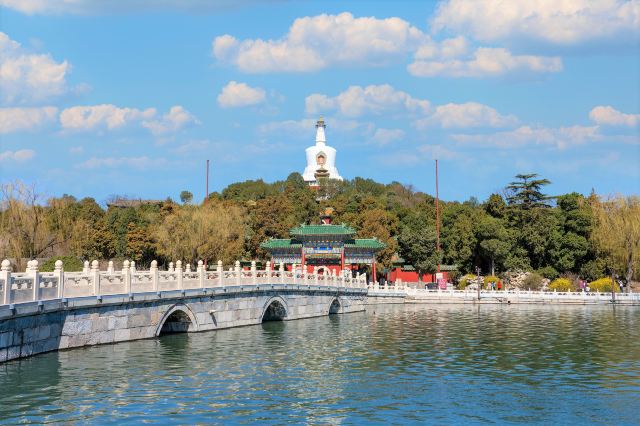
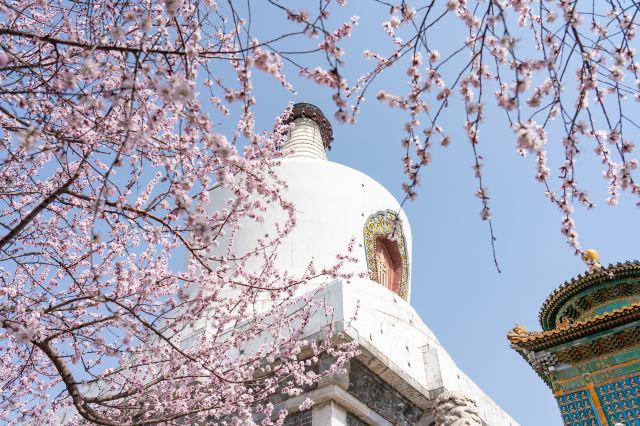
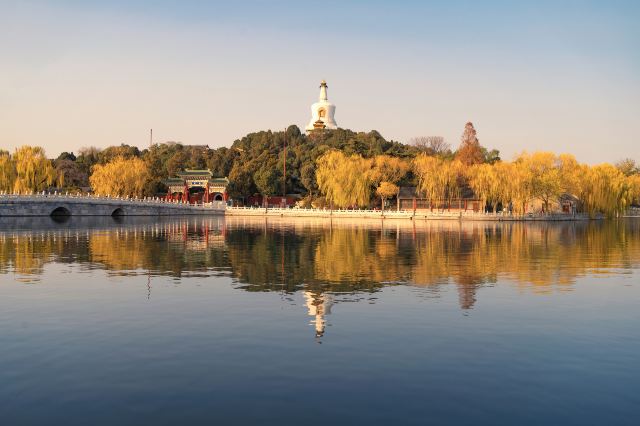
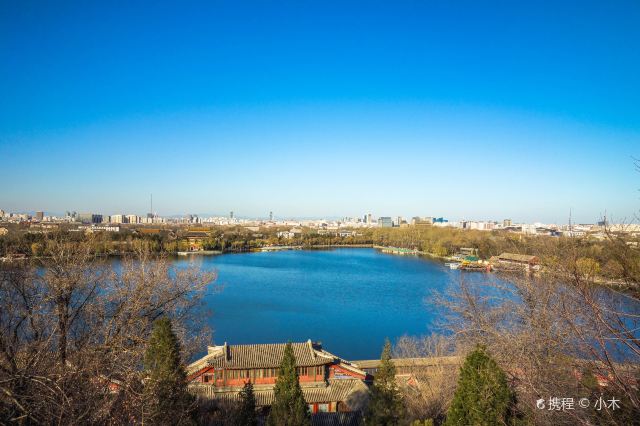
Beihai Park is Beijing's most beautiful and historically significant imperial garden, with origins dating back to the 11th century Liao Dynasty. The 68-hectare park is built around a massive lake that takes up more than half its area, with the iconic White Dagoba perched atop Jade Island at the center. The park successfully blends grand imperial architecture (temples, pavilions, dragon walls) with serene natural beauty (ancient trees, lotus ponds, willow-lined shores). The White Dagoba viewpoint offers panoramic views of the lake, the Forbidden City's corner towers, and Jingshan Park. The Nine-Dragon Wall is one of only three surviving ancient dragon walls in China — and the only double-sided one. The Quiet Heart Studio (Jingxinzhai) is a stunning garden-within-a-garden. Boating on the lake in summer and ice skating in winter are beloved local traditions. The park is remarkably uncrowded compared to the Forbidden City next door, making it a genuine oasis of calm. Downsides: the scenic spots within the park (temples, Dagoba) require separate tickets and close on Mondays. The park is large enough that walking the full loop around the lake takes 3-5 hours. Food options inside are limited. Best for history lovers, garden enthusiasts, photographers, and anyone needing a peaceful break from Beijing's intensity.
Top Questions from Travelers
Why This Place Matters
Beihai Park is China's oldest surviving imperial garden, with origins in the 11th century when the Liao Dynasty built a palace on the lake's island. The park's design embodies the ancient Chinese myth of 'one pool and three fairy mountains' — Penglai, Yingzhou, and Fangzhang — islands believed to be inhabited by immortals who held the secret to eternal life. Every subsequent dynasty expanded and refined the garden: the Jin Dynasty modeled it after the famous Genyue Garden, Kublai Khan made it the center of his Yuan Dynasty capital, and Emperor Qianlong's massive Qing Dynasty renovations established its current layout. The White Dagoba was built in 1651 to mark the first Dalai Lama's visit to Beijing, symbolizing the bond between Tibetan Buddhism and the Qing court. The park opened to the public in 1925 and became a protected national cultural site in 1961. In Chinese popular culture, Beihai is immortalized in the beloved children's song 'Let Us Row Our Oars' (让我们荡起双桨), which every Chinese person can sing from memory. In 2024, Beijing's Central Axis was inscribed as a UNESCO World Heritage Site, further cementing Beihai's significance.
Need help planning?
ChinaPal handles everything
- Book English-speaking guides
- Arrange transport & tickets
- Real-time help during your visit
- Restaurant reservations nearby
Highlights
5 iconic experiences that define a visit
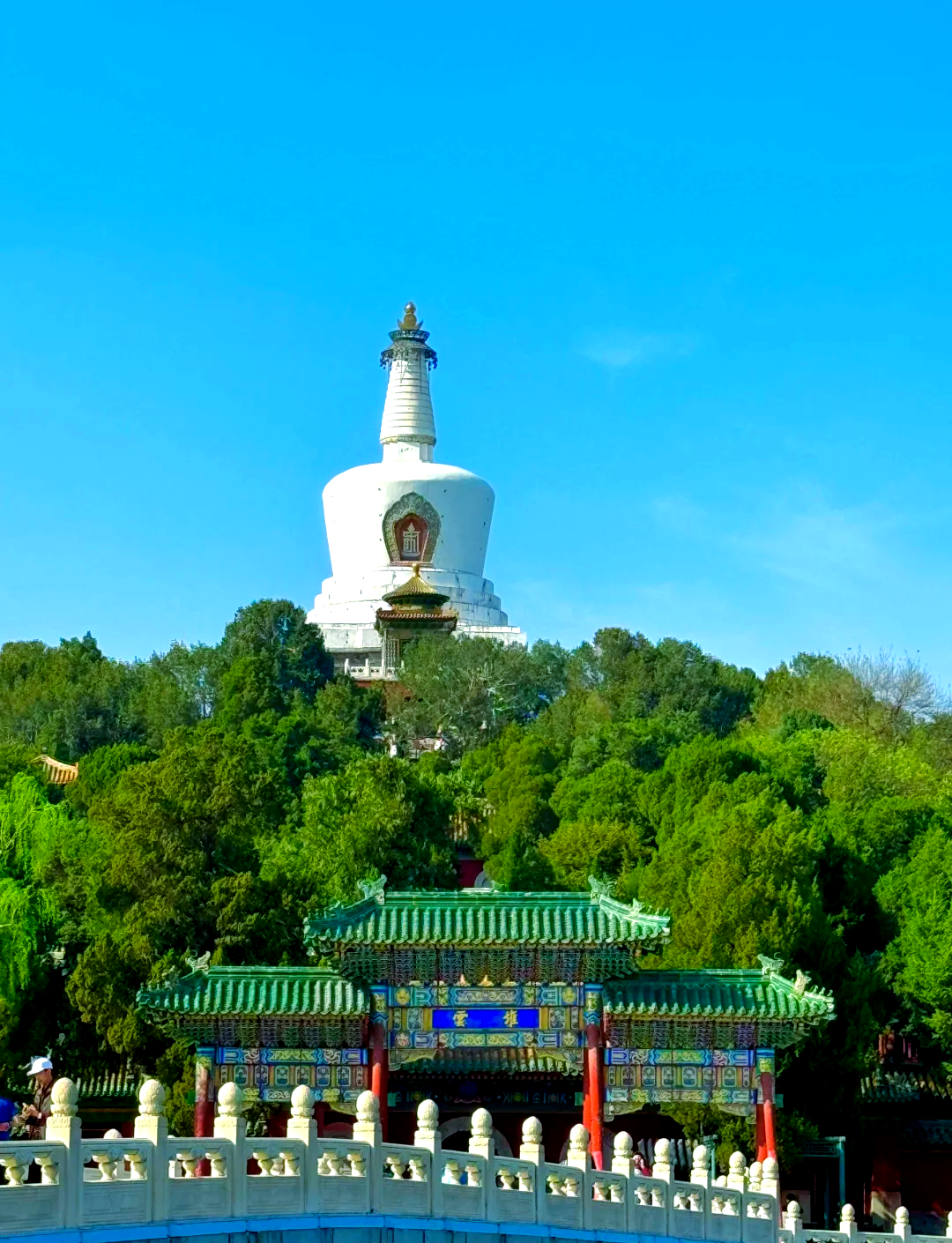
White Dagoba (白塔)
A 35.9-meter Tibetan-style white stupa built in 1651 atop Jade Island, housing Buddhist relics. It is the park's defining landmark and one of Beijing's most recognizable structures. The climb up takes about 30 minutes via stone steps (easier on the east side), and the panoramic view from the top reveals the lake, the Forbidden City's golden roofs, Jingshan Park, and the modern city beyond.
The view from the top is one of the best vantage points in central Beijing. On a clear day you can see the Forbidden City corner towers, making it an excellent complement to a Forbidden City visit.
 Universal Appeal
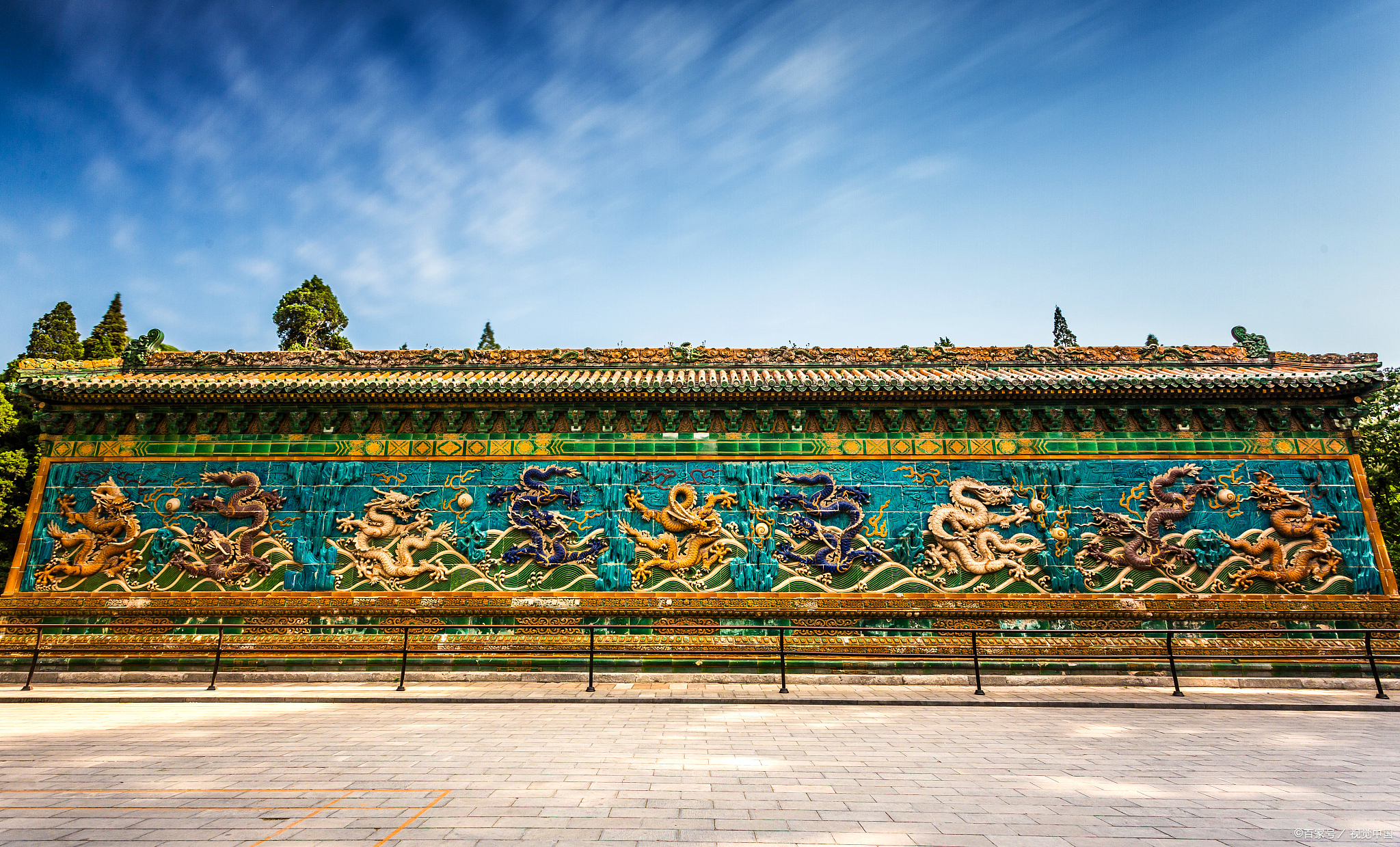
Nine-Dragon Wall (九龙壁)
A stunning 27-meter glazed-tile wall from 1756 featuring nine large dragons on each side — the only double-sided Nine-Dragon Wall among China's three ...
 Universal Appeal
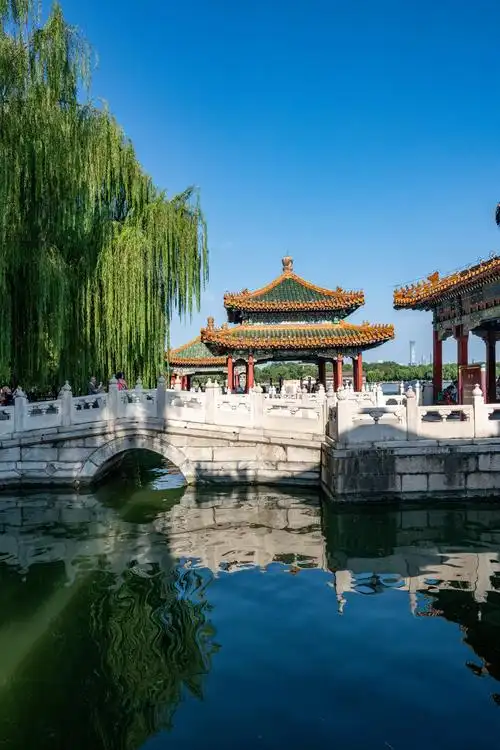
Five-Dragon Pavilion (五龙亭)
Five interconnected Ming Dynasty pavilions forming a graceful S-shape extending over the water on the northwest shore. The pavilions were originally b...
 Unique
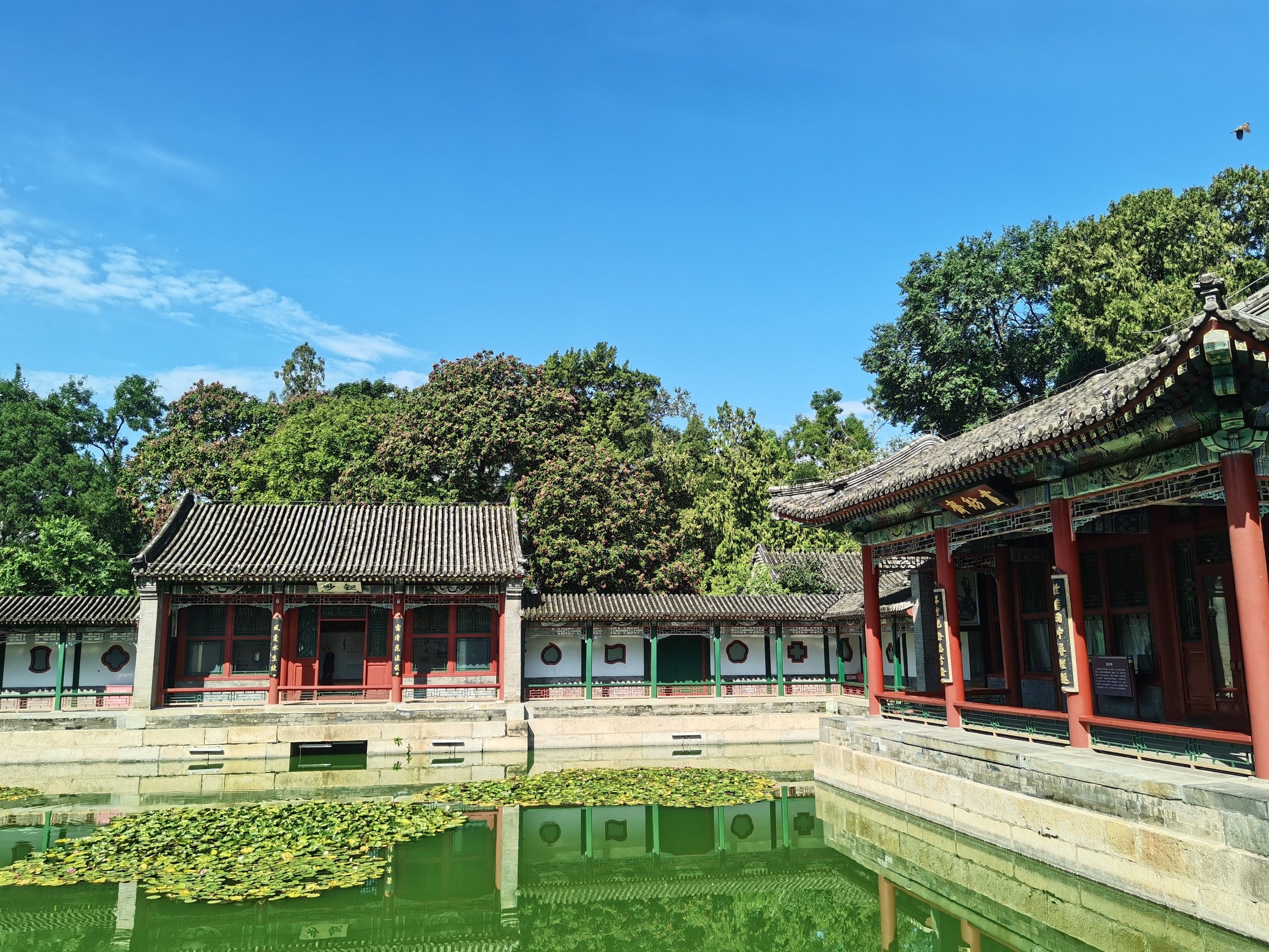
Quiet Heart Studio (静心斋)
An exquisite 'garden within a garden' originally built in the Qing Dynasty as a private study for the emperor. Features miniature ponds, rockeries, pa...
 Universal Appeal
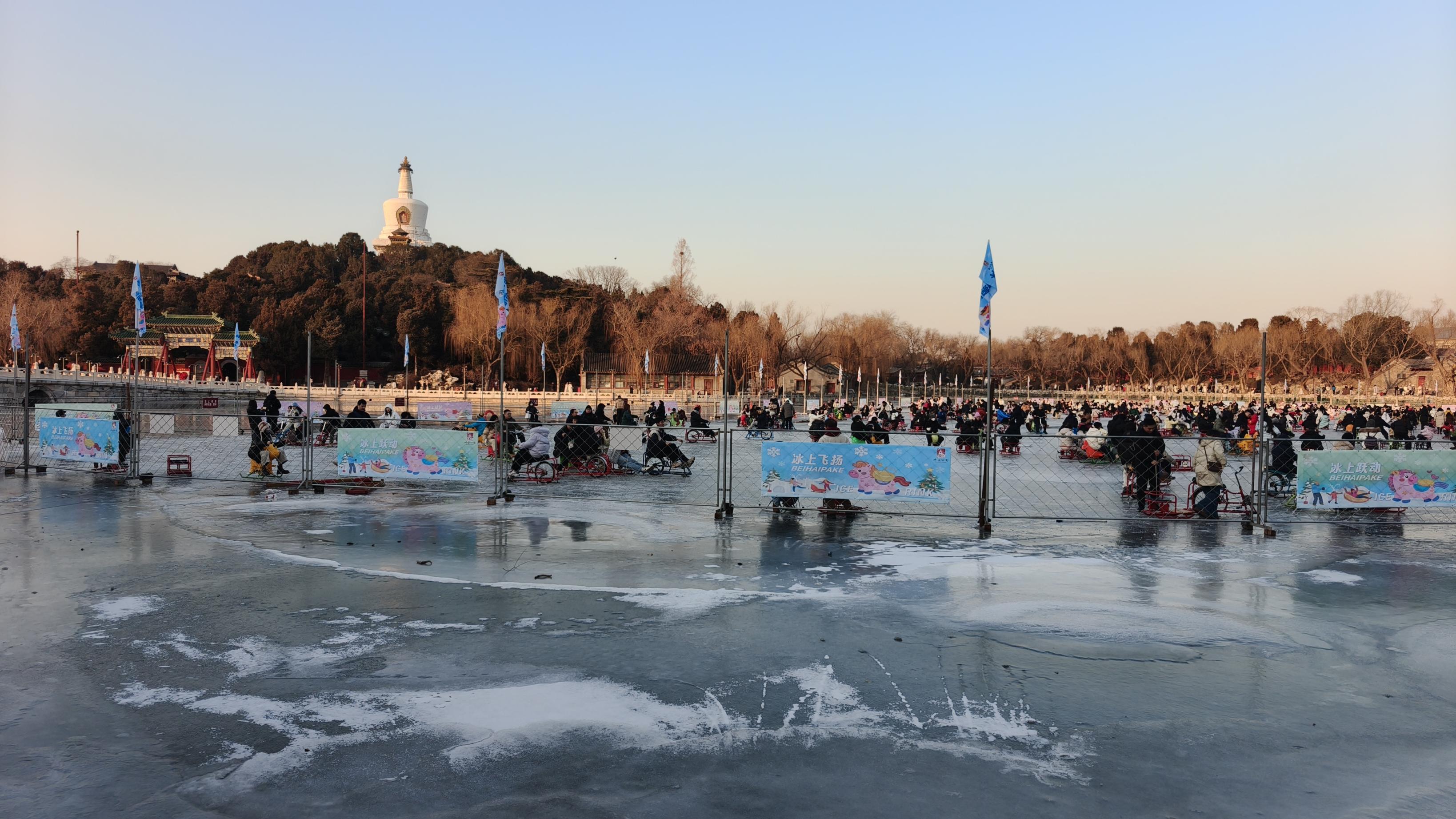
Boating on Beihai Lake / Ice Skating in Winter
In summer (roughly May-October), various boats are available for rent — electric, pedal, rowboat, and traditional-style. In winter (late December-Febr...
What Most Visitors Miss
Fangshan Restaurant (仿膳饭庄) — imperial court cuisine
Located on Jade Island, this restaurant serves dishes recreated from Qing Dynasty imperial recipes in a classical setting with staff in traditional cheongsam dresses. It is one of Beijing's most unique dining experiences. Most visitors walk right past it. Reserve in advance, especially on holidays.
The park at night — illuminated landmarks after 8 PM
Most visitors come during the day and leave before dark. After 8 PM, the White Dagoba, Yong'an Bridge, Five-Dragon Pavilions, and other structures are illuminated, creating a magical nighttime atmosphere that few tourists experience.
Circular City (团城) — the 'world's smallest castle'
This small walled enclosure near the south gate contains the Chengguang Hall with a white jade Buddha and the massive Jade Urn (weighing 3,500 kg, from 1265). It is included in the combined ticket but many visitors walk past it without entering.
Plan Your Visit
How Long to Visit
1-1.5 hours (climb to the White Dagoba for the view, walk back — you will miss most of the park
Dagoba, Nine-Dragon Wall, Five-Dragon Pavilion, Quiet Heart Studio, and a lakeside walk
full loop around the entire lake, all scenic spots, boat ride in summer or ice skating in winter, tea at Fangshan Restaurant
Smart Route
Enter from the south gate (closest to Forbidden City). Visit the Circular City (Tuancheng) first. Cross Yong'an Bridge to Jade Island and climb to the White Dagoba for panoramic views. Descend the north side of the island. Walk west along the north shore to see the Nine-Dragon Wall, Quiet Heart Studio, Five-Dragon Pavilion, and Little Western Heaven. If time permits, complete the full lake loop via the east shore. Exit from the north gate toward the metro.
Best Time to Visit
Early morning (6:00-8:00 AM) is magical — locals practice tai chi and dance by the lake, the light is soft, and tourist crowds have not arrived
Midday on weekends in peak season (April-October) when tour groups arrive
By Season
Spring
: lotus flowers begin blooming. Summer (June-August): full lotus coverage on the lake, boat rentals available (electric, pedal, rowboat).
Summer
(June-August): full lotus coverage on the lake, boat rentals available (electric, pedal, rowboat). Autumn (October-November): ginkgo trees turn brilliant yellow — one of Beijing's best autumn color spots.
Autumn
(October-November): ginkgo trees turn brilliant yellow — one of Beijing's best autumn color spots. Winter (late December-February): the lake freezes and becomes an ice rink with skating, ice bicycles, and ice carts — a uniquely Beijing experience.
Winter
Visit on a sunny winter day when the lake is frozen — the sight of hundreds of people ice skating against the backdrop of the White Dagoba is extraordinary and quintessentially Beijing.
What to Skip
The east shore (Huafangzhai and Xiancan Altar areas) are less impressive than the north shore — skip these if time is limited. The Arboretum area is pleasant but not essential.
Pro Tips
Buy the combined ticket — it is only 10 RMB more and unlocks the Dagoba and Circular City, which are the park's highlights. Avoid Mondays when interior scenic spots close. Combine with Jingshan Park (exit east gate, 5-minute walk) for the best view of the Forbidden City from above.
Photo Spots
Yong'an Bridge (永安桥) with White Dagoba behind
Shoot from the south shore looking north across the bridge toward the Dagoba. Early morning light (before 8 AM) creates the most dramatic shadows and reflections.
White Dagoba summit — panoramic view
Go on a clear day for the best visibility. You can see the Forbidden City's golden roofs, Jingshan Park's hill, and the modern city skyline all in one sweeping view.
Five-Dragon Pavilion (五龙亭) at night
After 8 PM when the illuminations turn on, the pavilions reflected in the dark water create an ethereal double image. Use a long exposure or night mode.
Lotus-covered lake in summer
June through August brings peak lotus coverage. Photograph from the north shore looking toward the Dagoba with lotus flowers in the foreground.
Pair With
Jingshan Park (景山公园)
5-minute walk from Beihai's east gate
The hilltop in Jingshan offers the single best aerial view of the Forbidden City — a perfect complement to Beihai's lakeside perspective. The two parks are adjacent.
The Forbidden City (故宫)
10-minute walk from Beihai's south gate
Beihai was the imperial family's private garden — visiting both gives the full picture of how emperors lived. The contrast between the formal palace and the relaxed garden is striking.
Shichahai / Houhai (什刹海/后海)
10-minute walk from Beihai's north gate
The connected lake area north of Beihai offers hutong neighborhoods, lakeside bars, and rickshaw tours through old Beijing. A natural extension of the Beihai walk.
Tickets & Access
Park Entry (peak season)
Gets you into the grounds only — not the Dagoba or temples
Combined Ticket (peak season)
Includes Dagoba, Yong'an Temple, and Circular City — highly recommended
Combined Ticket (off-season)
Same inclusions, lower price Nov-March
Boat Rental (summer)
Electric boats, pedal boats, rowboats, and traditional-style boats available
Ice Activities (winter)
Ice skating, ice bicycles, ice carts on the frozen lake
Opening Hours
Peak season (April 1-October 31): 6:00-21:00, last entry 20:30. Off-season (November 1-March 31): 6:30-20:00, last entry 19:30. Interior scenic spots: 8:30-17:00 (off-season) or 8:00-18:00 (peak season), closed Mondays except holidays.
How to Buy
Phone reservation for foreigners: (010) 64037972. Alternatively, try Trip.com or Klook. Chinese visitors can use WeChat mini-program or buy at the gate. Cash accepted at ticket windows.
Passport: Yes — foreigners can enter with their passport. Show it at the ticket window if you have a phone reservation.
Queue Situation
Minimal queues even in peak season — this park is far less crowded than the Forbidden City or Great Wall. Ticket purchase takes under 5 minutes. No security screening required.
Tips & Warnings
Interior scenic spots close on Mondays
The White Dagoba/Yong'an Temple, Quiet Heart Studio, and other interior sites are closed every Monday (except national holidays). The park grounds remain open, but you lose access to the most important attractions. Visit Tuesday-Sunday.
Foreign visitors officially need advance phone reservation
Call (010) 64037972 between 9:00-16:00 at least one day before your visit. This rule is inconsistently enforced but it is better to be safe. Have a Chinese speaker help you call, or book via Trip.com. If you do not have a Chinese-speaking friend to help, message our team and we will make the call for you and confirm your reservation.
The park is larger than it looks — walking the full loop takes 3-5 hours
The lake circumference is about 3.5 km, and the park has many detours into scenic compounds. If you are already tired from the Forbidden City, focus on Jade Island and the north shore rather than attempting the full loop.
What to Bring
Wear
Comfortable walking shoes — the park has stone paths and hill climbing to the Dagoba. In summer, sun protection is important as parts of the lakeside path have limited shade. In winter, dress warmly — the frozen lake area is windy and cold.
Bring
Passport (for entry). Cash (for tickets). Toilet paper. Water bottle. Camera. Sunscreen in summer.
Don't Bring
No special restrictions. The park is relaxed and welcoming.
Physical Reality
moderate
The lakeside paths are flat and accessible. However, climbing to the White Dagoba involves about 70 steep stone steps. The full lake loop is approximately 3.5 km. Wheelchairs can navigate the flat paths but cannot reach the Dagoba. Many scenic spots involve steps and uneven stone surfaces.
Foreigners Watch Out
- Foreign visitors officially need to call ahead to reserve (at least one day in advance). Without a reservation, you may be turned away at the ticket window.
- Bring cash — ticket windows accept cash which is simplest for foreigners. Some may not accept foreign credit cards. If you are having trouble with payments at any Beijing attraction, drop us a message and we can help you find a solution.
- Public restrooms are available throughout but often do not provide toilet paper — bring your own.
- Free WiFi is available (network: MyBeijing, no password) throughout the park.
- Seniors 60+ from outside Beijing can enter free with their passport — show it at the ticket window.
If Things Go Wrong
Turned away at the gate without a reservation
→ Try calling the reservation number on the spot: (010) 64037972. Ask a Chinese-speaking person nearby to help. Some visitors report being able to buy tickets anyway by showing their passport. Or message our concierge right away — we can call the reservation line immediately and try to sort it out while you wait.
Visited on a Monday and interior scenic spots are closed
→ You can still enjoy the park grounds, the lake, and the Circular City (Tuancheng, which stays open on Mondays). The lakeside walk and general scenery are beautiful even without entering the temples.
Too tired to walk the full park
→ Focus on just Jade Island — enter the south gate, cross Yong'an Bridge, climb to the Dagoba, and return. This takes only 1-1.5 hours and covers the park's single best attraction.
Useful Chinese
Tap to reveal the English meaning